

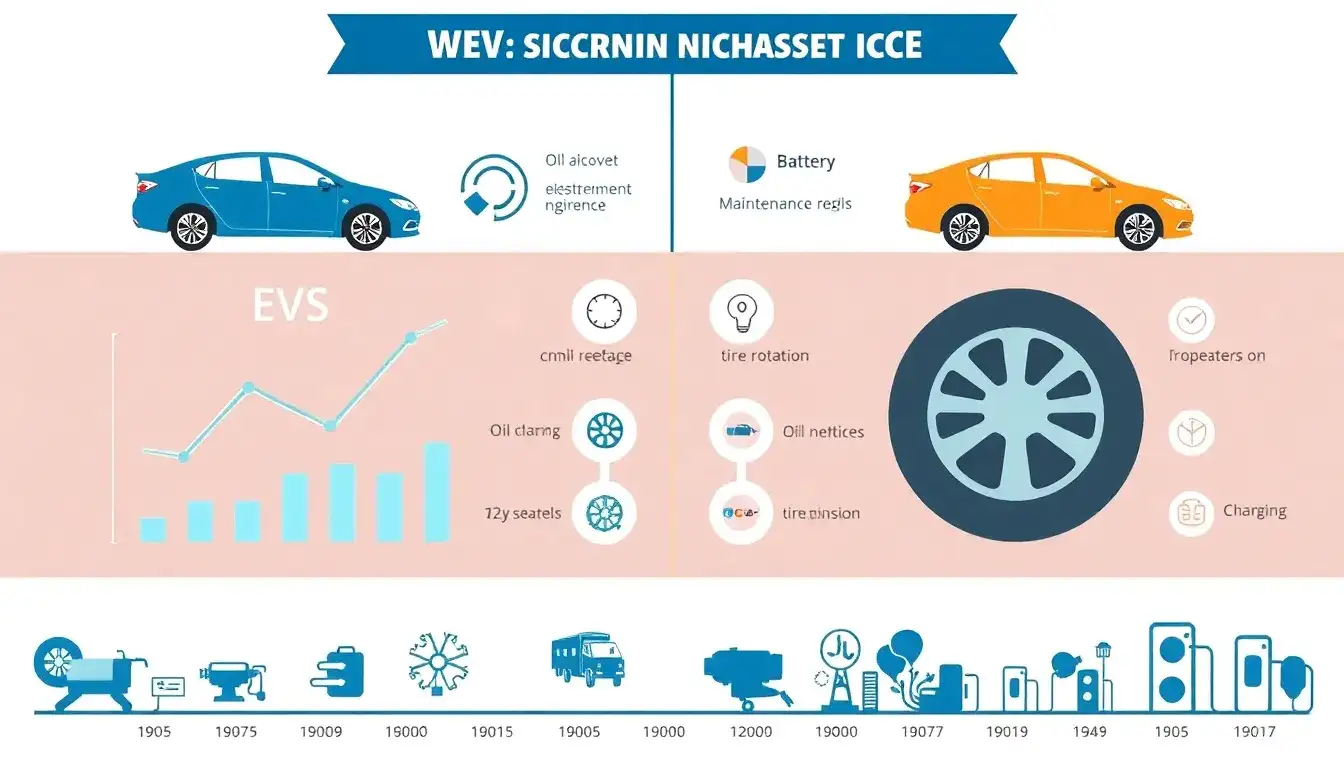
Electric vehicle (EV) maintenance costs are generally lower than those of traditional internal combustion engine (ICE) vehicles over time, primarily due to the simpler mechanical design and fewer required services.
Key Differences in Maintenance Costs
- Lower routine maintenance for EVs: EVs do not require regular oil changes, fuel filters, spark plugs, timing belts, or transmission maintenance, which are common and recurring expenses for ICE vehicles. As a result, EV owners save on these significant cost items over the vehicle’s lifespan.
- Estimated cost savings: According to various studies and data:
- EV owners spend about $300 less on maintenance in five years compared to ICE vehicle owners, with typical five-year costs around $4,246 for EVs versus $4,583 for ICE vehicles.
- Argonne National Laboratory found that EV maintenance costs per mile are about 40% less, and generally BEVs have systematically lower maintenance costs due to fewer components needing repair or replacement.
- AAA data suggest EVs cost approximately $330 less per year on maintenance than ICE vehicles, where the average annual ICE maintenance cost is $949.
- Consumer Reports indicates fully electric and plug-in hybrid owners pay about half as much as ICE owners on maintenance and repairs.
- Simplicity of EV mechanics: An EV drivetrain has around 20 moving parts compared to roughly 2,000 in an ICE vehicle, which reduces the likelihood of component failures and costly repairs.
Considerations for Repair Costs
- Although maintenance costs are lower, some research highlights that overall repair costs for EVs can be higher, with a recent global analysis reporting EV repair costs 29% higher than ICE repair costs, mainly due to more expensive parts (48% higher per estimate). However, this does not offset the lower routine maintenance requirements.
Summary
EVs cost less to maintain over their lifetime primarily because they eliminate many fluid changes and engine-related services required by ICE vehicles. While repair costs for EVs can be higher when repairs are needed, the reduced frequency and complexity of maintenance tasks generally make EV ownership more cost-effective from a maintenance perspective than traditional ICE vehicles.
In conclusion, though initial purchase prices and some repair costs may be higher for EVs, the lower routine maintenance costs and simpler mechanical architecture translate into lower total maintenance expenses compared to ICE vehicles over time.
Original article by NenPower, If reposted, please credit the source: https://nenpower.com/blog/how-do-ev-maintenance-costs-compare-to-those-of-traditional-ice-vehicles-over-time/

