

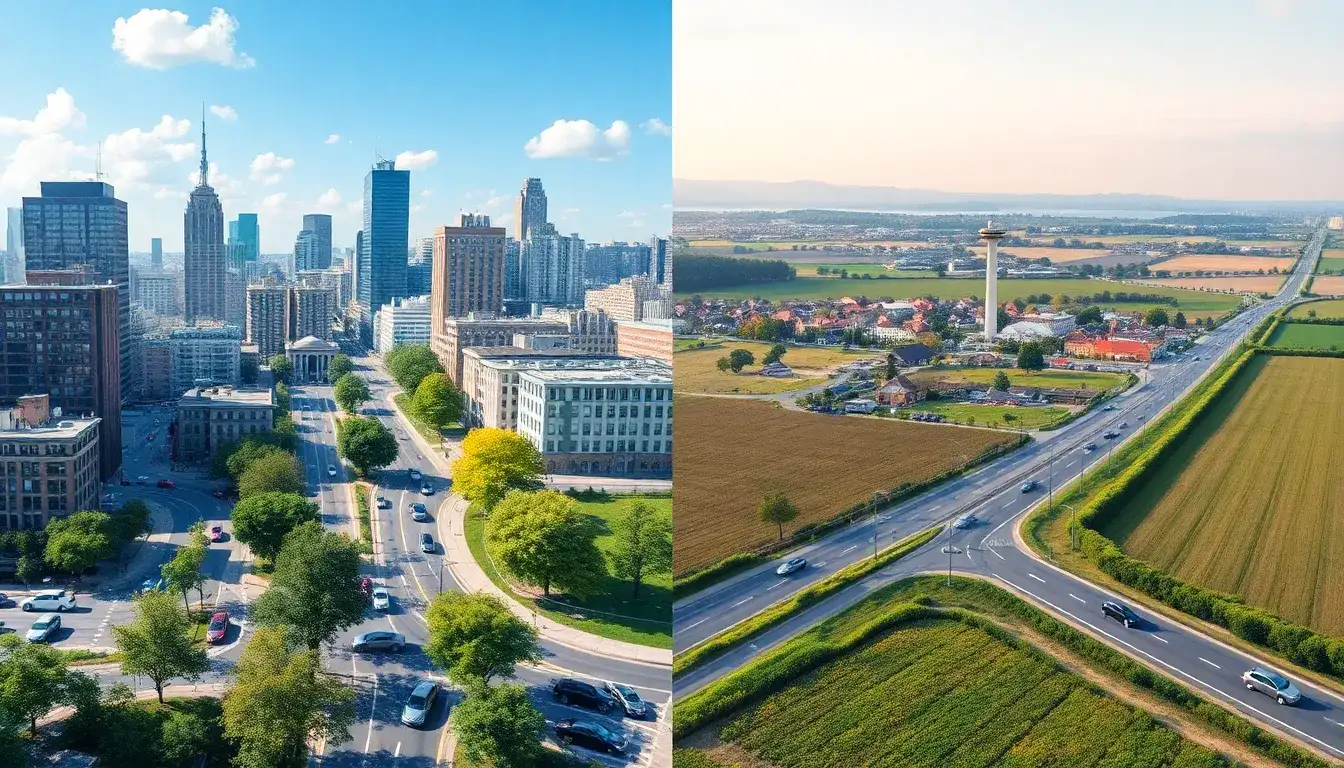
Air Quality Improvement Benefits
Urban Areas
- Higher Population Density: Urban areas have higher population densities, which means more people are exposed to air pollution from conventional vehicles. EVs help reduce this exposure by eliminating tailpipe emissions, leading to significant health benefits.
- Reduced Congestion-Related Pollution: Urban environments often suffer from congested roads, leading to increased idling times and higher emissions. EVs mitigate this issue by producing zero tailpipe emissions, reducing both particulate matter and nitrogen oxide emissions.
- Increased Infrastructure Availability: Urban areas typically have more extensive charging infrastructure, making EV ownership and usage more practical and widespread.
Rural Areas
- Less Local Air Pollution: While rural areas have fewer sources of air pollution due to lower traffic densities, EVs still offer benefits by reducing emissions from vehicles traveling longer distances, which is common in rural settings.
- Environmental Justice: Rural communities, particularly those overburdened by pollution, benefit from the reduced air pollution from EVs, improving public health outcomes.
- Charging Infrastructure Challenges: Rural areas face challenges with charging infrastructure availability, which can make widespread EV adoption more difficult compared to urban settings.
Overall, both urban and rural areas benefit from improved air quality due to EV adoption, but the impact is more pronounced in urban environments where air pollution from traffic is more concentrated. In rural areas, EVs offer benefits through reduced emissions on longer trips and improved environmental justice outcomes.
Original article by NenPower, If reposted, please credit the source: https://nenpower.com/blog/how-do-ev-emissions-benefits-differ-between-urban-and-rural-areas-in-terms-of-air-quality-improvement/

