

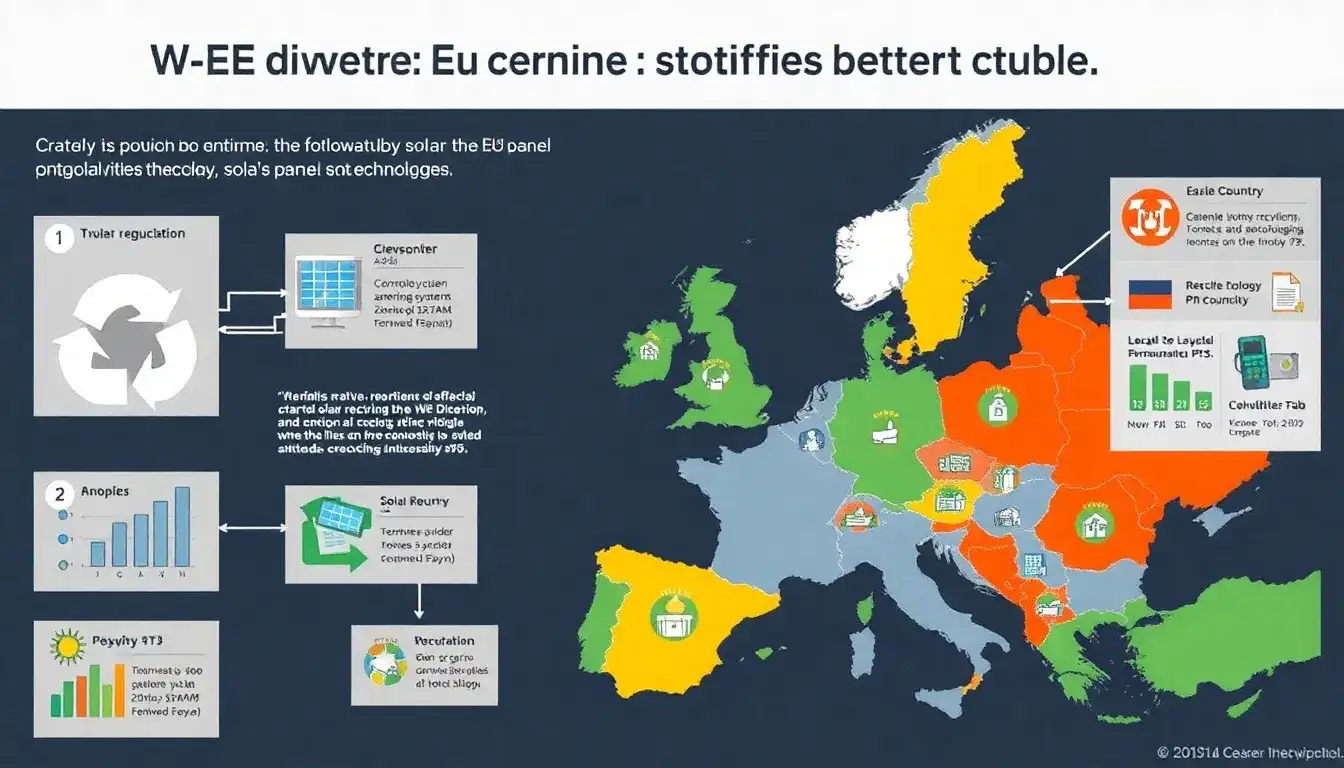
EU countries differ in their implementation of the WEEE Directive for PV (photovoltaic) recycling mainly through variations in producer responsibility organizations (PROs), collection and recycling targets, and regulatory frameworks. Here are some key differences:
Implementation Differences
- Producer Responsibility: Each EU member state implements the Extended Producer Responsibility (EPR) principle differently. While the core idea is that producers are responsible for the waste management of their products, the specific requirements and fees associated with this responsibility vary. For instance, some countries may have lower fees or less stringent reporting requirements than others.
- Collection and Recycling Systems: The infrastructure for collecting and recycling WEEE, including PV components, is organized at the national level. For example, in Germany, the Stiftung EAR is responsible for registration and monitoring, while other countries have similar bodies but with differing operational methods.
- National Targets and Monitoring: The WEEE Directive sets common recycling targets, but countries may have slightly different interpretations or additional national goals. This can lead to variations in how effectively or efficiently countries manage PV waste.
- PRO Organization: The formation and operation of producer compliance schemes (PCS), which manage the recycling process, differ across EU countries. These schemes collect fees from producers to cover the costs of collection and recycling, but the efficiency and cost-effectiveness of these schemes can vary significantly.
- Transition Periods and Implementation Details: During the transition period from 2012 to 2018, countries had time to fully implement the directive. Some countries might have taken longer to fully adopt the changes or might have different deadlines for incorporating new regulations or technologies like PV recycling into their existing frameworks.
PV Recycling Specifics
While specific PV recycling regulations are not addressed in detail by the WEEE Directive, countries are increasingly focusing on the unique challenges of recycling PV components. This includes managing hazardous materials like lead and ensuring the recovery of valuable materials. The implementation of PV-specific recycling strategies varies as countries develop their own best practices and regulations based on national environmental policies and technological capabilities.
In summary, while the WEEE Directive provides a common framework for managing e-waste across the EU, the implementation details and effectiveness can differ significantly from one country to another, particularly in how they address the recycling of specific technologies like PV systems.
Original article by NenPower, If reposted, please credit the source: https://nenpower.com/blog/how-do-eu-countries-differ-in-their-implementation-of-the-weee-directive-for-pv-recycling/

