

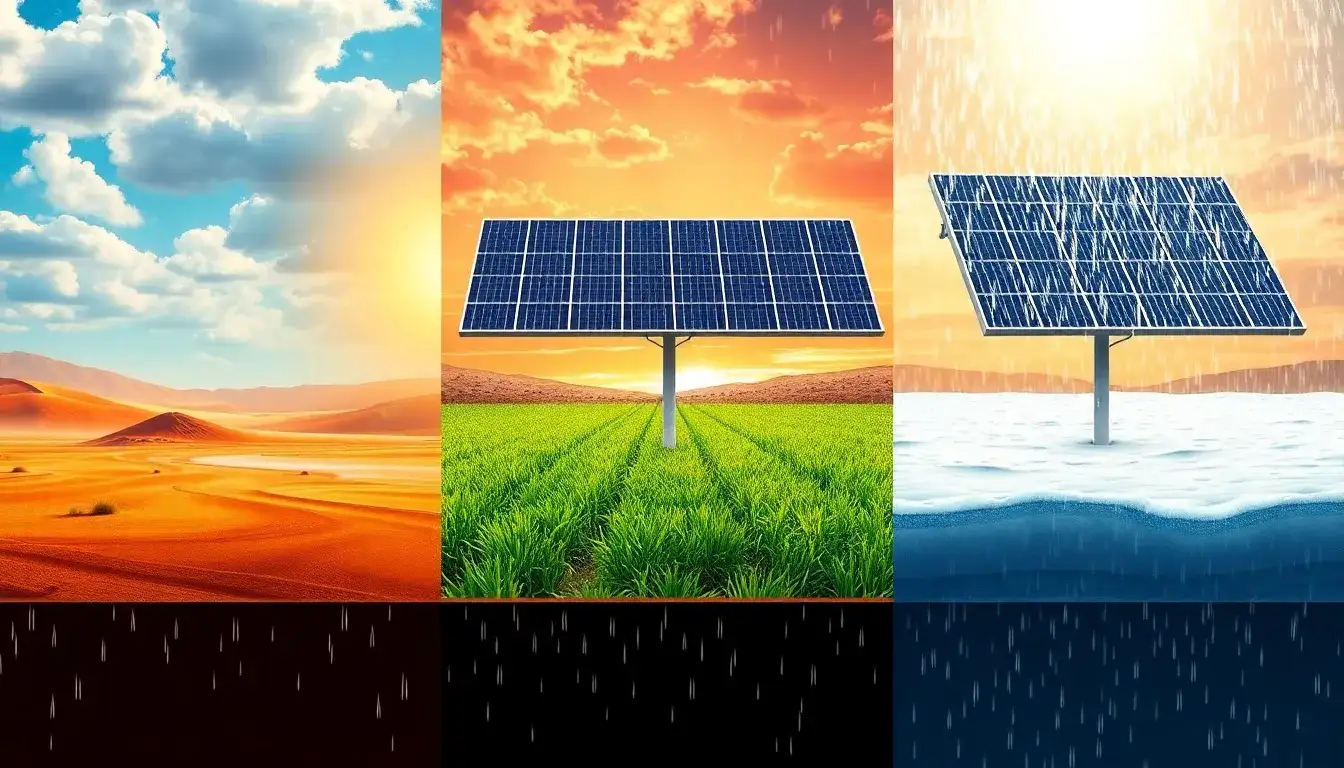
Environmental conditions significantly impact the performance of bifacial solar panels by influencing how much sunlight the panels capture from both their front and rear sides.
Key Environmental Factors Affecting Bifacial Solar Panels
1. Albedo (Surface Reflectivity)
The albedo effect, or the reflectivity of the ground or surface beneath the panels, is a crucial driver of bifacial panel performance. Highly reflective surfaces such as snow, sand, or light-colored rooftops can bounce additional sunlight onto the panel’s rear side, increasing total energy generation by up to 30% compared to monofacial panels. Conversely, surfaces with low reflectivity like asphalt or dark soil reduce this benefit. For example, snowy surfaces can boost energy capture significantly in colder climates.
2. Tilt Angle and Orientation
The angle and orientation at which bifacial panels are installed greatly affect their exposure to reflected light. A higher tilt angle tends to increase the rear side’s exposure to reflected sunlight, thereby improving energy yield. Optimal tilt settings depend on geographic location and seasonal solar positions to maximize both direct and reflected irradiance.
3. Climate and Weather Conditions
– Sunlight Availability: Bifacial panels perform best in regions with abundant sunlight. Cloud cover reduces overall irradiance, diminishing both front and rear side energy capture.
– Temperature: Elevated temperatures can reduce the efficiency of bifacial (and all) solar panels. Hot climates may see reduced panel performance, especially during peak summer months.
– Snowfall: Snow can sometimes cover the front surface of solar panels, reducing their output. However, bifacial panels recover more quickly from snow coverage and utilize reflected light off the snow on the ground, mitigating some power losses.
4. Shading and Obstructions
Shadows cast by trees, buildings, or other nearby objects reduce sunlight reaching both sides of bifacial panels, lowering overall energy yield. Since bifacial panels rely on light reaching the rear surface, shading impacts can be more pronounced than on monofacial setups. Ensuring minimal shading throughout the day is essential to maintain high performance.
5. Installation Height and Ground Cover
The spacing between the panels and ground, as well as the type of vegetation or material on the ground, influence bifacial gain. Taller installations and ground covers with higher reflectivity can increase the rear-side irradiance and power output. Studies in tropical regions such as Minas Gerais, Brazil, showed that natural soil albedo (around 0.20) limits bifacial gain, but alternative ground coverings can improve reflectivity and thus bifacial performance.
Summary Table
| Environmental Factor | Impact on Bifacial Performance |
|---|---|
| Albedo (surface reflectivity) | High reflectivity (snow, sand, light roofs) boosts rear-side energy by up to 30% |
| Tilt Angle & Orientation | Optimized tilt improves capture of reflected light on rear side |
| Climate (Sunlight & Temp) | More sunlight improves yield; high temps reduce efficiency |
| Snow Cover | Temporary losses from snow, but quicker recovery than monofacial panels |
| Shading | Reduces light on rear side, lowers overall panel output |
| Installation Height & Ground Cover | Increased height and reflective ground surfaces enhance bifacial gain |
In conclusion, environmental conditions such as ground reflectivity (albedo), installation angle, local climate including temperature and snowfall, shading, and installation setup strongly affect bifacial solar panels’ performance. Maximizing energy yield from bifacial panels requires strategically selecting sites with high reflectivity, optimal tilt, minimal shading, and consideration of local climatic effects.
Original article by NenPower, If reposted, please credit the source: https://nenpower.com/blog/how-do-environmental-conditions-impact-the-performance-of-bifacial-solar-panels/

