

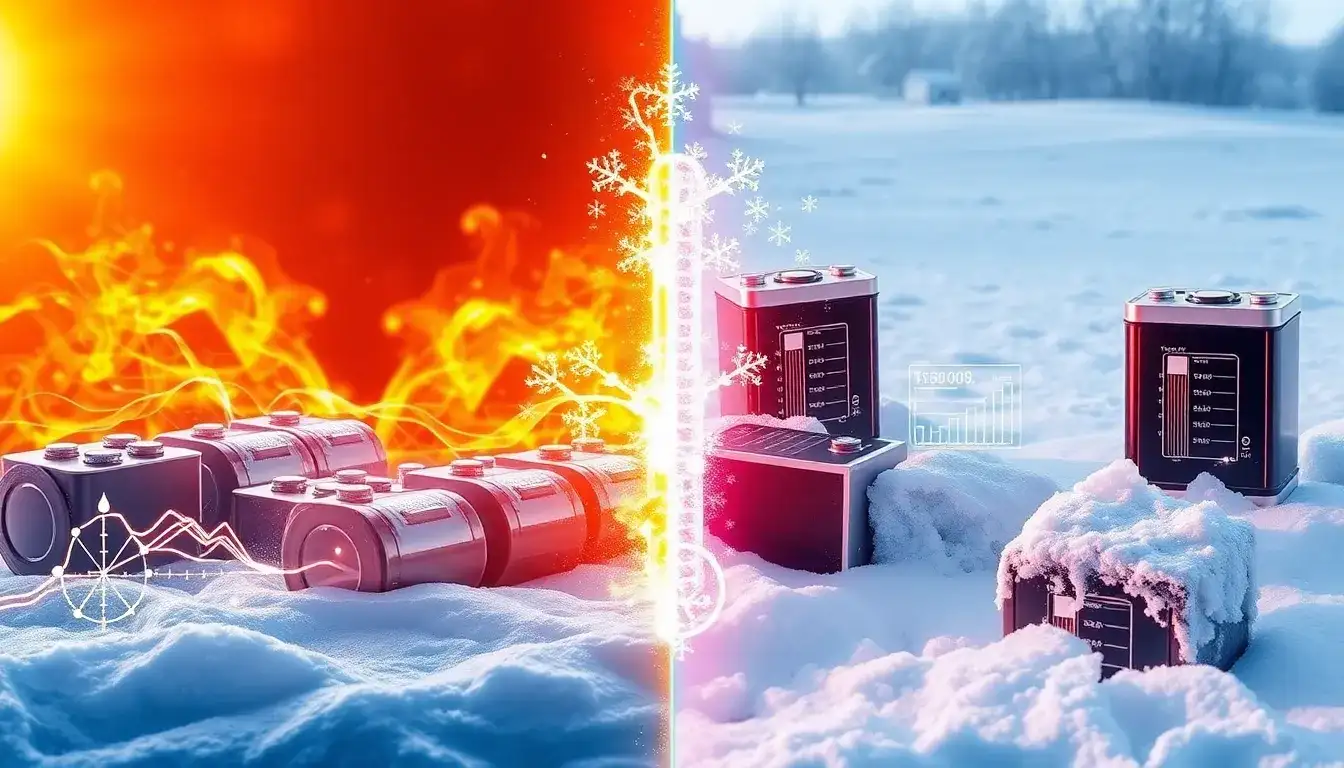
Environmental conditions notably influence the lifespan and performance of lithium-ion batteries through their effects on internal chemical processes and physical integrity.
Temperature Effects
High Temperatures:
Elevated temperatures accelerate chemical reactions inside lithium-ion batteries, which speeds up aging and leads to a shorter overall lifespan. This degradation can result in loss of capacity and increased risk of thermal runaway, a dangerous condition where the battery temperature rises uncontrollably. High-temperature operation can also deteriorate the negative electrode over time, contributing to battery failure.
Low Temperatures:
Cold conditions cause the electrolyte to become more viscous, impeding the movement of lithium ions during charging. This can lead to lithium plating, where metallic lithium deposits form on the anode surface. These deposits may develop dendrites that can puncture the separator, causing short circuits and permanent capacity loss. Lithium plating is more likely below freezing temperatures but varies with battery chemistry. Low temperature also worsens charging performance, increasing constant voltage charging time and reducing efficiency.
Other Environmental and Usage Factors
- Charge and Discharge Currents: Higher currents put extra stress on the battery, accelerating degradation. High discharge rates may cause incomplete lithium ion movement and damage to battery components.
- Mechanical Stress: Strong vibrations or shocks can damage battery terminals, welds, and active materials, reducing lifespan and potentially causing safety risks.
- Storage Conditions: Storing batteries in cool, dry environments at partial charges slows degradation and maintains battery health.
- Battery Management Systems (BMS): Effective BMS help regulate charging and discharging within safe limits, protecting against overcharge, deep discharge, and thermal extremes, thus extending battery life.
Summary Table of Environmental Impacts on Lithium-Ion Batteries
| Environmental Condition | Effect on Battery Lifespan | Mechanism/Details |
|---|---|---|
| High Temperature | Accelerates aging, risk of thermal runaway | Increased chemical reaction rates |
| Low Temperature | Reduced efficiency, lithium plating | Slowed ion movement, metallic lithium deposits |
| Mechanical Shock/Vibration | Physical damage, material degradation | Breakage of terminals, active material shedding |
| Improper Storage | Premature degradation | Exposure to moisture, extreme temps |
| Excessive Charge/Discharge Currents | Faster capacity loss | Rapid electrode reactions, possible component damage |
In conclusion, maintaining lithium-ion batteries within optimal temperature ranges, minimizing mechanical stress, using appropriate charge-discharge rates, and employing reliable battery management systems are critical for maximizing their lifespan and safe operation under varying environmental conditions.
Original article by NenPower, If reposted, please credit the source: https://nenpower.com/blog/how-do-environmental-conditions-affect-the-lifespan-of-lithium-ion-batteries/

