

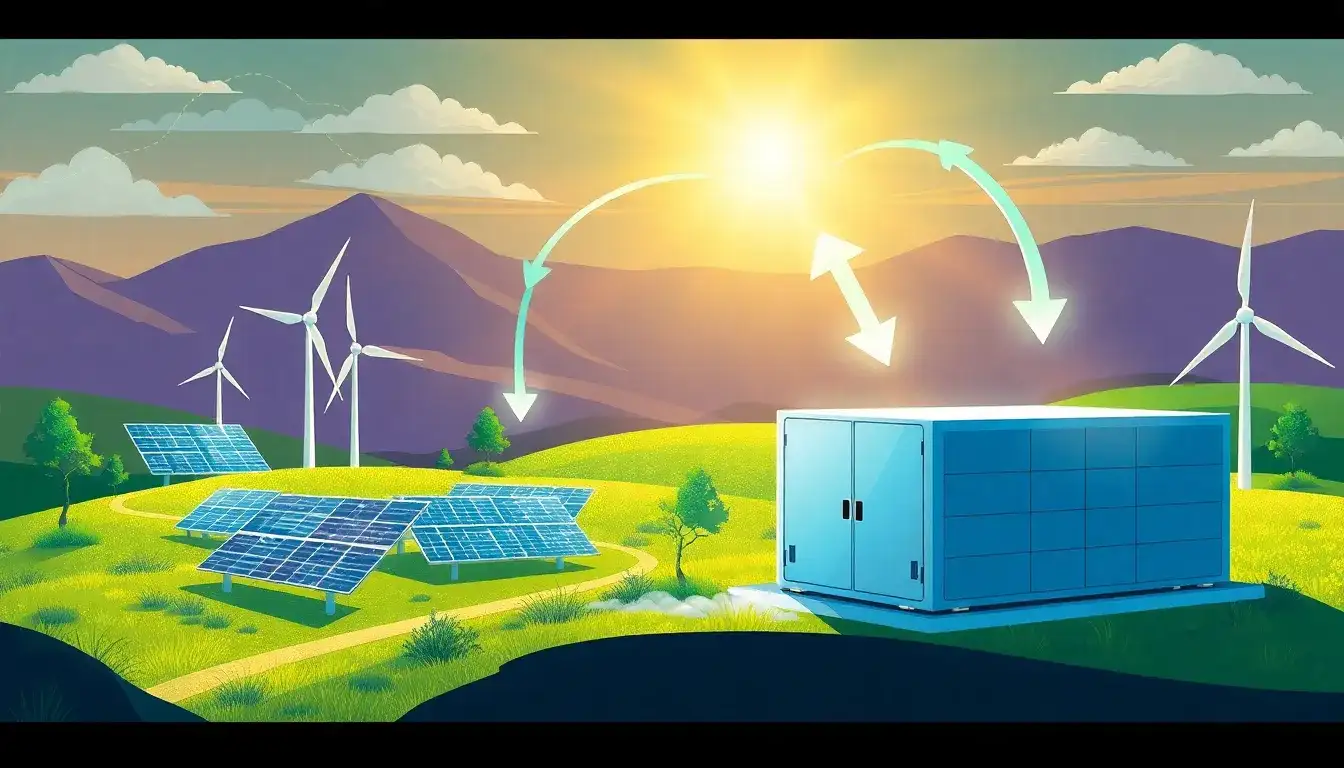
Energy Storage Systems and Their Role in Renewable Integration
Energy storage systems, particularly battery energy storage systems (BESS), play a crucial role in integrating renewable energy sources into the grid. Here’s how they integrate with renewables like solar and wind:
Role of Energy Storage
- Smoothing Intermittency: Renewable energy sources like solar and wind are intermittent because their output varies with solar radiation and wind speed. Energy storage systems help stabilize the grid by smoothing out these fluctuations. They store excess energy generated during periods of high production and release it during periods of low production.
- Grid Stability: Energy storage provides services such as frequency regulation, which is crucial for maintaining grid stability. It quickly injects or withdraws power to balance supply and demand, especially when conventional generators with inherent stability (like thermal or hydro) are less available.
- Peak Shifting: Storage can shift solar energy generated during the day to meet peak electricity demands in the evening, ensuring a steady supply of clean energy even when solar generation is low.
- Economic Viability: By reducing curtailment (intentionally stopping production to avoid grid overload) and increasing the capacity factor of renewable plants, energy storage enhances the economic viability of solar and wind projects.
- Microgrids and Backup Power: Storage systems combined with solar or wind can provide backup power during grid outages, ensuring continuous supply in critical facilities and remote communities.
Types of Energy Storage Used
- Electrochemical Storage (Batteries): The most common form is lithium-ion batteries, which store electrical energy through chemical reactions. They are suitable for short-term energy shifting and grid stability services.
- Mechanical Storage (Pumped Hydro Storage): Uses excess energy to pump water to a higher reservoir, which can then generate electricity when demand is high. This form is less flexible but offers long-duration storage.
- Thermal Energy Storage: Useful in concentrating solar power (CSP) systems, where heat is stored to generate electricity when needed.
Advantages for Renewable Integration
- Flexibility and Reliability: Enhances grid flexibility by providing a buffer against the variability of solar and wind, ensuring a reliable power supply.
- Cost Reduction: Can reduce the need for costly grid upgrades and improve the efficiency of renewable energy use.
- Increased Penetration: Supports the integration of higher shares of renewables into the grid, promoting a cleaner energy mix.
In summary, energy storage is essential for boosting the reliability and efficiency of renewable energy sources in the power grid.
Original article by NenPower, If reposted, please credit the source: https://nenpower.com/blog/how-do-energy-storage-systems-integrate-with-renewable-energy-sources/

