

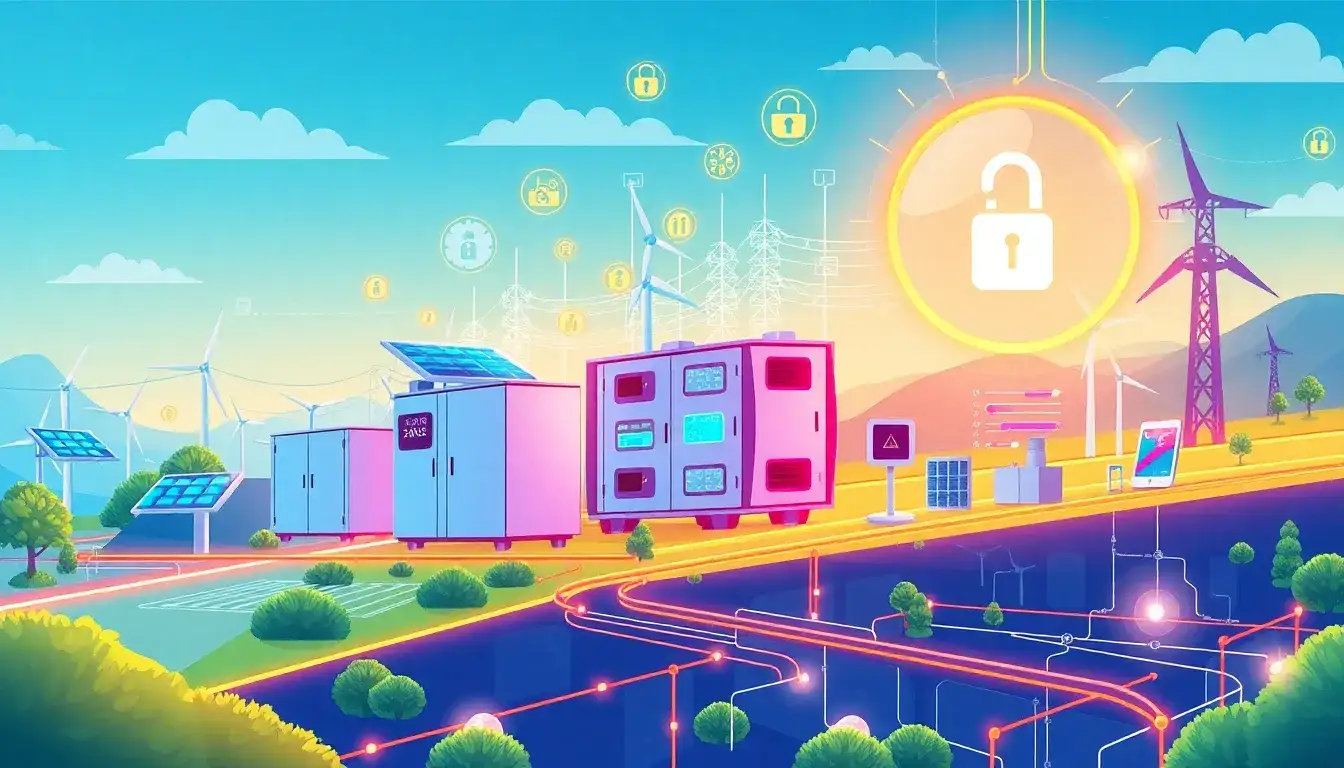
Energy storage systems, particularly Battery Energy Storage Systems (BESS), integrate with other grid technologies to enhance cybersecurity through several key strategies:
Integration with Grid Technologies
- Smart Grid Infrastructure: Energy storage systems are integrated into smart grids, utilizing advanced communication protocols like IEEE 2030.5 and IEEE 1815 to facilitate secure interactions between grid operators, distributed energy resources (DER), and aggregators. This integration allows for real-time monitoring, efficient energy management, and swift response to potential cybersecurity threats.
- Distributed Energy Resources (DER) Management Systems: These systems ensure coordinated control over various grid elements, including energy storage. This coordination enhances the grid’s overall resilience by enabling the detection and mitigation of cyber threats across interconnected systems.
- Grid-Scale Control Systems: Energy storage systems can be integrated with advanced control systems that monitor grid conditions and optimize energy dispatch. These systems help maintain grid stability and respond to potential cybersecurity breaches by adjusting energy storage operations.
Cybersecurity Enhancements
- Cybersecurity Standards and Frameworks: Compliance with standards like NERC CIP ensures that energy storage systems adhere to robust cybersecurity controls, reducing the risk of unauthorized access and data breaches.
- Secure Communication Networks: Implementing secure communication protocols, such as those using Transport Layer Security (TLS), protects data exchanged between energy storage systems and other grid components.
- Incident Response Plans: Developing clear incident response protocols helps utilities quickly address and mitigate cybersecurity breaches, minimizing their impact on grid operations.
- Supply Chain Security: Ensuring that energy storage systems and their components are sourced from trusted suppliers and developed with robust security in mind reduces the risk of inherent vulnerabilities.
- Real-Time Monitoring and Control: Implementing advanced monitoring systems allows for real-time detection of anomalies and swift intervention to prevent potential cyber threats from impacting energy storage operations.
Design Considerations for Enhanced Security
- Secure-by-Design Approach: Energy storage systems should be designed with cybersecurity in mind from the outset, incorporating secure network architectures and remote access controls.
- Data Sovereignty and Localization: Storing critical system data within secure jurisdictions can enhance data protection and reduce risks associated with cross-border data transfers.
- In-House Development and Control: Retaining control over firmware, software, and hardware development minimizes third-party vulnerabilities in energy storage systems.
By integrating with other grid technologies and incorporating these cybersecurity measures, energy storage systems can significantly enhance the overall security and resilience of the modern energy grid.
Original article by NenPower, If reposted, please credit the source: https://nenpower.com/blog/how-do-energy-storage-systems-integrate-with-other-grid-technologies-to-enhance-cybersecurity/

