

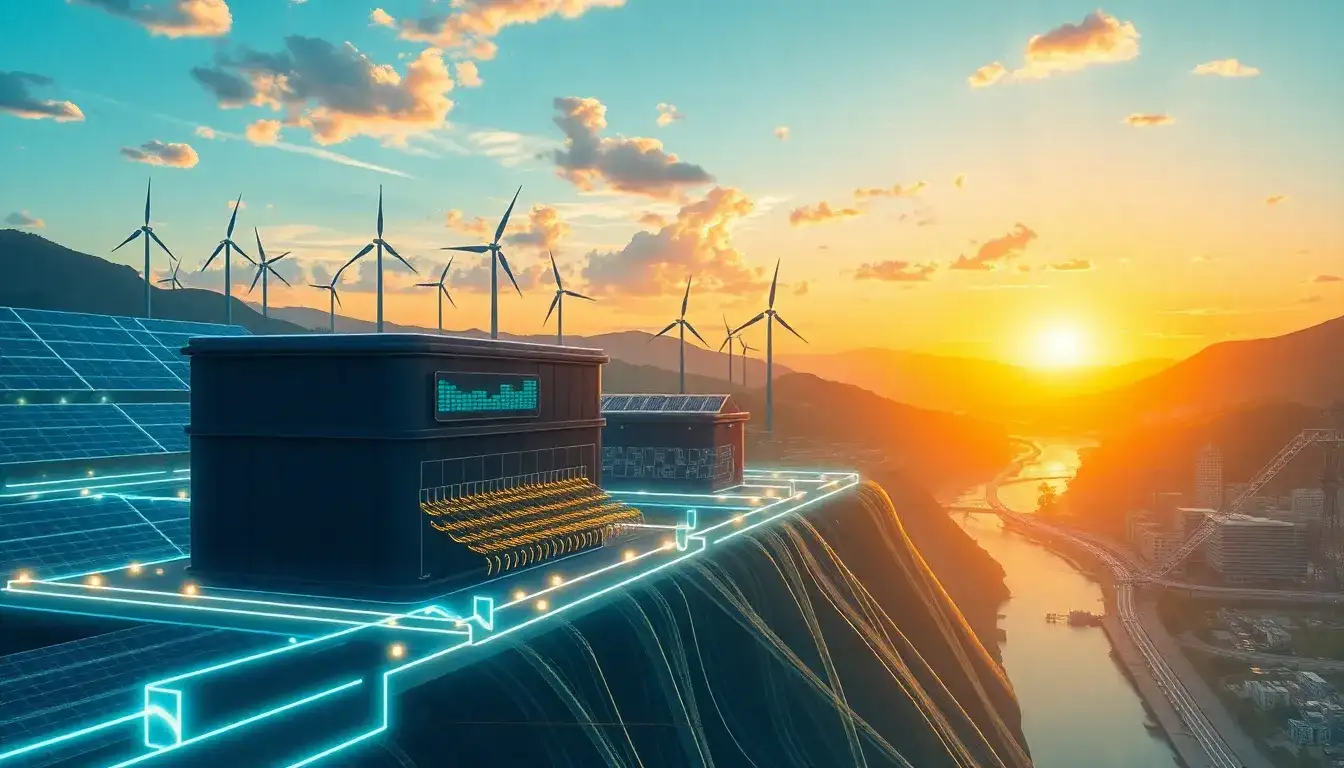
Energy storage systems (ESS) play a crucial role in stabilizing the electrical grid when integrating variable renewable energy sources like wind and solar. Their main contributions include:
- Balancing Supply and Demand: ESS store excess energy generated during periods of high wind or solar production, typically when demand is low, and release that energy back into the grid during periods of high demand or low renewable generation. This helps smooth out fluctuations in power supply and consumption, maintaining grid balance.
- Frequency and Voltage Regulation: Battery energy storage systems (BESS) provide fast, dynamic responses to real-time grid conditions, adjusting power output quickly to regulate grid frequency and voltage. This capability acts as a buffer to absorb sudden surges or drops in generation from intermittent renewables, thereby enhancing grid stability and reliability.
- Peak Load Management: By shifting power usage to off-peak hours and supplying energy during peak demand, ESS reduce strain on the grid infrastructure, helping avoid the need for additional power plants and improving overall grid efficiency.
- Supporting Grid Modernization: Advanced ESS technologies are key enablers of a smarter, more efficient grid. They facilitate higher renewable penetration by mitigating the variability of wind and solar energy, thus promoting greater energy sustainability and resilience.
In summary, energy storage systems stabilize grids with wind and solar by storing surplus renewable energy, providing rapid response to fluctuations, regulating frequency and voltage, and managing peak demand. This ensures consistent power supply despite the inherent variability of renewable sources.
Original article by NenPower, If reposted, please credit the source: https://nenpower.com/blog/how-do-energy-storage-systems-help-stabilize-the-grid-with-wind-and-solar-energy/

