

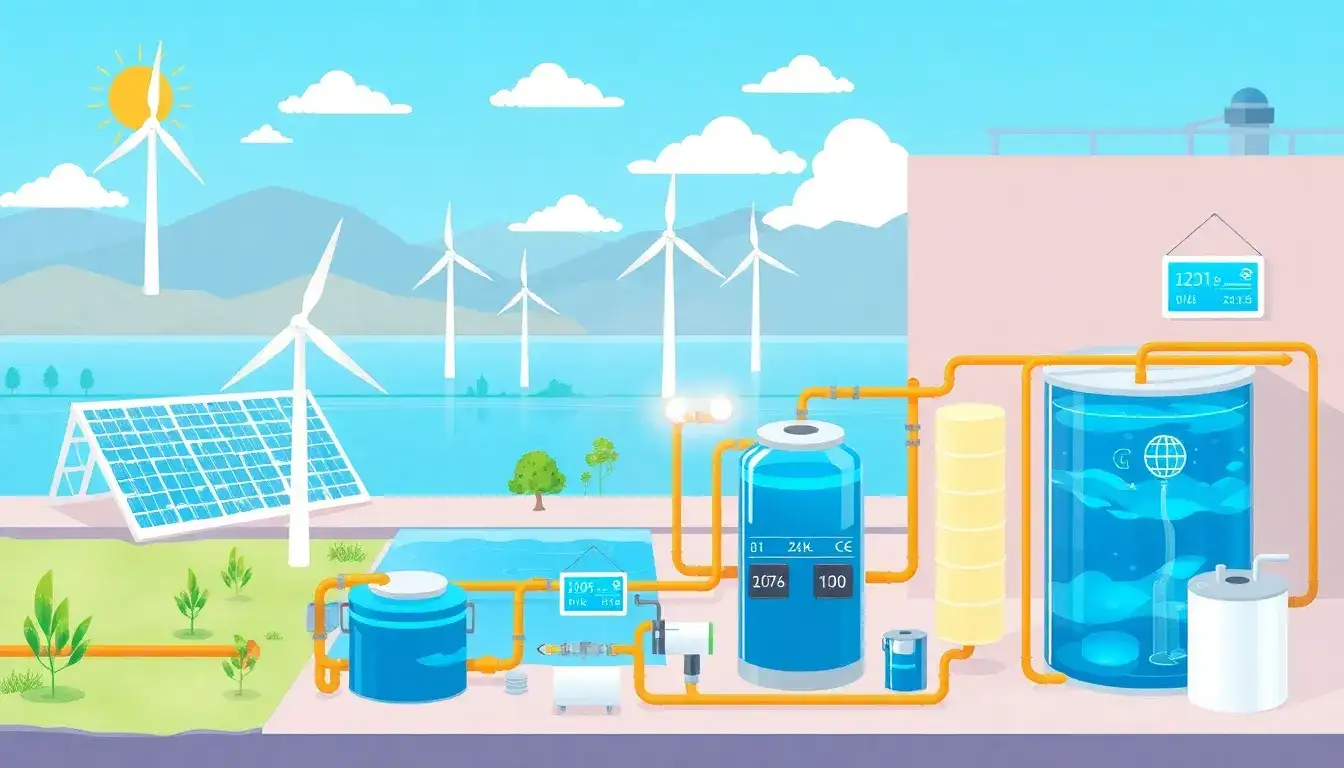
Energy storage systems play a crucial role in integrating renewable energy sources into water treatment facilities by addressing the intermittent nature of these sources. Here are several ways energy storage helps:
Key Roles of Energy Storage in Water Treatment Facilities
- Reliability and Resilience:
- Power Continuity: Renewable energy sources like solar and wind are not always available at constant levels. Energy storage systems ensure that water treatment facilities can operate continuously, even during power outages or periods of low renewable energy generation.
- Microgrid Operations: By integrating energy storage into microgrids, facilities can manage their energy supply more effectively, balancing generation and demand to maintain business continuity and decrease reliance on the utility grid.
- Energy Cost Reduction:
- Peak Demand Management: Storage systems can supply electricity during peak demand periods when the grid is heavily used, which can significantly reduce energy costs for water treatment operations.
- Efficient Use of Renewable Energy: Energy stored during periods of high renewable energy production (e.g., sunny days) can be used later, reducing the need to purchase electricity from the grid at peak rates.
- Sustainability and Carbon Footprint Reduction:
- Increased Renewable Energy Use: By providing a buffer for variable renewable energy output, storage systems enable facilities to rely more heavily on green energy sources, reducing their carbon footprint.
- Decarbonization: Using more renewable energy with storage helps fulfill climate objectives by decreasing the reliance on fossil fuels for energy generation.
- Operational Flexibility:
- Smoothing Energy Fluctuations: Storage technologies can buffer sudden changes in renewable energy supply due to factors like cloud cover or wind speed changes, maintaining a consistent power supply for critical systems.
- Bidirectional Power Flow: Advanced storage systems allow water treatment facilities to sell excess energy back to the grid when not needed locally, enhancing energy efficiency and sustainability.
Storage Technologies Used
- Lithium-Ion Batteries: Commonly used for their high energy density and rapid charging/discharging capabilities, these are ideal for short- to medium-term storage needs.
- Thermal Energy Storage: Though less common in water treatment, thermal systems can store energy by heating materials, which is then converted into electricity when needed.
- Pumped Hydro Storage: A proven method involving pumping water to an elevated reservoir during surplus energy periods for later use.
In summary, energy storage systems are vital for leveraging the benefits of renewable energy in water treatment facilities, ensuring reliable operation, reducing costs, and enhancing sustainability.
Original article by NenPower, If reposted, please credit the source: https://nenpower.com/blog/how-do-energy-storage-systems-help-integrate-renewable-energy-sources-into-water-treatment-facilities/

