

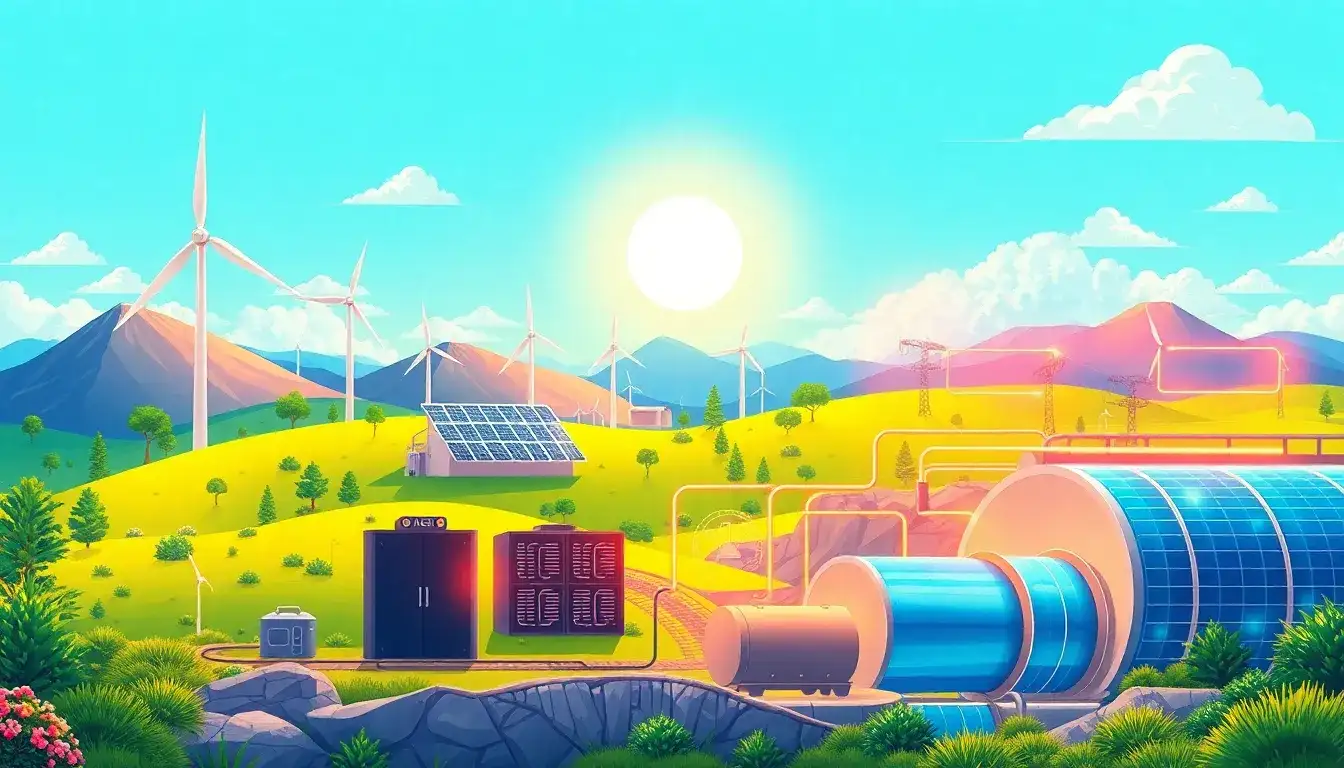
Energy storage systems are crucial for balancing renewable energy sources by addressing their intermittent nature. These systems store excess energy generated during periods of high production, making it available when demand exceeds supply. Here’s how they help balance renewable energy:
Benefits of Energy Storage Systems
- Preventing Energy Waste: Energy storage reduces waste by capturing excess electricity from solar panels or wind turbines when demand is low, and releasing it when needed, ensuring that clean energy isn’t curtailed.
- Grid Stabilization: By providing a buffer against fluctuations in renewable output, energy storage helps maintain grid stability. It can quickly respond to changes in energy supply and demand, ensuring consistent power delivery.
- Reducing Reliance on Fossil Fuels: By storing renewable energy for later use, the reliance on fossil fuels decreases. This shifts the energy mix towards cleaner sources, reducing greenhouse gas emissions.
- Increasing Efficiency: Energy storage systems optimize self-consumption and reduce peak power demand by releasing stored energy during high-demand periods, thus improving overall energy efficiency.
Types of Energy Storage Technologies
- Battery Energy Storage Systems (BESS): BESS, primarily using lithium-ion batteries, are excellent for short-term balancing, providing flexibility over a few seconds to an hour. They are widely used for grid services such as frequency response.
- Pumped Hydroelectric Energy Storage: This technology stores energy by pumping water to elevated reservoirs during low-demand periods and releasing it to generate electricity during high-demand periods.
- Thermal and Phase Transition Energy Storage: These include technologies like thermal sand batteries and pumped heat electrical storage, which offer alternatives to traditional battery systems with benefits such as low maintenance and environmental impact.
Future Perspectives
The growth in renewable energy is driving an increased demand for energy storage. The cost-effectiveness and technological advancements in storage systems, especially in battery technology, are key factors in accelerating this transition. By 2050, nearly half of the electricity on the grid is expected to come from renewable sources, highlighting the critical role energy storage will play in balancing supply and demand.
Original article by NenPower, If reposted, please credit the source: https://nenpower.com/blog/how-do-energy-storage-systems-help-balance-renewable-energy-sources/

