

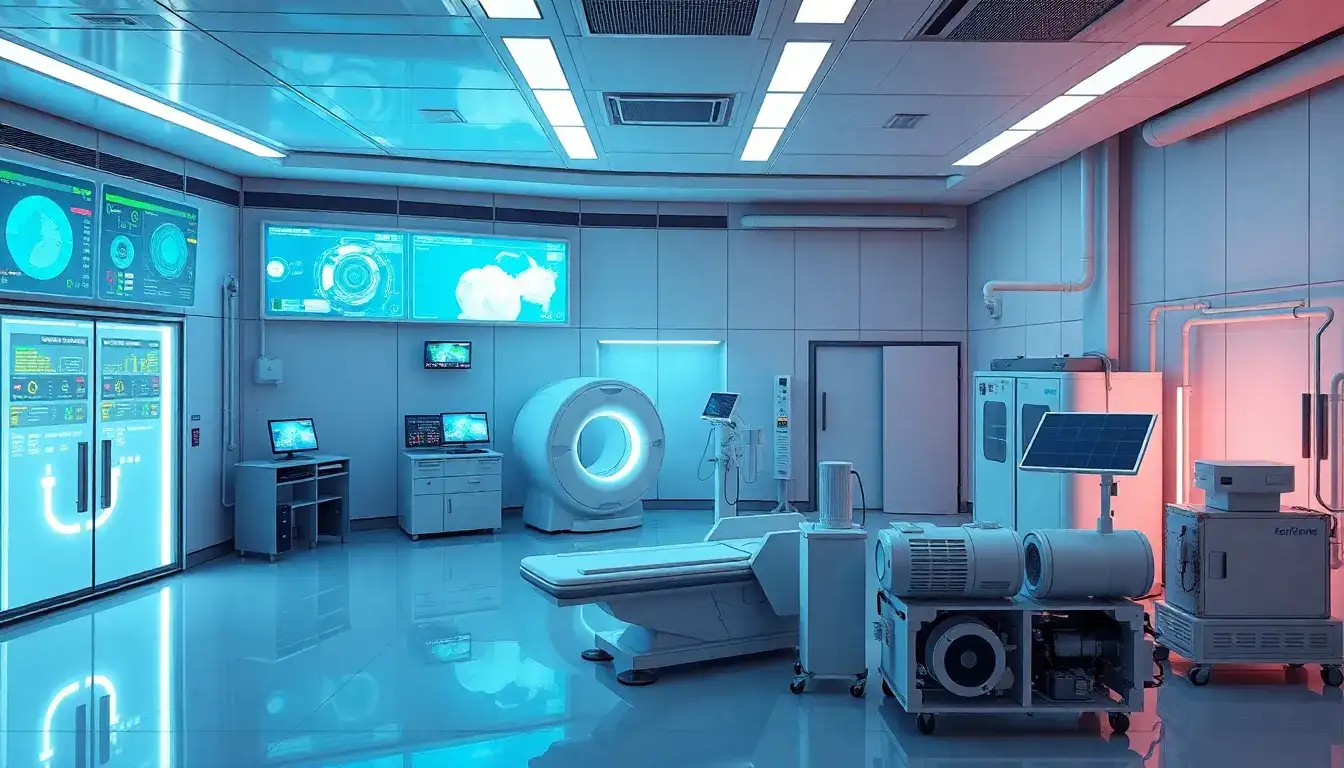
Energy storage systems play a vital role in ensuring reliability and uptime for critical applications such as hospitals by providing several key benefits:
Ensuring Reliability in Hospitals
1. Backup Power Supply
Energy storage systems serve as backup power sources during grid outages. This is particularly crucial in hospitals, where continuous power supply is essential for life-saving equipment and patient care. Systems like battery energy storage systems (BESS) can quickly respond to power failures, ensuring that critical systems remain operational.
2. Reducing Grid Dependence
By storing energy generated during off-peak hours or from on-site renewable sources, energy storage systems can reduce dependence on the grid. This helps maintain power supply even when the grid is down or unstable, ensuring that hospital operations are not interrupted.
3. Enhancing Grid Stability
Energy storage systems can help stabilize the grid by providing frequency regulation and voltage support. This ensures that power quality remains consistent even during periods of high demand or when integrating renewable energy sources, which is beneficial for sensitive hospital equipment.
4. Microgrid Integration
In hospitals, energy storage systems can be integrated into microgrids to create self-sustaining energy systems. These microgrids allow hospitals to operate independently from the main grid during outages, providing a reliable source of power.
5. Renewable Energy Integration
By firming intermittent renewable energy sources (e.g., solar and wind), energy storage systems help integrate more clean energy into the power supply mix. This not only reduces reliance on fossil fuels but also ensures a stable and clean energy supply for critical facilities like hospitals.
6. Improved Performance and Reliability Analysis
Projects like those by EPRI focus on advancing the performance and reliability analysis of energy storage systems. This involves developing data platforms to assess system performance and identify key factors affecting reliability. Such insights help optimize energy storage operations, ensuring consistent and reliable power supply to critical infrastructure.
7. Component Reliability
For battery energy storage systems, reliability analysis highlights the importance of component durability, particularly for power converters and batteries. Understanding failure mechanisms and optimizing component design and operation can significantly enhance system reliability and lifespan.
In summary, energy storage systems enhance reliability and uptime for critical applications like hospitals by providing redundant power supply, improving grid stability, integrating renewable sources, and optimizing performance through advanced analytics and component reliability analysis.
Original article by NenPower, If reposted, please credit the source: https://nenpower.com/blog/how-do-energy-storage-systems-ensure-reliability-and-uptime-for-critical-applications-like-hospitals/

