

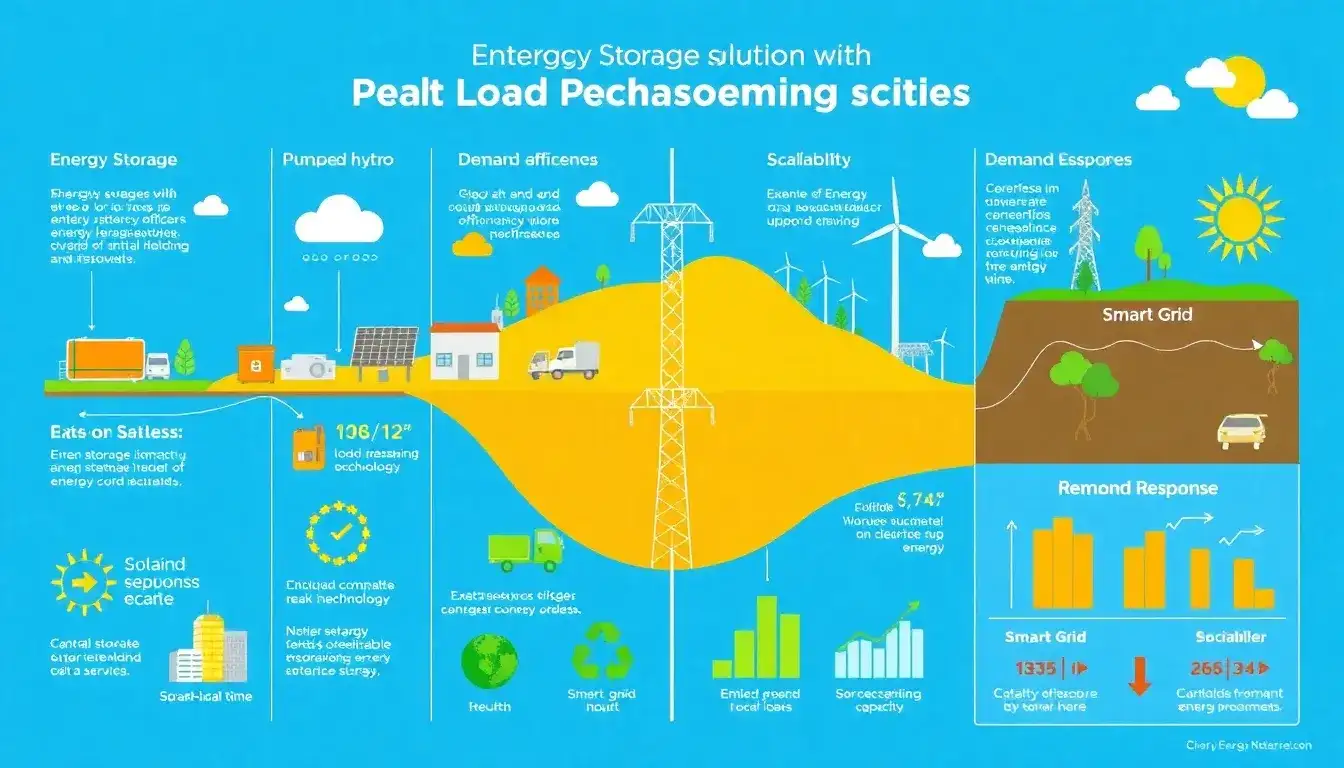
Overview of Peak Load Management Strategies
1. Energy Storage Solutions
- How it Works: Energy storage solutions, such as battery systems, store energy during off-peak hours when electricity prices are lower and release it during peak hours to reduce grid reliance and costs.
- Benefits: Reduces peak demand charges, enhances energy efficiency, and allows for increased use of renewable energy sources.
- Challenges: Initial investment costs can be high, although technological advancements are making systems more cost-effective.
2. Flexible Operations Adjustments
- How it Works: Businesses adjust non-critical operations to reduce energy consumption during peak hours without interrupting core activities.
- Benefits: Easy to implement, can be cost-effective, and improves operational efficiency.
- Challenges: May require changes in operational schedules or practices.
3. Energy-Efficient Equipment
- How it Works: Upgrading to more efficient technologies, such as LED lighting or HVAC systems, reduces overall energy consumption.
- Benefits: Lower energy baseline, reduced peak demand, and long-term cost savings.
- Challenges: Requires upfront investment for equipment upgrades.
4. Demand Response Programs
- How it Works: Businesses agree to reduce their energy usage during peak times in exchange for financial incentives.
- Benefits: Reduces grid stress and provides financial rewards.
- Challenges: Requires coordination with utilities and may impact operations if not managed carefully.
5. Predictive Load Management
- How it Works: Uses predictive analytics to anticipate peak demand periods and adjust energy usage accordingly.
- Benefits: Allows for proactive adjustments to avoid peak charges.
- Challenges: Requires advanced data analytics capabilities.
Comparison Summary
| Strategy | Key Benefits | Challenges |
|---|---|---|
| Energy Storage Solutions | Reduces peak demand, enhances renewable use, cost-effective in the long term | High initial investment, technological dependencies |
| Flexible Operations Adjustments | Easy implementation, operational efficiency gains | Requires operational flexibility, may not be feasible for all businesses |
| Energy-Efficient Equipment | Reduced energy baseline, cost-effective over time | Initial investment for new equipment |
| Demand Response Programs | Financial incentives, grid stability improvement | Coordination challenges, potential operational impact |
| Predictive Load Management | Proactive adjustments, enhanced efficiency | Requires advanced analytics capabilities |
In conclusion, energy storage solutions offer a robust method for managing peak loads by leveraging stored energy to reduce grid reliance and costs during high demand periods. While other strategies like flexible operations adjustments, energy-efficient equipment, demand response programs, and predictive load management provide valuable benefits, they each come with their own set of challenges and requirements. Ultimately, the choice of strategy depends on the specific needs and capabilities of the organization.
Original article by NenPower, If reposted, please credit the source: https://nenpower.com/blog/how-do-energy-storage-solutions-compare-to-other-peak-load-management-strategies/

