

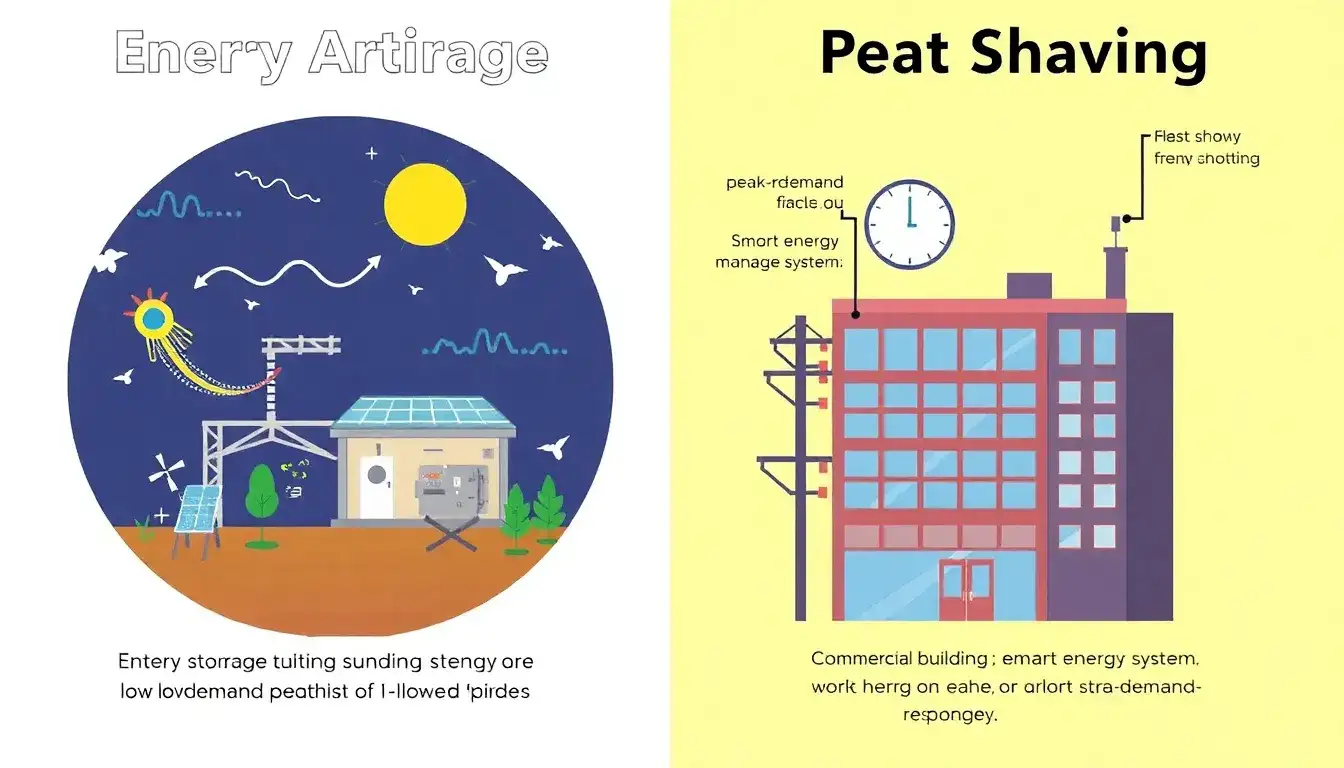
Energy Arbitrage vs. Peak Shaving: Implementation Differences
Energy arbitrage and peak shaving are two distinct strategies used in the energy sector to manage and optimize energy use. While they both involve energy storage, they differ in their primary objectives and implementation approaches.
Energy Arbitrage
Objective: The primary goal of energy arbitrage is to exploit price differences between various times or locations. It involves buying energy when prices are low and selling it when prices are high, often to maximize financial returns.
Implementation:
- Monitoring Price Discrepancies: Identify periods of low and high energy prices, typically on an hourly, daily, or seasonal basis.
- Deploying Storage Assets: Utilize battery storage systems (or other forms like pumped hydro) to purchase energy at low prices and store it.
- Optimizing Trading Strategies: Use algorithms to streamline energy management and maximize profits by selling stored energy during peak price periods.
Peak Shaving
Objective: Peak shaving focuses on reducing electricity consumption during peak demand periods, often to minimize demand charges imposed by utilities.
Implementation:
- Identifying Peak Demand Periods: Determine times of high energy demand, such as late afternoons or during extreme weather conditions.
- Implementing Demand Response Strategies: Temporarily reduce non-essential energy use or utilize onsite energy storage systems to meet peak demands internally, thereby avoiding reliance on the grid during peak hours.
- Maintaining Grid Stability: Contributes to grid stability by ensuring consistent energy supply and reducing strain on the grid during peak times.
Key Differences
- Primary Goal: Energy arbitrage aims to profit from price differences, while peak shaving targets reducing peak demand and associated costs.
- Focus: Energy arbitrage emphasizes financial optimization, whereas peak shaving focuses on managing energy consumption to maintain grid reliability and reduce costs.
- Usage of Energy Storage: Both strategies rely on energy storage systems, but peak shaving tends to prioritize reducing demand charges, whereas energy arbitrage aims to capitalize on price differentials.
Overall, while both strategies can be used together to optimize energy use and costs, they address different aspects of energy management within the sector.
Original article by NenPower, If reposted, please credit the source: https://nenpower.com/blog/how-do-energy-arbitrage-and-peak-shaving-strategies-differ-in-their-implementation/

