

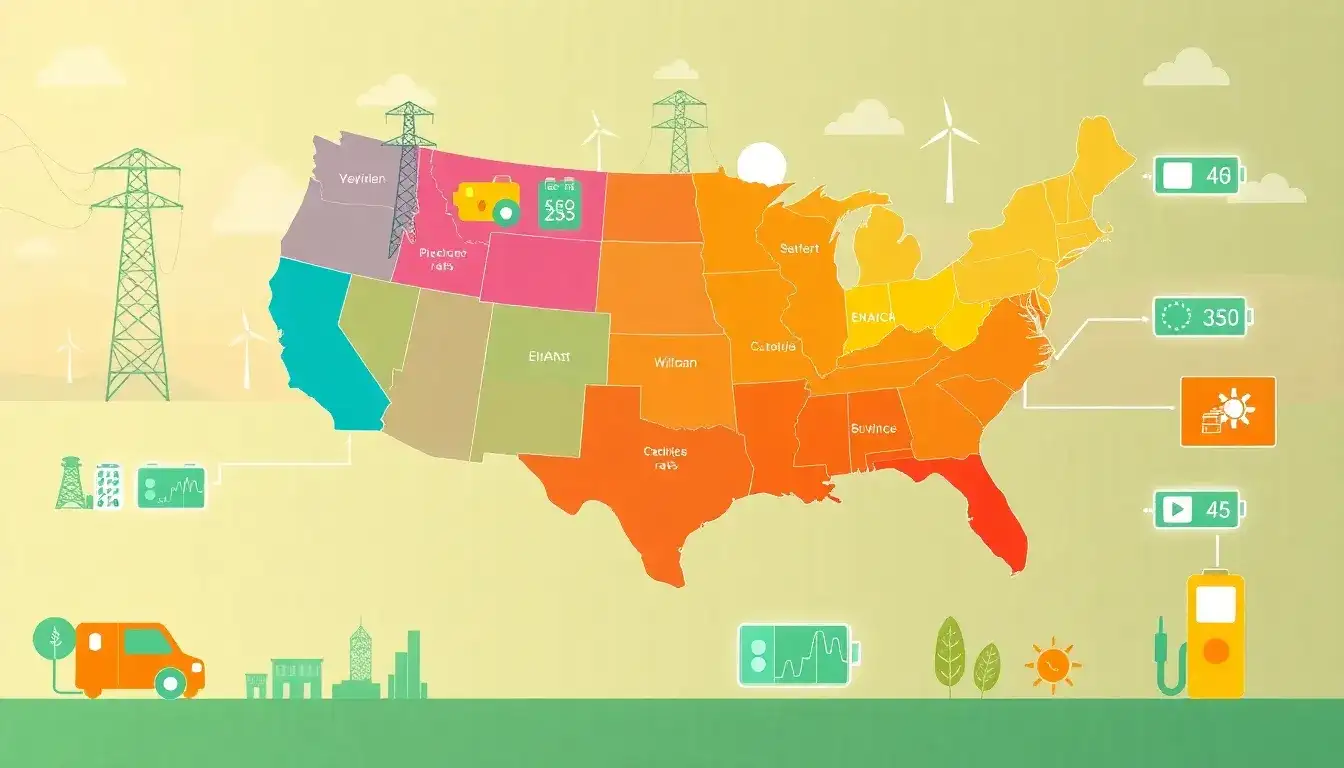
Electricity rates vary significantly by location in the United States, ranging from as low as about 7.18 cents per kWh to as high as 40.51 cents per kWh as of April 2025. This variation is influenced by factors such as local energy sources, infrastructure costs, regulations, and regional demand.
Variation in Electricity Rates by Location
- Highest Rates: Hawaii has the highest average residential electricity rate at 40.51 cents per kWh, although this represents a decrease of 8.5% compared to the previous year. Other states with high rates include Rhode Island (~31.66 cents/kWh), California (~30.22 cents/kWh), Massachusetts (~30.08 cents/kWh), and Connecticut (~30.06 cents/kWh).
- Moderate to Low Rates: Other states have much lower average rates, some falling below 10 cents per kWh. The national average is approximately 15.95 cents per kWh.
- Regional Examples: In California, residential rates are around 30.22 cents per kWh, with utilities such as Southern California Edison offering various residential rate plans reflecting local demand and cost structures.
Impact on Charging Costs
Electricity rates directly affect the cost of charging electric vehicles (EVs) and using electricity for other applications. For example:
- Higher electricity rates mean higher costs for charging EVs. In Hawaii, with rates around 40.51 cents/kWh, charging an EV will be more expensive compared to states with lower rates like Texas or Washington. A typical EV requires roughly 25-30 kWh for a full charge, so costs can vary widely.
- Residential rate plans also influence costs. Some utilities offer time-of-use (TOU) rates where electricity is cheaper during off-peak hours, reducing charging costs for users who can charge EVs overnight or during low-demand periods.
- Location-specific rates matter for budgeting and planning. EV owners in states like California, Massachusetts, or Rhode Island with higher rates will face increased operating costs compared to those in states with lower rates. This can influence adoption and usage patterns.
Summary
| Factor | Description | Example Rates (cents/kWh) |
|---|---|---|
| Highest average rates | Hawaii, Rhode Island, California, Massachusetts | 30 – 40.5 |
| National average | Approximate average across all states | 15.95 |
| Lowest rates | States with abundant low-cost energy sources | ~7.18 or lower |
| Impact on EV charging | Directly proportional: higher rates mean higher charging costs | Charging cost = rate × kWh consumed |
Therefore, electricity rates vary widely by location across the U.S., impacting charging costs for electric vehicles and electricity bills in general. Regions with higher rates will face greater expenses for energy consumption, which can affect consumer behavior and the economics of electric vehicle use. Utilities may offer different rate plans to mitigate costs, especially for residential customers.
This geographic disparity in electricity costs is a crucial consideration for consumers and policymakers focusing on energy usage and electrification strategies.
Original article by NenPower, If reposted, please credit the source: https://nenpower.com/blog/how-do-electricity-rates-vary-by-location-and-impact-charging-costs/

