

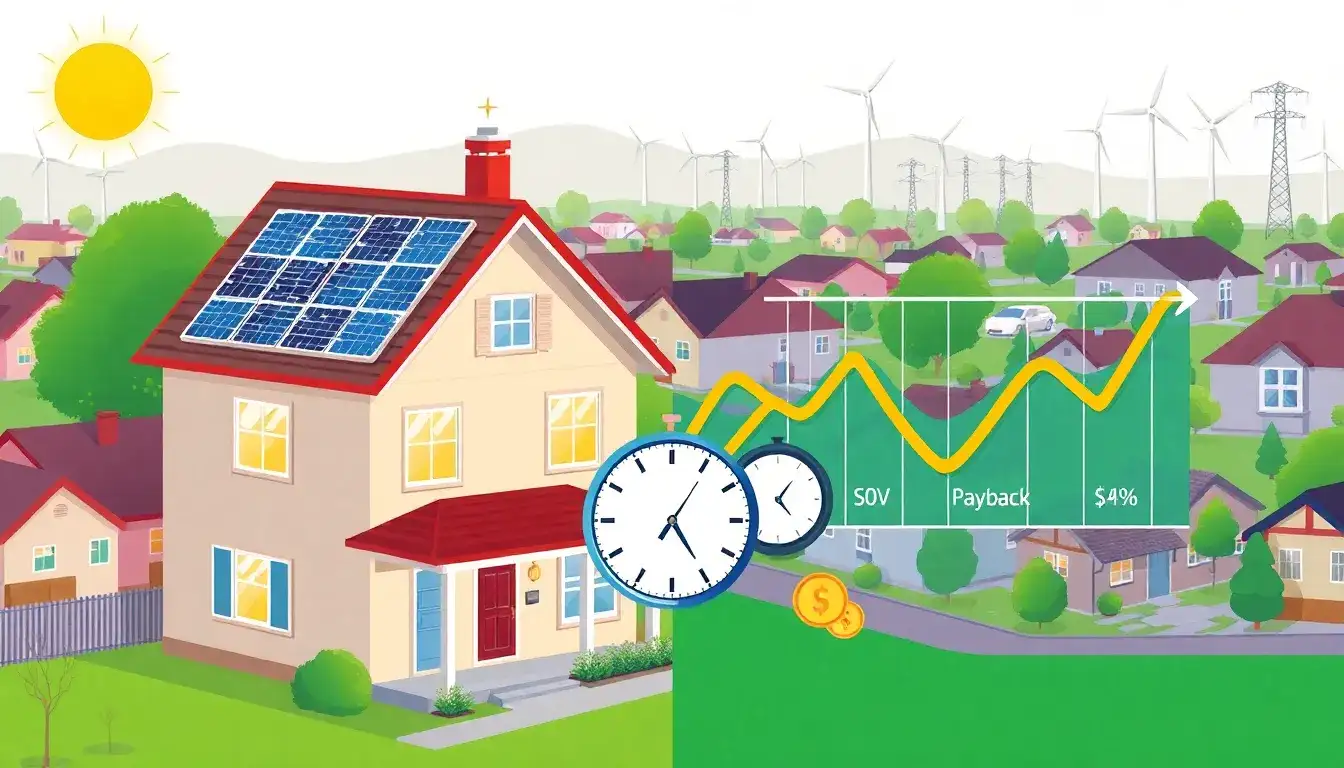
The payback period for solar or renewable energy systems, such as solar panels, is significantly influenced by the electricity rates in your area. Here’s how electricity rates impact the payback period:
How Electricity Rates Impact Payback Period
- Higher Electricity Rates Shorten Payback Period: When electricity rates are high, switching to solar energy saves more money on utility bills. This results in a shorter payback period because the savings from using solar energy are greater compared to the cost of grid electricity.
- Lower Electricity Rates Lengthen Payback Period: Conversely, if electricity rates are low, the savings from switching to solar are smaller, leading to a longer payback period. In regions with cheap electricity, the financial benefits of solar may be less pronounced.
- Variability in Electricity Prices: Fluctuations in electricity prices can also affect payback periods. If electricity prices rise over time, it enhances the financial advantage of solar energy systems, potentially shortening the payback period.
Factors Influencing Payback Period
In addition to electricity rates, other factors that influence the payback period include:
- Upfront Costs: The initial cost of the solar system and installation.
- Incentives and Credits: Federal and state tax credits, rebates, and renewable energy certificates.
- System Efficiency: The efficiency of solar panels and their performance over time.
- Location and Sunlight: Areas with more sunlight can generate more energy.
- Net Metering Policies: The ability to sell excess energy to the grid affects savings.
Overall, high electricity rates are a key factor that can reduce the payback period for solar energy investments by maximizing savings on utility bills.
Original article by NenPower, If reposted, please credit the source: https://nenpower.com/blog/how-do-electricity-rates-in-your-area-affect-the-payback-period/

