

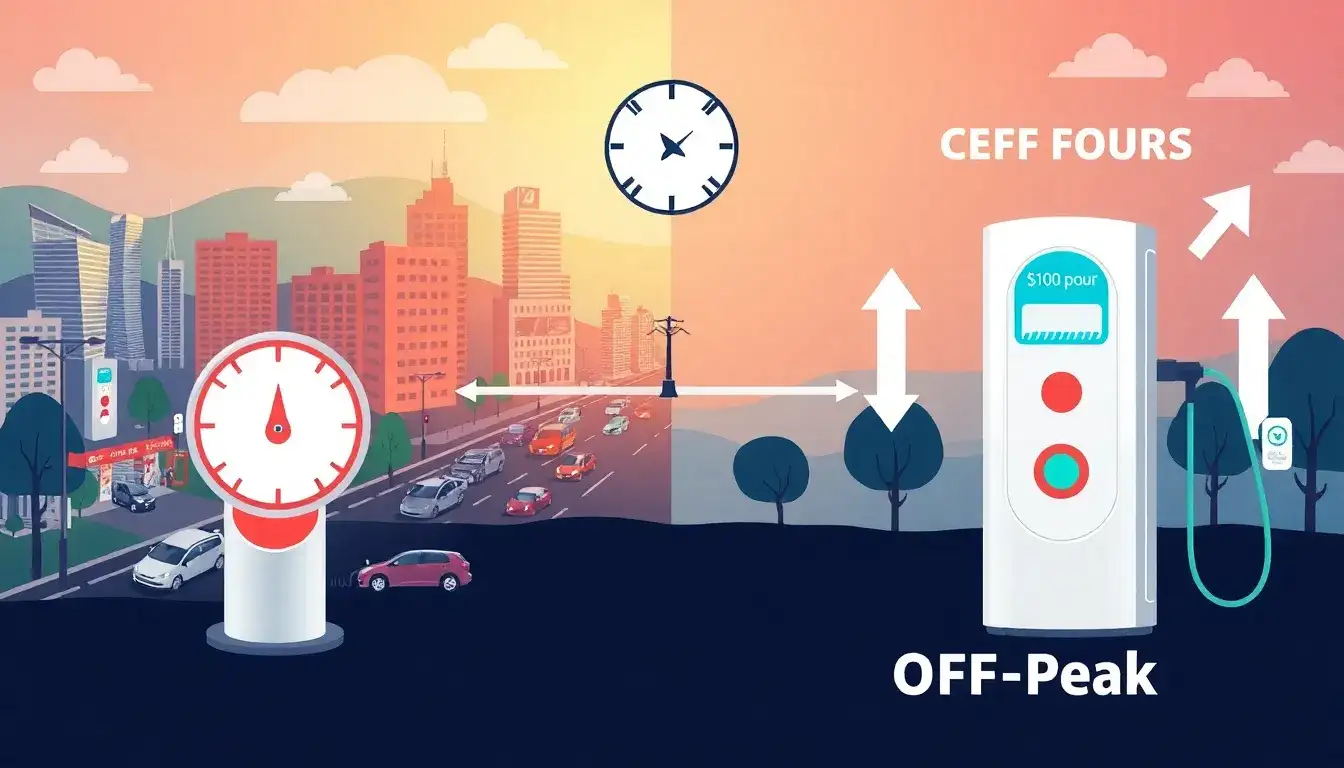
Electricity rates during peak hours significantly increase the cost of EV charging compared to off-peak periods, as utilities implement time-of-use (TOU) pricing to manage grid demand. Here’s how this impacts costs:
1. Rate Structure Differences
- Peak hours (e.g., 4–9 p.m. in PG&E’s EV2-A plan, 4–9 p.m. in many TOU plans): Electricity costs are 2–3× higher than off-peak rates, directly raising charging expenses.
- Off-peak hours (e.g., midnight–3 p.m. for EV2-A, 11 p.m.–7 a.m. for National Grid): Lower rates make charging comparable to ~$2.90 per gallon of gasoline (PG&E estimate).
2. Cost-Saving Strategies
- Automated charging: Most EVs and chargers allow scheduling to avoid peak times, ensuring charging occurs during cheaper off-peak windows.
- Renewable integration: Pairing TOU rates with solar panels or batteries enables using stored or self-generated energy during high-cost peak periods.
- Utility-specific plans: Programs like National Grid’s SC-1 VTOU offer one-time credits if TOU pricing underperforms standard rates, reducing financial risk.
3. Grid and Consumer Impact
- Grid strain reduction: TOU rates discourage high-demand activities during peak hours, improving distribution efficiency.
- Consumer savings: Off-peak charging can cut costs substantially, especially when combined with smart home energy management.
For EV owners, adhering to off-peak charging via TOU plans is critical to minimizing expenses.
Original article by NenPower, If reposted, please credit the source: https://nenpower.com/blog/how-do-electricity-rates-during-peak-hours-impact-the-overall-cost-of-ev-charging/

