

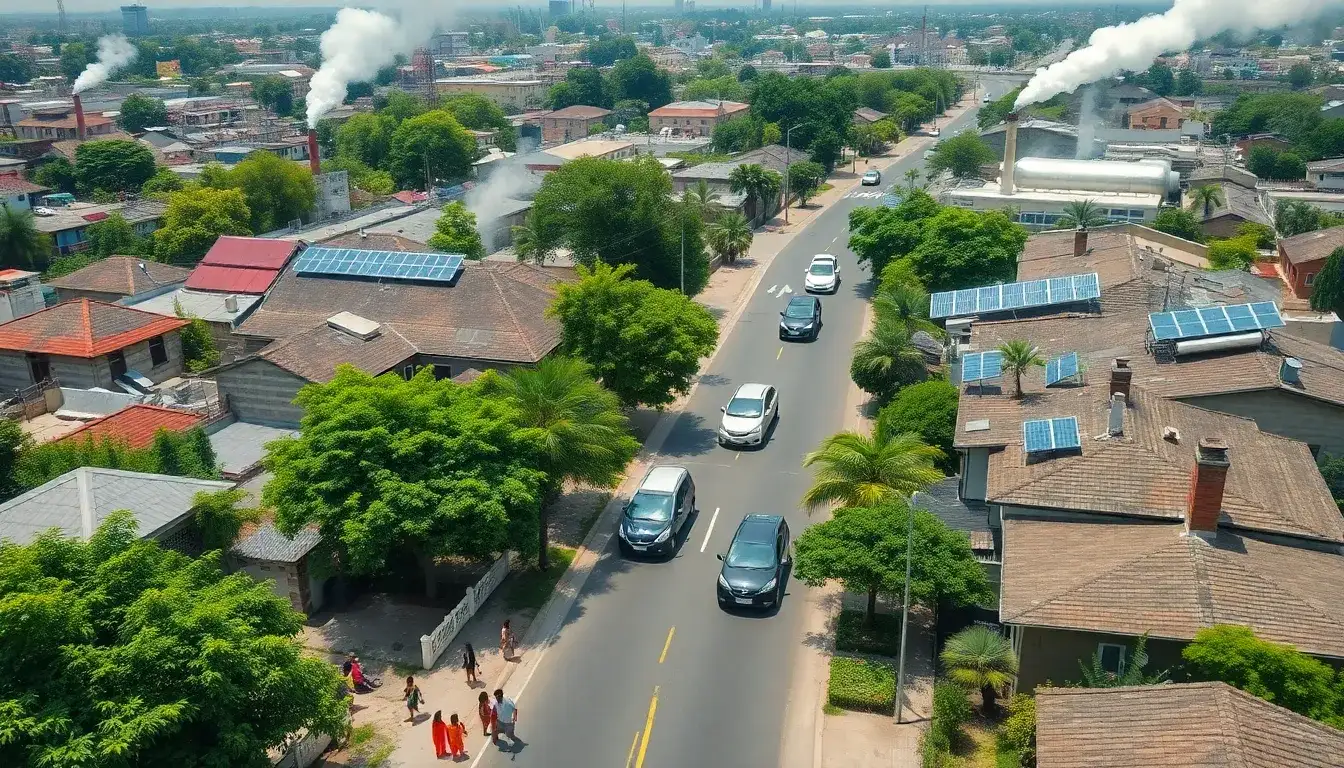
Electric vehicles (EVs) impact air pollution in disadvantaged communities primarily by reducing local emissions, but the benefits and challenges are nuanced.
Positive impacts of EVs on air pollution:
- EVs produce zero tailpipe emissions, unlike traditional gasoline and diesel vehicles, which directly decreases local air pollution such as nitrogen oxides (NOx) and particulate matter in the areas where they are driven.
- Even when accounting for emissions from electricity generation (including coal-powered plants), studies have shown that transitioning to EVs still significantly improves air quality, as the reductions from tailpipe pollution outweigh emissions from power plants.
- Research has found that widespread adoption of EVs leads to measurable reductions in air pollution and associated health benefits.
Impacts specifically in disadvantaged communities:
- Disadvantaged and low-income neighborhoods often experience higher pollution levels due to the volume of traffic and proximity to heavily trafficked corridors dominated by gasoline-powered vehicles.
- Although EVs are more commonly owned in wealthier neighborhoods, the air quality improvements from EVs extend to all communities, including disadvantaged ones.
- Studies estimate that pollution reductions in disadvantaged communities due to EV adoption are proportionally greater (around 40% more) than in other areas because these communities initially face higher pollution burdens.
- Despite these relative gains, disadvantaged communities still suffer from disproportionately high pollution levels because the main pollution sources—traffic corridors with many gas-powered vehicles—remain concentrated in these areas.
- Experts recommend policies that increase EV adoption specifically among low-income households through financial incentives, which could further reduce pollution disparities.
In summary, electric vehicles reduce local tailpipe emissions and improve air quality across communities, including disadvantaged ones. However, because these communities often have more traffic from conventional vehicles nearby, they still endure higher pollution levels. Increasing EV access and adoption in disadvantaged areas is critical to maximize pollution reductions and health benefits there.
Original article by NenPower, If reposted, please credit the source: https://nenpower.com/blog/how-do-electric-vehicles-impact-air-pollution-in-disadvantaged-communities/

