

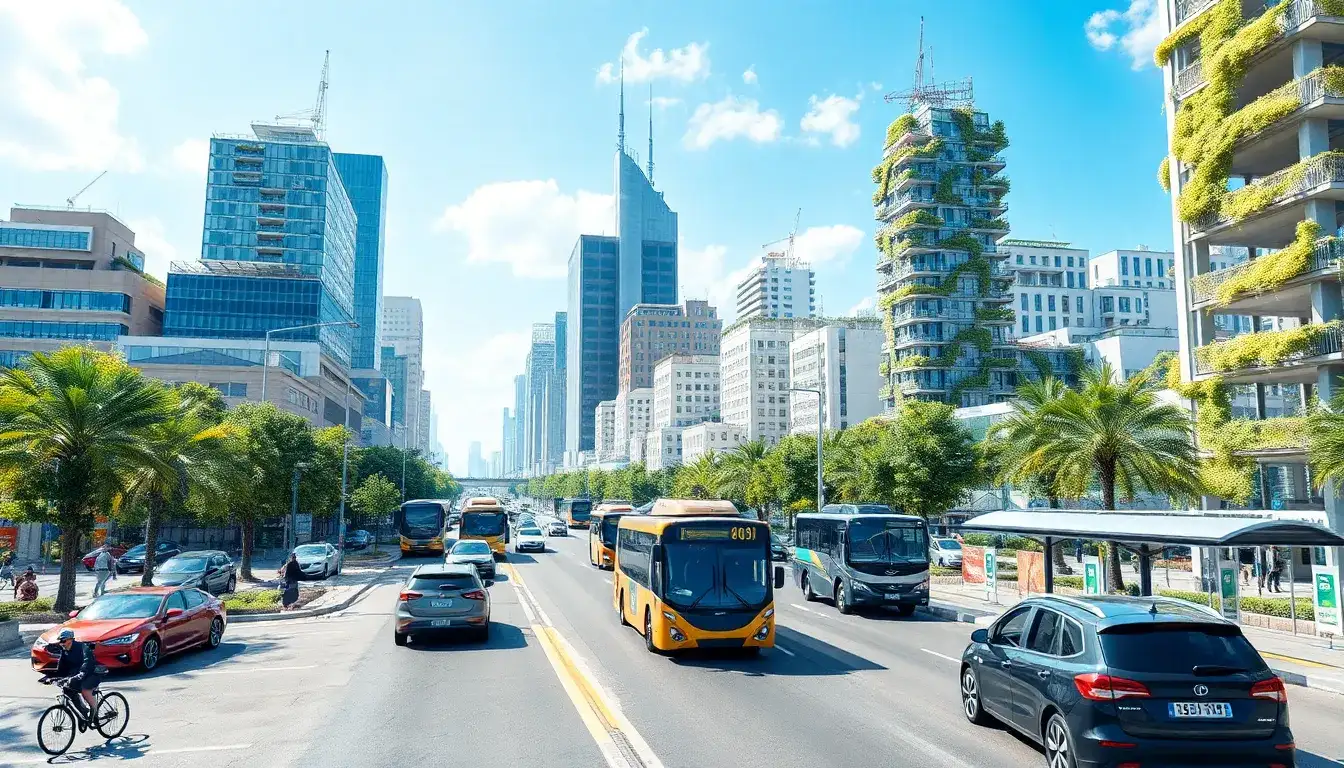
Electric vehicles (EVs) contribute to reducing air pollution in urban areas primarily by eliminating tailpipe emissions, which are a major source of urban air pollutants such as nitrogen oxides (NOx), particulate matter (PM2.5), and volatile organic compounds (VOCs). Since EVs run on electricity instead of gasoline or diesel, they do not emit exhaust pollutants during operation, leading to cleaner air in cities where vehicle traffic density is high.
Key ways EVs reduce urban air pollution include:
- Elimination of tailpipe emissions: EVs produce zero direct exhaust emissions, reducing harmful pollutants that contribute to smog, respiratory problems, and cardiovascular diseases in urban populations.
- Reduction of particulate matter (PM2.5): Studies show that despite EVs often being heavier, switching to electric drivetrains results in overall reduced PM2.5 emissions on urban roads, due both to the lack of combustion emissions and advances in brake and tire wear technologies.
- Improved air quality and public health: Research projects substantial health benefits from widespread EV adoption, including fewer premature deaths attributable to air pollution. For example, an accelerated EV transition in the US could prevent about 150,000 premature deaths by 2050, with even greater benefits if combined with cleaner electricity generation.
- Equity in pollution reduction: While EV ownership tends to be higher in wealthier neighborhoods, benefits of cleaner air from EVs extend across communities. One UCLA study found disadvantaged communities experience a larger proportional reduction in pollution from EV travel, although they still face higher overall pollution due to traffic patterns.
- Case studies on urban impacts: Cities like London have demonstrated that transitioning to EVs can lower air pollution-related mortality by up to 30%, highlighting the potential for significant public health improvements in densely populated areas.
Overall, EVs contribute to cleaner urban air by removing emissions at the source—tailpipe combustion—thereby lowering concentrations of smog-forming and health-harming pollutants. The degree of improvement depends on the extent of EV adoption and the cleanliness of the electricity grid powering them, with greater benefits seen when combined with renewable energy sources.
Original article by NenPower, If reposted, please credit the source: https://nenpower.com/blog/how-do-electric-vehicles-contribute-to-reducing-air-pollution-in-urban-areas/

