

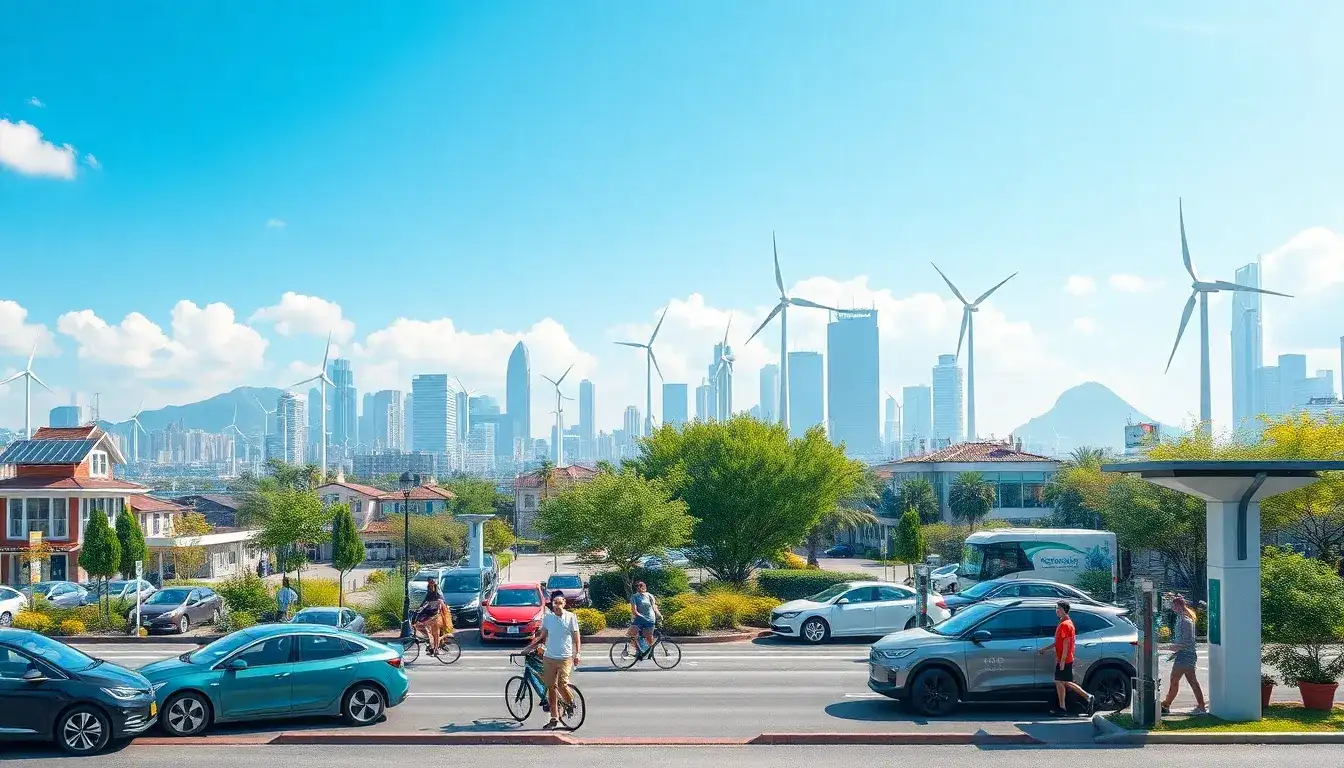
Electric vehicles (EVs) mitigate climate change in polluted communities through multiple pathways:
1. Lower Greenhouse Gas Emissions
EVs produce far fewer emissions over their lifetime compared to gasoline vehicles, even when accounting for battery production and electricity generation. In the U.S., EVs generate >50% less global warming pollution than gasoline equivalents, with “upfront” emissions from manufacturing offset within 6–16 months of driving. This reduction directly lowers the community-level carbon footprint contributing to climate change.
2. Reduced Local Air Pollution
EVs eliminate tailpipe emissions of nitrogen oxides (NOx), particulate matter (PM2.5), and volatile organic compounds (VOCs). These pollutants disproportionately harm low-income and minority neighborhoods near highways or industrial zones. In the U.S., a 25% EV adoption scenario could prevent ~437 annual deaths from improved air quality.
3. Synergy with Cleaner Electricity Grids
As grids incorporate more renewables, EV emissions drop further. For example, Minnesota’s Clean Cars policies pair EV adoption with renewable energy growth, maximizing climate and health benefits. In regions with low-carbon grids (e.g., hydropower-dominant areas), EVs achieve ~24% lower global warming potential than diesel vehicles.
4. Mitigating Urban Heat Islands
EVs emit less waste heat than combustion engines. A Beijing study found widespread EV adoption could reduce summer urban heat island intensity by ~0.94°C, cutting energy use for cooling and associated CO2 emissions. This effect is critical in polluted, densely populated areas where heat exacerbates air quality issues.
Key Consideration: Grid Decarbonization
While EVs intrinsically reduce local pollution, their full climate benefits depend on transitioning electricity generation away from fossil fuels. Policies accelerating renewable energy adoption alongside EV incentives—as seen in Minnesota—are essential for maximizing impact.
By addressing both climate change and localized air quality, EVs serve as a dual-purpose tool for environmental justice in polluted communities.
Original article by NenPower, If reposted, please credit the source: https://nenpower.com/blog/how-do-electric-vehicles-contribute-to-climate-change-mitigation-in-polluted-communities/

