

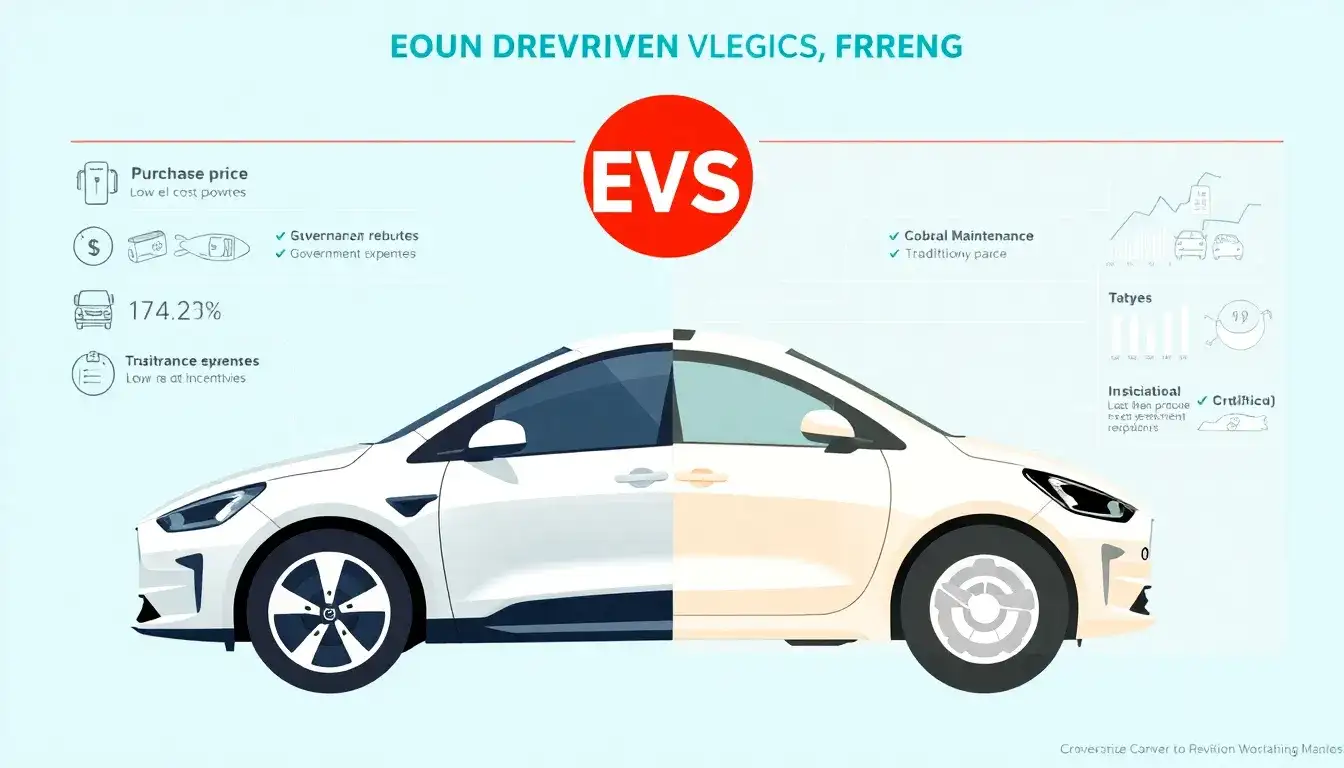
When comparing electric vehicles (EVs) to traditional gas-powered cars in terms of overall cost of ownership, several key factors come into play:
Upfront Costs
- Purchase Price: Electric vehicles generally have a higher upfront purchase price compared to traditional gas-powered cars. On average, EVs cost more than their internal combustion engine counterparts, with some sources indicating an average MSRP of around $53,048 for electric models versus $35,722 for gas models. However, incentives such as federal tax credits can significantly reduce this gap.
Operating Costs
- Energy/Fuel Costs: EVs are typically cheaper to operate due to lower energy costs. Charging an EV at home costs between $6 and $18 for a full charge, which often covers over 200 miles, compared to around $30 for 200 miles of gasoline. This results in savings over time.
- Maintenance Costs: Electric vehicles tend to require less maintenance than gas cars. They have fewer moving parts, which means fewer components to repair or replace. As a result, EVs can save owners approximately $5,000 to $5,400 over 15 years compared to the $10,800 for gas vehicles.
Long-Term Costs
- Insurance and Resale Value: Historically, EVs have higher insurance premiums but are improving in resale value, often retaining value better over time.
- Savings Over Time: Studies suggest that over a period of 7 to 15 years, EV owners can save between $7,000 and $11,000 compared to owners of gas-powered vehicles.
Considerations
- Driving Habits: The savings from EVs are more pronounced for drivers who frequently charge at home and have access to tax incentives.
- Local Energy Costs: Differences in local energy costs can affect the savings potential of EVs.
- Rural vs. Urban Usage: Gas cars might be more practical for rural areas due to their wider fueling infrastructure, while EVs are often better suited for urban environments with more charging stations.
Conclusion: While electric vehicles are more expensive upfront, their lower operating and maintenance costs can lead to significant savings over time. Choosing between EVs and traditional cars depends on individual driving habits, financial goals, and access to incentives.
Original article by NenPower, If reposted, please credit the source: https://nenpower.com/blog/how-do-electric-vehicles-compare-to-traditional-cars-in-terms-of-overall-cost-of-ownership/

