

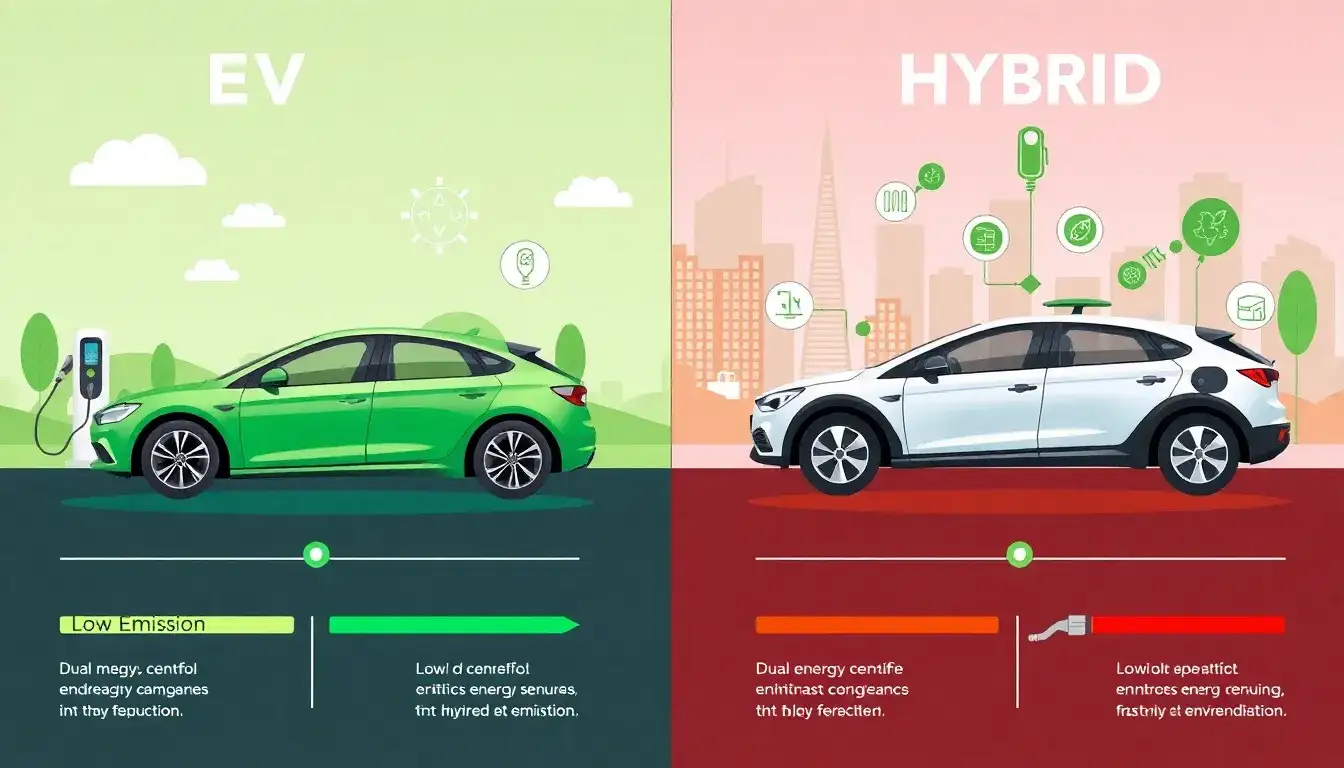
Comparison Overview
- Electric Vehicles (EVs):
- Advantages: EVs have no tailpipe emissions, which means they produce no direct air pollutants or carbon emissions during operation. They are also more energy-efficient, converting about 87% to 91% of the energy from their batteries into vehicle movement, compared to gasoline vehicles, which only convert about 16% to 25% of energy into movement.
- Considerations: The environmental impact of EVs largely depends on the source of electricity used for charging. If the electricity comes from renewable sources like solar or wind, EVs can significantly reduce greenhouse gas emissions. However, if the electricity is generated from fossil fuels like coal or natural gas, the overall emissions footprint increases.
- Hybrid Vehicles:
- Traditional Hybrids: These vehicles combine a gasoline engine with an electric motor, using regenerative braking to recharge batteries. They reduce emissions by improving fuel efficiency but still produce tailpipe emissions from the gasoline engine.
- Plug-in Hybrid Electric Vehicles (PHEVs): PHEVs can run exclusively on electricity until their battery is depleted, at which point they switch to gasoline. This setup allows them to have a smaller battery than full EVs while still benefiting from electric-only operation for shorter trips.
- Considerations: Like full EVs, the environmental benefits of hybrids depend on driving patterns and the source of energy used during manufacture and operation. In specific scenarios, hybrids might offer comparable or even better emissions performance than EVs, especially in regions with high renewable energy use or in driving conditions that favor hybrid efficiency.
Pollution Reduction Potential
- Electric Vehicles: Generally considered the cleaner option due to zero tailpipe emissions and potential for renewable energy charging.
- Hybrid Vehicles: While they produce some emissions, they still offer improved efficiency and reduced emissions compared to purely gasoline-powered vehicles, especially in specific driving conditions.
In summary, EVs are typically the cleaner choice due to their lack of tailpipe emissions and potential for renewable energy charging. However, hybrids can offer significant emissions reductions as well, particularly under the right driving conditions and energy mixes.
Original article by NenPower, If reposted, please credit the source: https://nenpower.com/blog/how-do-electric-vehicles-compare-to-hybrid-vehicles-in-terms-of-pollution-reduction/

