

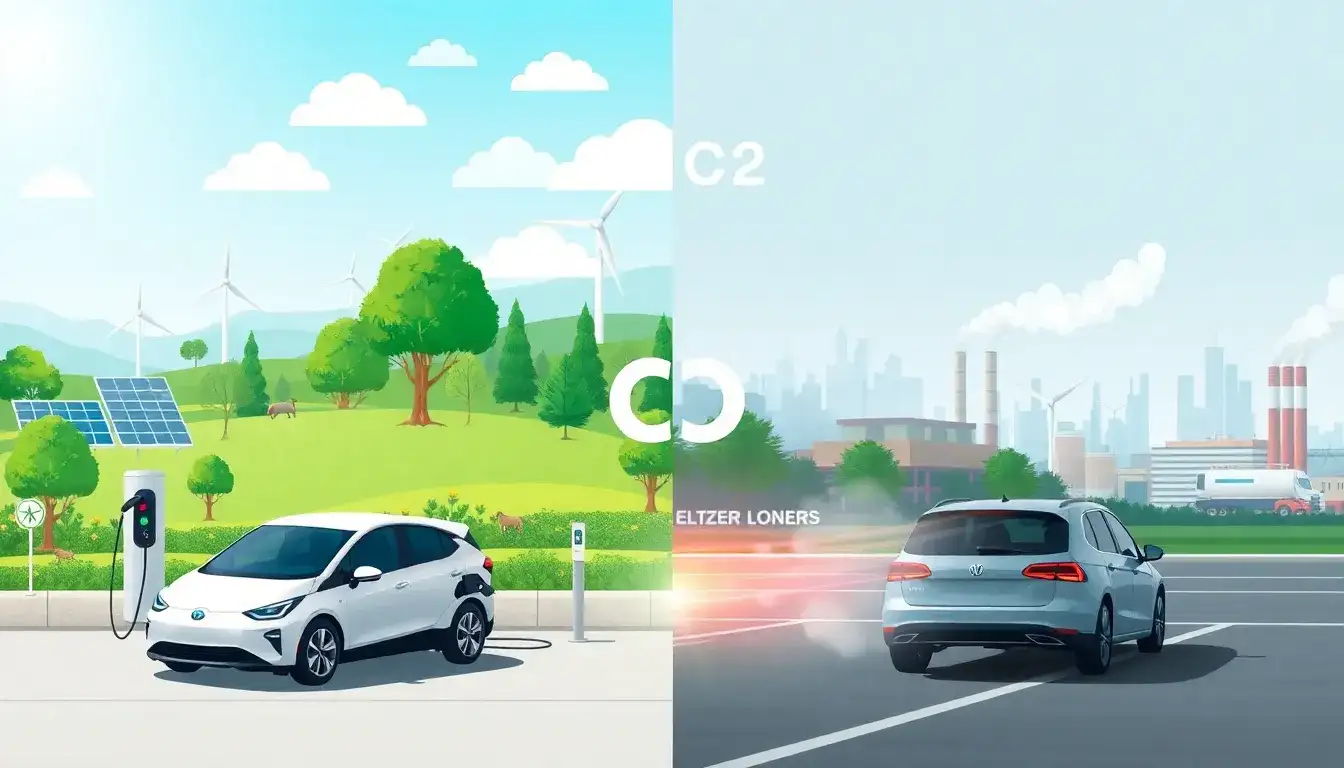
Electric vehicles (EVs) generally have a lower carbon footprint compared to conventional internal combustion engine (ICE) vehicles, despite some nuances in their manufacturing process. Here’s a comparison of the two:
Key Points of Comparison
- Manufacturing Emissions:
- Electric Vehicles (EVs): The production of EVs, particularly battery manufacturing, is more carbon-intensive than that of conventional vehicles. It’s estimated that building an EV can produce around 80% more emissions than building a comparable gas-powered car during manufacturing.
- Conventional Vehicles: These vehicles have lower initial manufacturing emissions compared to EVs.
- Operational Emissions:
- Electric Vehicles (EVs): EVs produce zero direct tailpipe emissions. However, emissions are associated with the generation of electricity used for charging, which varies based on the energy mix of the region (e.g., coal, natural gas, solar, wind). Even so, EVs are generally more energy-efficient, converting about 87%–91% of the electrical energy from the grid to power the wheels.
- Conventional Vehicles: These vehicles emit significant greenhouse gases directly from their tailpipes, averaging over 350 grams of CO2 per mile over their lifetimes.
- Lifetime Emissions:
- Electric Vehicles (EVs): Despite higher manufacturing emissions, EVs typically contribute fewer greenhouse gas emissions over their lifetimes due to their low operational emissions. Studies suggest it takes around 1.4 to 1.9 years for an EV to “break even” with a gas-powered car in terms of emissions.
- Conventional Vehicles: Over a car’s lifetime, conventional vehicles emit significantly more CO2, averaging about 410 grams per mile compared to an EV’s 110 grams.
- Energy Efficiency:
- Electric Vehicles (EVs): EVs are more efficient, using about four times less energy per mile compared to gasoline-powered vehicles.
- Conventional Vehicles: These vehicles convert only about 16–25% of the energy in gasoline into motion.
In summary, although EV manufacturing is more carbon-intensive, the operational emissions of EVs are significantly lower, making them more environmentally friendly over their lifetimes compared to conventional vehicles.
Original article by NenPower, If reposted, please credit the source: https://nenpower.com/blog/how-do-electric-vehicles-compare-to-conventional-vehicles-in-terms-of-greenhouse-gas-emissions/

