

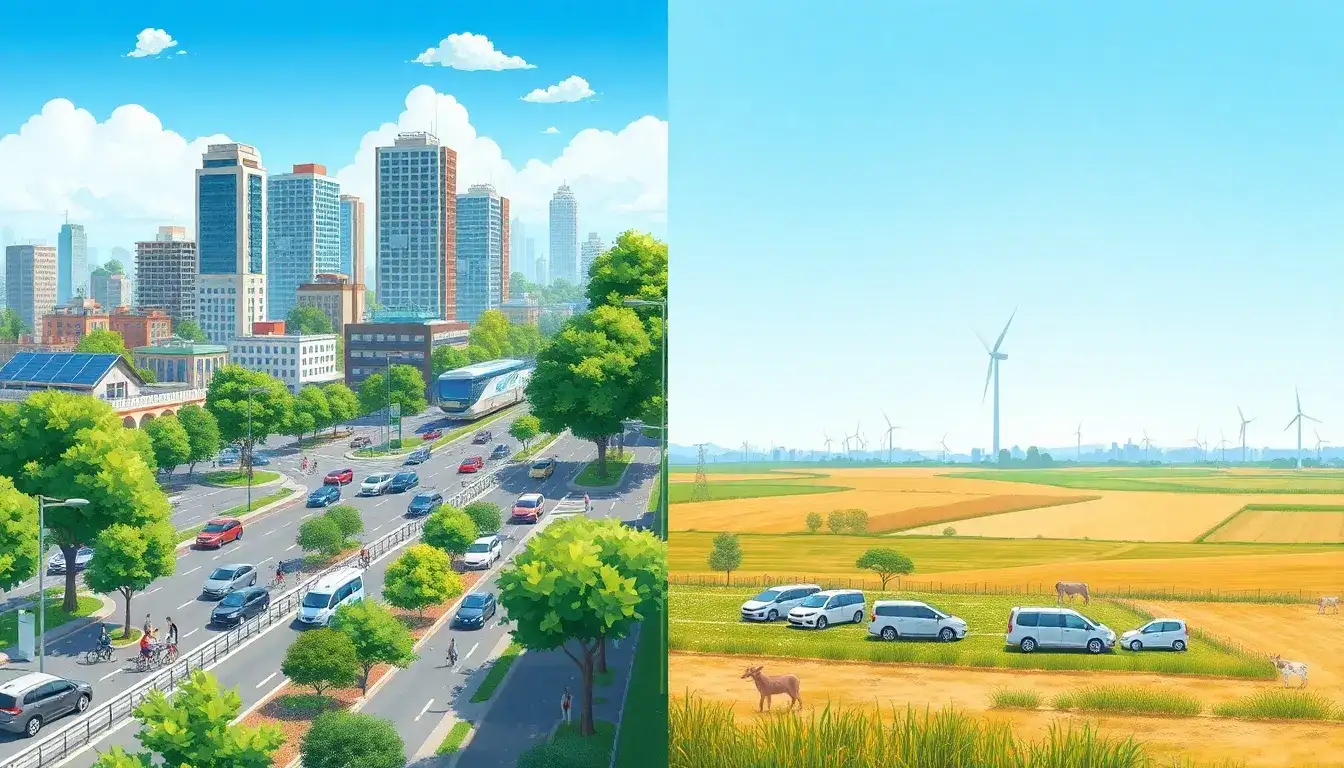
Electric vehicles (EVs) positively affect air quality in both urban and rural areas primarily by eliminating tailpipe emissions, which are significant contributors to air pollution from traditional gasoline and diesel vehicles. However, the extent and nature of their impact differ between these environments.
Impact of EVs on Air Quality in Urban Areas
- Urban areas typically have higher vehicle density and congestion, leading to greater concentrations of tailpipe emissions from combustion engine vehicles. Since EVs produce zero tailpipe emissions, their adoption in cities helps significantly reduce local pollutants such as nitrogen oxides (NOx), carbon monoxide (CO), and hydrocarbons, which contribute to smog and respiratory problems.
- Studies show that switching to EVs in urban centers like Barcelona and Madrid has improved air quality despite emissions associated with electricity generation. The reduction in pollutants in cities is particularly important because disadvantaged and heavily polluted neighborhoods often experience worse air quality; EV adoption can alleviate but not fully eliminate these disparities.
- Even considering non-exhaust emissions (brake, tire, and road wear particles), EVs contribute less particulate matter (PM2.5 and PM10) compared to diesel or petrol cars in urban environments. This is true even for heavier EV models with longer ranges, which may produce slightly more non-exhaust emissions but still result in net air quality benefits.
Impact of EVs on Air Quality in Rural Areas
- Rural areas generally have lower traffic density and therefore lower baseline levels of vehicle-related air pollution. The relative benefit of EVs in these areas is less dramatic in terms of immediate local air quality improvement because traditional combustion emissions are more dispersed.
- However, reducing automotive tailpipe emissions still contributes to cleaner air in rural zones, where pollutants can accumulate less visibly but still affect ecosystems and human health over time.
- An important consideration in rural areas is the source of electricity used to charge EVs. If the electricity comes from coal or other fossil fuels, the air quality benefits may be offset somewhat by emissions at the power plants, which are often located away from urban centers but still impact regional air quality. Nonetheless, studies have found overall improvements in air pollution even when coal-generated electricity is included in the emissions accounting.
Summary
| Aspect | Urban Areas | Rural Areas |
|---|---|---|
| Vehicle density | High | Low |
| Tailpipe emission impact | Large reductions in NOx, CO, hydrocarbons | Smaller but positive reductions in local pollution |
| Non-exhaust particulate matter | Reduced PM2.5 and PM10 despite heavier EVs | Lower baseline PM; EVs contribute less overall particulate pollution |
| Electricity source effect | Power plant pollution offset but net air quality benefit | Regional power plant emissions relevant but net gain likely |
| Disadvantaged communities | EVs improve but do not fully eliminate pollution disparities | Less impacted due to lower density and traffic |
In conclusion, electric vehicles improve air quality more noticeably in urban areas due to higher traffic emissions, but they also provide benefits in rural regions. The largest gains come from eliminating toxic tailpipe pollutants. While secondary emissions from electricity generation and non-exhaust sources exist, the overall effect of EVs is a significant improvement over conventional vehicles in both settings.
Original article by NenPower, If reposted, please credit the source: https://nenpower.com/blog/how-do-electric-vehicles-affect-air-quality-in-urban-versus-rural-areas/

