

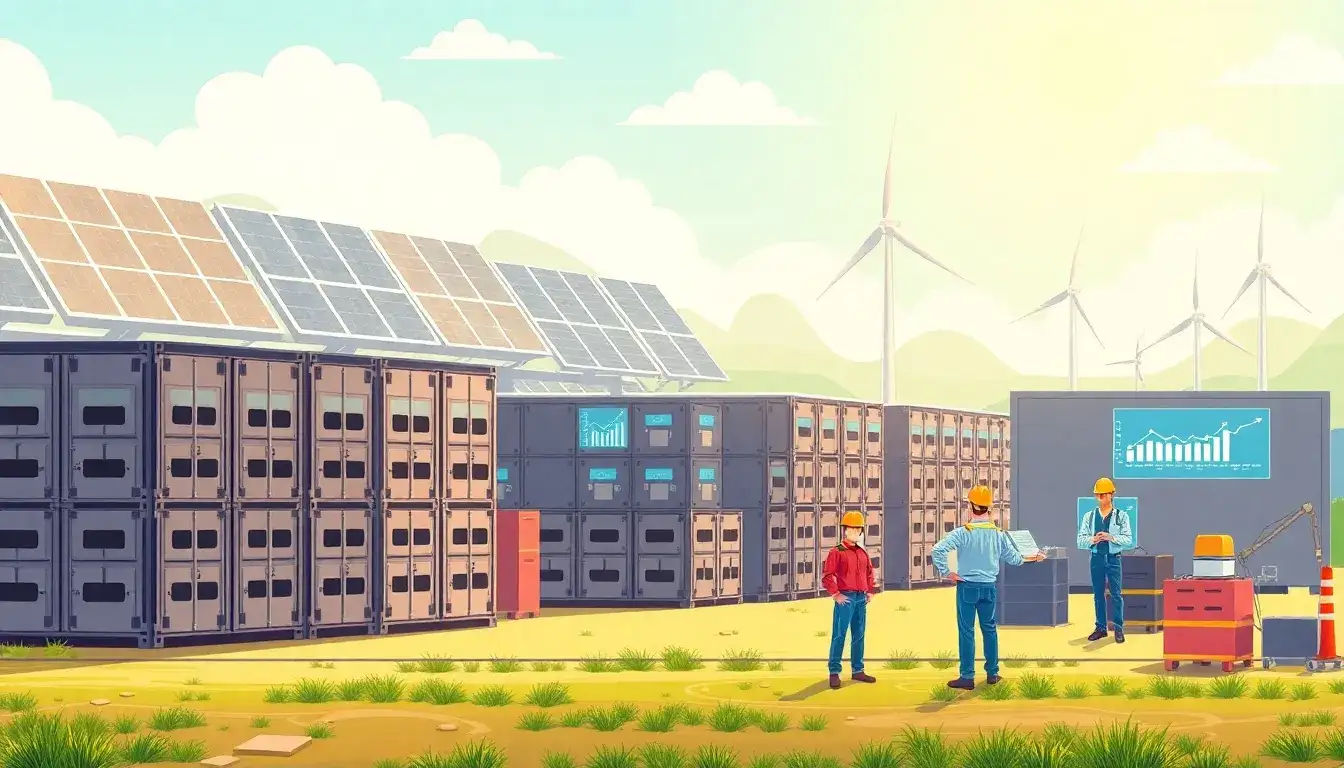
Economies of scale significantly impact the cost of battery energy storage systems, particularly in utility-scale applications. As the scale of battery storage projects increases, several factors contribute to reduced costs:
- Technological Advancements and Mass Production: Large-scale production of battery components leads to economies of scale, which can drive down the costs of manufacturing. This is observed in lithium-ion batteries, where mass production has reduced prices over the years.
- Lower Installation Costs per Unit: Utility-scale projects benefit from lower installation costs on a per-unit basis compared to smaller installations. The balance of system (BOS) costs, which include inverters, power equipment, and grid integration, become less burdensome per unit as the system size increases.
- Increased Efficiency and Reduced Operational Costs: Larger systems often utilize better technology and management systems, leading to improved efficiency and reduced operational costs over time. This enhances the overall cost-effectiveness of large-scale projects.
- Economic Incentives: Governments often provide incentives such as subsidies or tax breaks for large-scale projects, further reducing their costs and enhancing their viability.
- Market Dynamics: The growth in utility-scale battery storage capacity increases competition among suppliers, which can lead to further price reductions.
However, while economies of scale reduce costs, other factors like battery degradation and the need for ongoing maintenance must also be considered to ensure long-term efficiency and cost savings.
Original article by NenPower, If reposted, please credit the source: https://nenpower.com/blog/how-do-economies-of-scale-impact-the-cost-of-battery-energy-storage-systems/

