

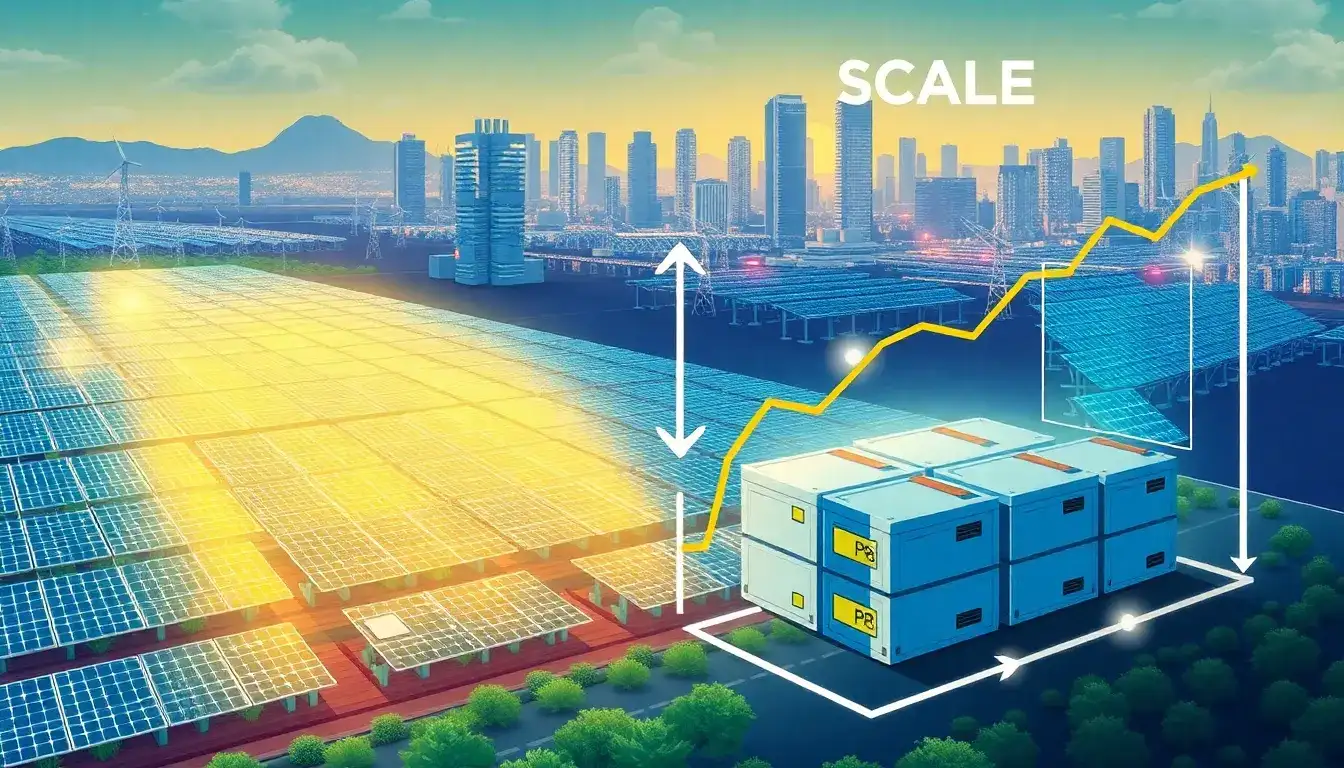
Economies of scale significantly affect the cost of solar and battery storage by reducing them over time. Here’s how these economies influence the costs:
Economies of Scale in Solar Energy
- Manufacturing Costs: As the demand for solar panels increases, manufacturers can produce more units per factory. This larger production volume leads to economies of scale, reducing the cost per unit. Improved manufacturing techniques and efficiency gains also contribute to lower costs.
- Installation and System Costs: Larger solar projects can reduce installation costs per unit of capacity. Economies of scale come into play through bulk purchasing of materials and equipment, as well as the efficiency gained from larger-scale operations.
- Technological Improvements: Innovations in materials science have led to more efficient solar panels. Economies of scale enable these advancements to be implemented more widely, further reducing costs over time.
Economies of Scale in Battery Storage
- Production Efficiency: Similar to solar panels, the production of batteries benefits from economies of scale. As production capacity increases, manufacturers can optimize their processes, reduce material costs, and improve manufacturing efficiency, leading to cheaper batteries.
- Raw Material Costs: The increased demand for battery materials, such as lithium and nickel, has prompted investments in their extraction and processing. Economies of scale in the supply chain can lead to lower costs for these essential components.
- Innovation and Competition: With more companies entering the market and scaling up production, competition increases. This competition drives innovation and further reduces battery costs, making storage more economically viable for consumers.
Overall Impact of Economies of Scale
- Lower Costs: Economies of scale contribute to falling costs for both solar panels and battery storage. This makes renewable energy systems more competitive with traditional energy sources, driving their adoption globally.
- Increased Adoption: Lower costs lead to higher demand, creating a positive feedback loop where increased production further reduces costs. This encourages more widespread adoption of solar and battery storage technologies.
- Job Creation and Economic Growth: The reduction in costs increases the economic feasibility of solar and storage projects, stimulating job creation and contributing to economic growth in the sector.
Original article by NenPower, If reposted, please credit the source: https://nenpower.com/blog/how-do-economies-of-scale-affect-the-cost-of-solar-and-battery-storage/

