

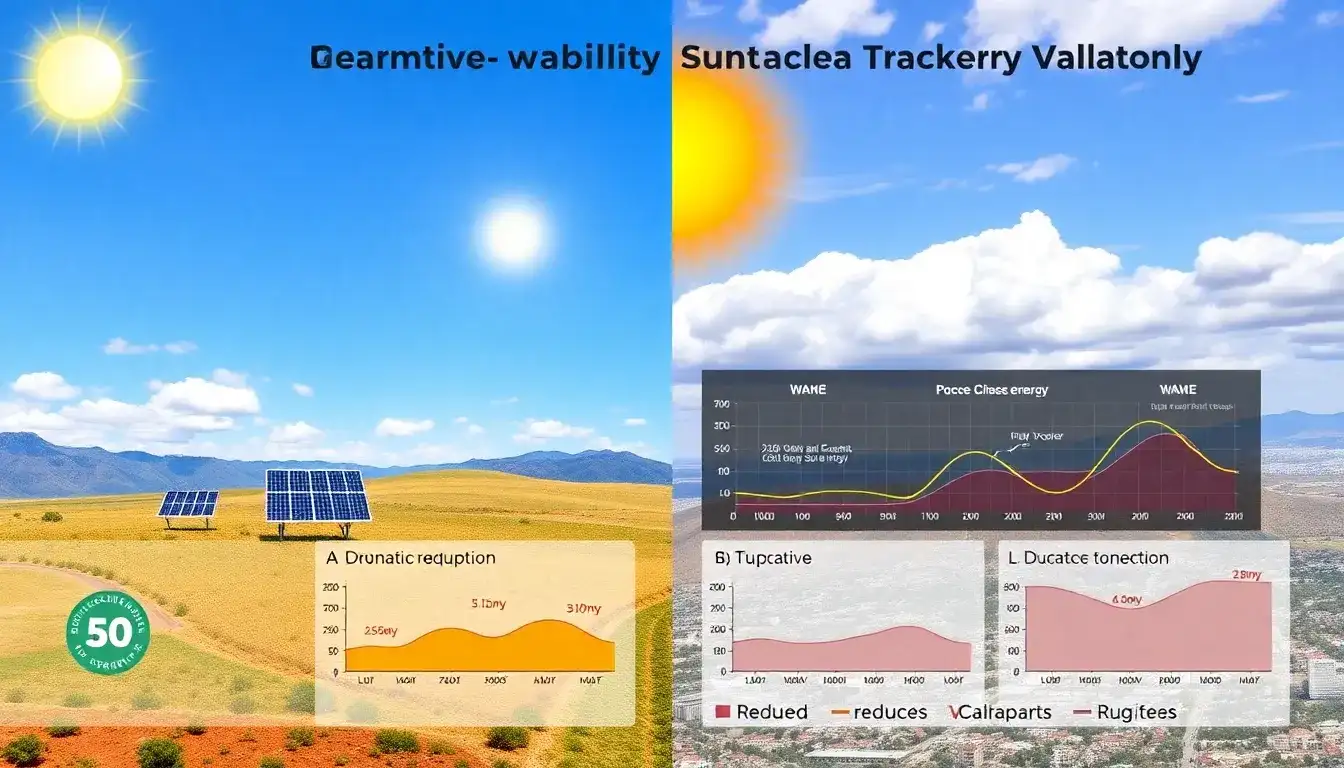
Dual-Axis Trackers in Regions with High Sunlight Variability
Dual-axis trackers are designed to maximize energy output from solar panels by continuously adjusting their position to face the sun directly, thereby optimizing the irradiance received. In regions with high sunlight variability, such as those with frequent cloud cover or seasonal changes in sun paths, the performance of dual-axis trackers can be advantageous but also presents some challenges.
Performance Advantages
- Efficiency Increase: Dual-axis trackers can increase solar panel efficiency by up to 60% compared to fixed systems, as they can capture more direct sunlight throughout the day. This advantage is particularly pronounced in regions with high direct beam fractions, as the tracker can maximize the exposure to direct sunlight.
- Adaptability: By adjusting in both azimuth and elevation, dual-axis trackers can adapt well to changing sun paths due to seasonal variations or time of day, maintaining optimal alignment with the sun.
Challenges in High Sunlight Variability Regions
- Cloudy Conditions: In highly variable or cloudy conditions, the standard tracking strategies may not be optimal. The sun’s position is not always the best direction for capturing irradiance when the sun is obscured by clouds. In such cases, advanced control strategies that can detect and adjust for diffused light might be necessary.
- Maintenance and Complexity: Dual-axis trackers are more complex and require more maintenance than single-axis or fixed systems. This complexity can increase the risk of mechanical failures, especially in environments with frequent weather changes or extreme conditions.
- Energy Consumption: While dual-axis trackers can increase overall energy output, they consume more energy for their motors and controls compared to simpler systems. In regions with high sunlight variability, ensuring that the energy gain offsets the additional consumption is crucial.
Advanced Control Strategies
To optimize performance in regions with high sunlight variability, advanced control strategies are being developed:
- Hybrid Control: Uses real-time image processing and sensors to adjust tracking based on actual sunlight conditions, improving efficiency even on cloudy days.
- Robotic Sensor Systems: Utilize independent sensor systems to locate the sun and provide tracking trajectories, enhancing performance under irregular conditions but at higher complexity and cost.
In summary, dual-axis trackers offer significant advantages in efficiency but require careful consideration of their operation in highly variable sunlight conditions. Advanced control strategies can help mitigate these challenges and optimize performance.
Original article by NenPower, If reposted, please credit the source: https://nenpower.com/blog/how-do-dual-axis-trackers-perform-in-regions-with-high-sunlight-variability/

