

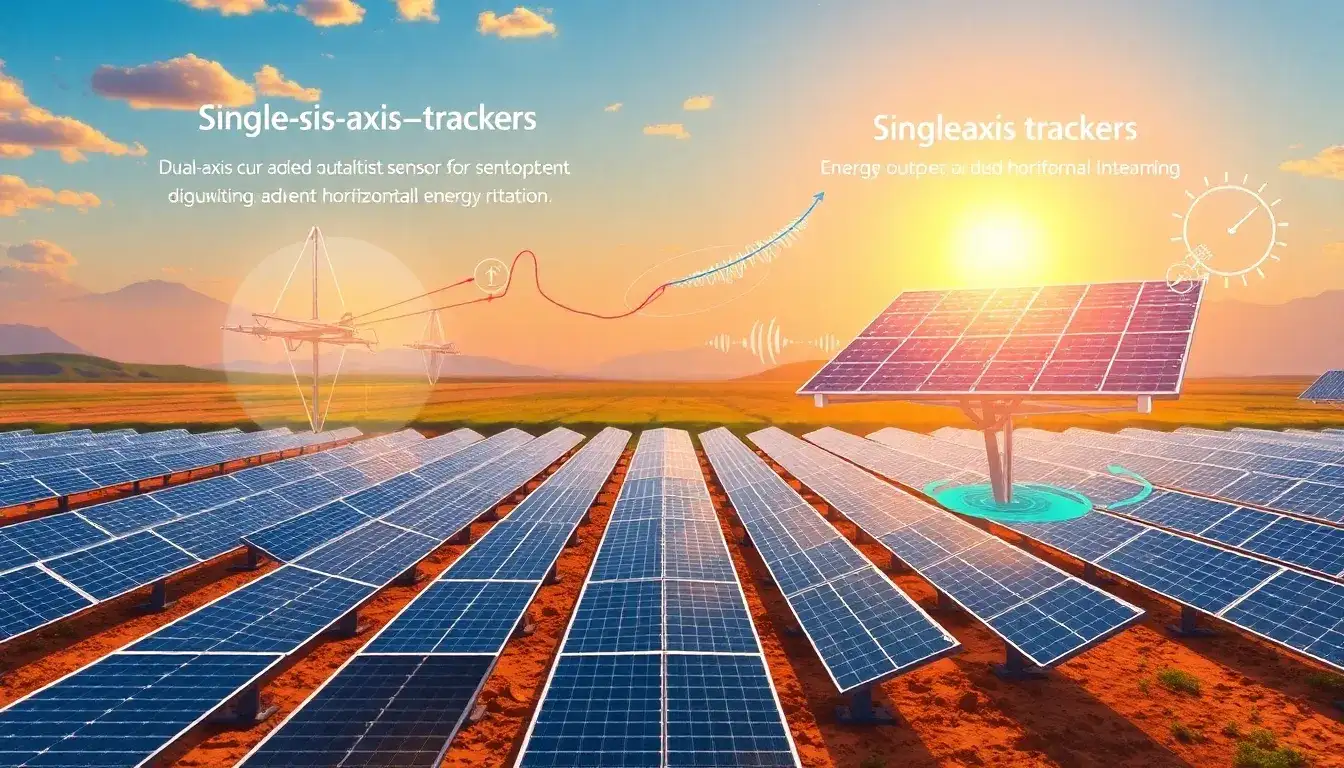
Dual-axis solar trackers generally produce more energy than single-axis trackers, but the gain varies and comes with trade-offs.
Energy Output Comparison:
- Single-axis trackers increase solar energy generation by about 25% to 30% compared to fixed mounts.
- Dual-axis trackers add an additional 5% to 10% energy gain beyond single-axis trackers, resulting in roughly 30% to 40% more energy than fixed systems overall.
- In some assessments, dual-axis trackers can produce about 45% to 50% more power annually than fixed systems, compared to 15%-16% higher generation for single-axis trackers versus fixed mounts.
- Under varying irradiance levels, dual-axis trackers show consistently higher power output, with improvements especially noticeable under high irradiance (700-900 W/m²), where dual-axis can outperform single-axis by about 10-15%.
Operational Characteristics and Practical Implications:
- Dual-axis trackers continuously follow the sun’s position both in azimuth and elevation, maximizing exposure throughout the day and seasons, which leads to their higher energy yield, especially in clear-sky or equatorial regions.
- Single-axis trackers mainly follow the sun east to west, which provides a consistent power output but less optimal solar incidence angles than dual-axis systems.
- Dual-axis systems are more mechanically complex and require more maintenance, leading to potential downtime and lower reliability over long durations compared to the simpler, more robust single-axis trackers.
- Single-axis trackers tend to have a longer lifespan, lower cost, and simpler maintenance needs, making them ideal for budget-conscious projects or areas with less direct sunlight.
Summary Table:
| Feature | Single-Axis Tracker | Dual-Axis Tracker |
|---|---|---|
| Energy Gain vs Fixed | ~25-30% increase | Additional 5-10% over single-axis (~45-50% total) |
| Sun Tracking Movement | East-West rotation | East-West + elevation adjustment |
| Complexity | Lower | Higher |
| Maintenance & Reliability | Higher reliability, lower maintenance | More maintenance, higher complexity |
| Cost | Lower cost | Higher cost |
| Ideal Use Cases | Budget projects, less sunny/cloudy areas | High solar resource regions, limited land use |
In conclusion, dual-axis trackers provide better energy output by more accurately following the sun but come with increased cost and maintenance. Single-axis trackers offer a good balance of increased energy production with lower complexity and reliability, often preferred in many commercial solar projects depending on location and budget.
Original article by NenPower, If reposted, please credit the source: https://nenpower.com/blog/how-do-dual-axis-trackers-compare-to-single-axis-trackers-in-terms-of-energy-output/

