

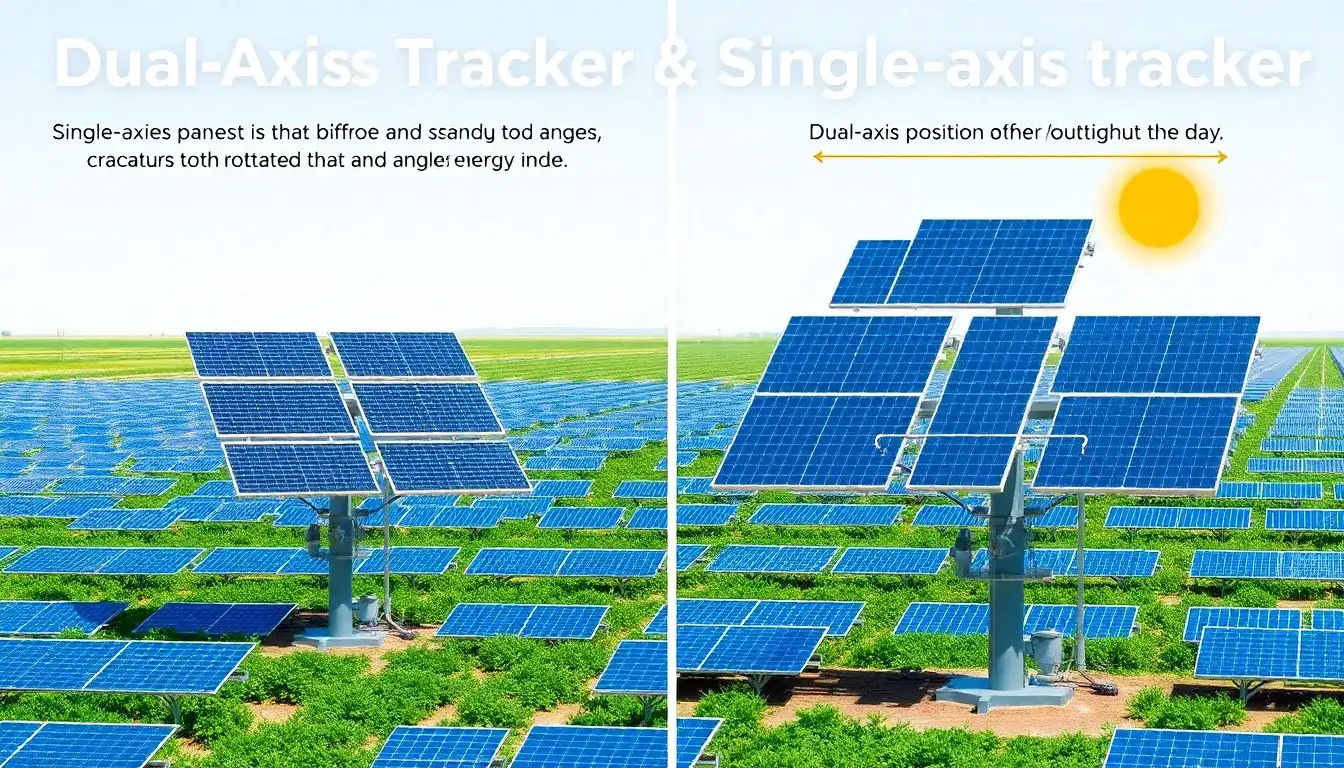
Dual-axis solar trackers differ from single-axis trackers in terms of efficiency primarily due to their ability to follow the sun’s movement more precisely. Here are the key differences:
Key Efficiency Differences
- Tracking Movement:
- Single-Axis Trackers: These follow the sun on either a horizontal or vertical axis, increasing energy production by about 20-30% compared to fixed-tilt systems.
- Dual-Axis Trackers: They follow the sun using both horizontal and vertical axes, allowing them to maintain a perpendicular orientation to the sun throughout the day. This results in a higher energy yield.
- Efficiency Improvements:
- Single-Axis Trackers generally offer a 20% higher yield than fixed-tilt installations.
- Dual-Axis Trackers provide an additional 20% higher yield over single-axis trackers, resulting in a total increase of 40-70% compared to fixed-tilt systems.
- Reliability and Uptime: Historically, dual-axis trackers faced criticism for low reliability due to more moving parts. However, recent advancements have significantly improved their reliability, with some manufacturers reporting uptimes of 99.9%.
Overall, dual-axis solar trackers are more efficient because they can continuously align the solar panels with the sun’s position, maximizing energy production. Despite higher costs and maintenance requirements, their superior tracking ability provides substantial efficiency gains over single-axis systems.
Original article by NenPower, If reposted, please credit the source: https://nenpower.com/blog/how-do-dual-axis-solar-trackers-differ-from-single-axis-trackers-in-terms-of-efficiency/

