

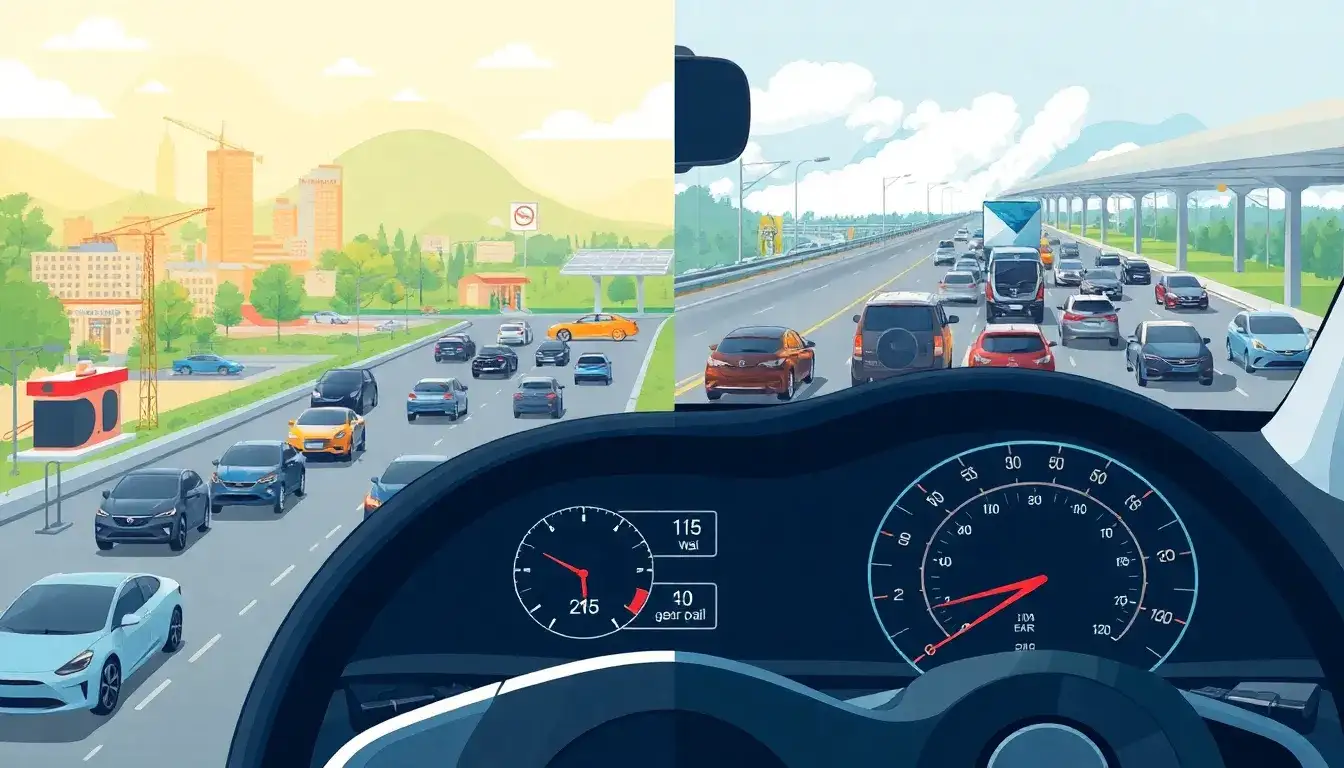
Driving habits significantly impact the maintenance costs of both electric vehicles (EVs) and gas-powered cars, although in different ways due to their distinct operational mechanisms.
Electric Vehicles (EVs)
Key Factors:
- Regenerative Braking: EVs use regenerative braking, which can reduce wear on brakes compared to gas-powered cars, potentially lowering maintenance costs. However, frequent hard braking might still require more frequent brake pad replacements, though generally less than in gas cars.
- Tire Wear: Aggressive driving, such as rapid acceleration and sharp turns, increases tire wear, which applies to both EVs and gas cars. EVs, being generally heavier due to the battery, might experience slightly more pronounced effects.
- Battery Health: Extreme temperature variations and rapid charging/discharging cycles can affect battery longevity. Driving habits that frequently charge batteries to 100% or allow them to completely drain could impact battery health, potentially increasing long-term costs.
- Motor Maintenance: EV motors are typically simpler and require less maintenance than internal combustion engines. However, aggressive driving habits could lead to increased energy consumption, which might indirectly affect battery health.
Gas-Powered Cars
Key Factors:
- Engine Stress: Aggressive driving, including rapid acceleration and frequent hard braking, places significant stress on the engine, leading to increased wear and tear on components like cylinder heads and pistons.
- Oil Consumption: Short, frequent trips in gas cars prevent the engine from reaching optimal temperatures, which can lead to increased oil degradation, necessitating more frequent oil changes.
- Fuel Efficiency: Aggressive driving habits decrease fuel efficiency, increasing fuel consumption costs.
- Component Wear: Hard braking and rapid acceleration increase wear on brakes and tires, similar to EVs, but the impact on engine components is more pronounced.
Comparison Summary
| Aspect | Electric Vehicles (EVs) | Gas-Powered Cars |
|---|---|---|
| Braking Wear | Regenerative braking reduces wear, but hard braking still impacts maintenance. | Frequent hard braking significantly increases brake pad wear. |
| Engine/Motor Stress | Simple motor design typically requires less maintenance. | Aggressive driving causes more stress on internal combustion engines. |
| Battery vs. Fuel | Aggressive habits can affect battery health indirectly. | Decreased fuel efficiency increases fuel costs. |
| Tire Wear | Aggressive driving increases tire wear similarly to gas cars. | Similar increase in tire wear due to aggressive driving. |
| Overall Maintenance | Generally lower maintenance due to fewer moving parts. | Higher maintenance due to more complex engine and components. |
In summary, while both types of vehicles are affected by driving habits, EVs tend to have lower maintenance costs due to fewer mechanical components and regenerative braking. However, aggressive driving can still increase costs for both types by affecting tires, brakes, and battery/engine health.
Original article by NenPower, If reposted, please credit the source: https://nenpower.com/blog/how-do-driving-habits-impact-the-maintenance-costs-of-evs-versus-gas-powered-cars/

