

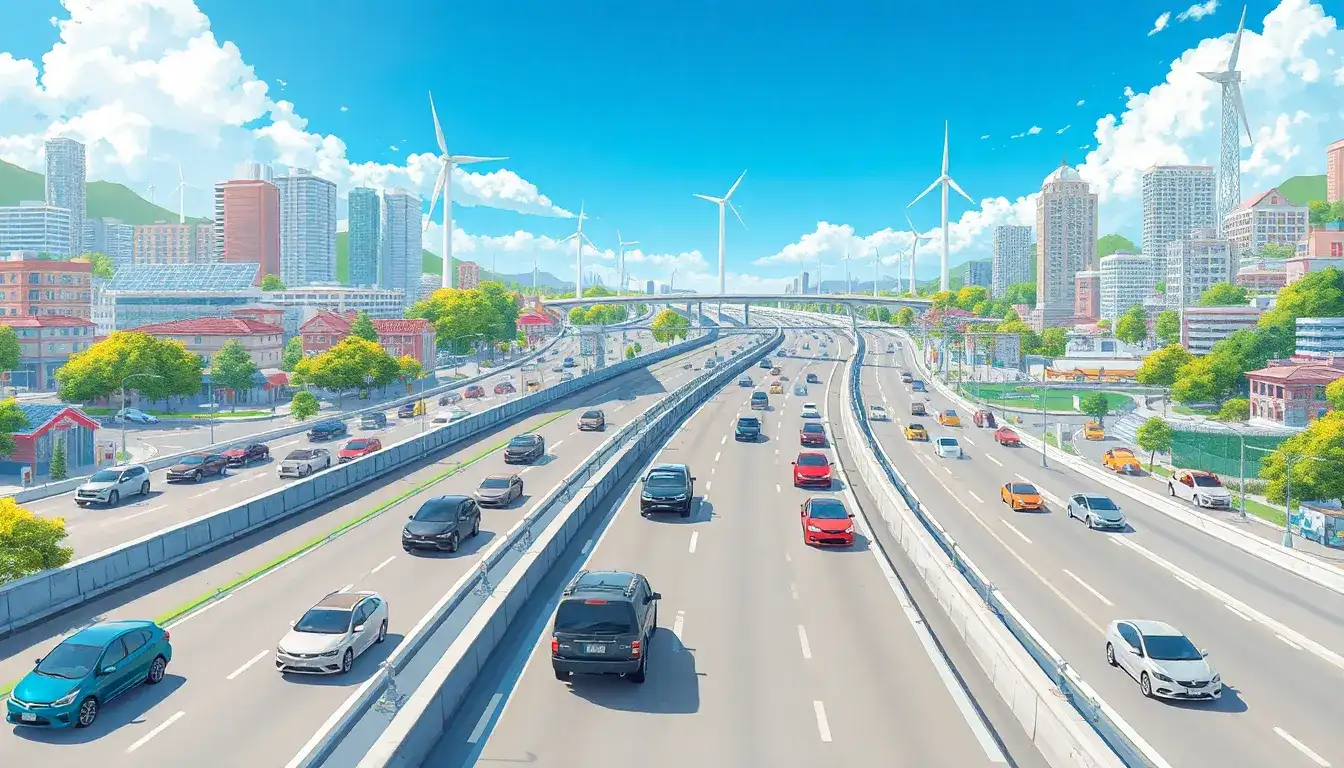
Driving conditions, such as city versus highway driving, affect the performance and efficiency of electric vehicles (EVs) but do not directly impact their emissions since EVs produce zero tailpipe emissions. However, these conditions influence the vehicle’s energy usage and, indirectly, the overall environmental impact through the energy source used for charging.
City Driving
- Efficiency and Regenerative Braking: City driving is generally more efficient for EVs because it involves more frequent stops and starts, which maximize the benefits of regenerative braking. This process captures kinetic energy and converts it back into electrical energy, thereby enhancing the vehicle’s overall efficiency and reducing the amount of energy drawn from the battery or the electrical grid.
- Emissions Impact: Since EVs produce no tailpipe emissions, city driving does not increase emissions directly. However, the energy used from the grid may have an emissions impact based on the source of electricity. If the electricity comes from fossil fuels, then there is an indirect emissions effect, but if it’s renewable, then even this indirect impact is minimized.
Highway Driving
- Efficiency and Energy Use: Highway driving typically requires more energy from the battery due to higher speeds and increased drag, which can reduce efficiency compared to city driving. This means that more energy is drawn from the grid or other electricity sources during charging.
- Emissions Impact: The emissions impact is similar to city driving in that EVs produce no direct emissions. However, the increased energy usage during highway driving might lead to higher indirect emissions if the charging energy comes from non-renewable sources.
In summary, while driving conditions affect the efficiency and energy consumption of electric vehicles, their zero tailpipe emissions mean that emissions are not directly influenced by whether they are driven in city or highway conditions. The indirect environmental impact depends on the energy mix of the grid used for charging.
Original article by NenPower, If reposted, please credit the source: https://nenpower.com/blog/how-do-driving-conditions-like-city-vs-highway-affect-the-emissions-of-electric-vehicles/

