

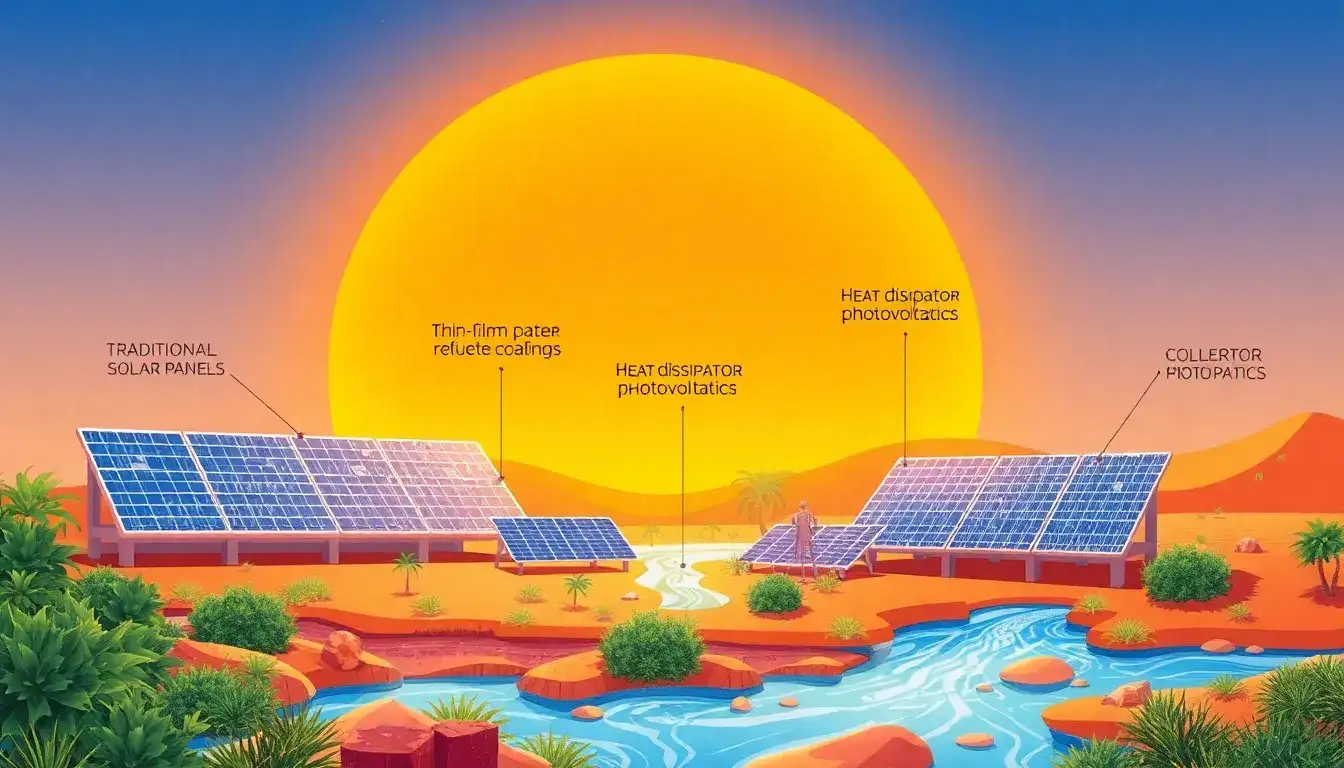
Different types of solar panels handle high temperatures in various ways, but generally, efficiency decreases as temperature increases due to the negative temperature coefficient associated with most solar panels.
Factors Affecting Efficiency in High Temperatures:
- Temperature Coefficient: This coefficient indicates the percentage decrease in efficiency per degree Celsius rise above 25°C (77°F). Most commercial solar panels have a temperature coefficient between -0.30% and -0.45% per degree Celsius.
- Semiconductor Properties: Higher temperatures cause semiconductor properties to shift, leading to a slight increase in current but a larger decrease in voltage, which results in reduced power output.
- Material Durability: Solar panels are made from durable materials designed to withstand extreme temperatures. However, excessive heat can still reduce efficiency and potentially damage components over time.
Types of Solar Panels and High Temperatures:
- Crystalline Silicon Solar Panels: These are the most common type of solar panels and can lose 0.3% to 0.5% of efficiency for each degree Celsius above 25°C.
- Thin-Film Solar Panels: While less efficient, these panels typically have a lower temperature coefficient compared to crystalline silicon, performing relatively better in high temperatures.
Mitigating High Temperature Effects:
- Installation Techniques: Mounting panels a few inches above the roof allows for airflow cooling.
- Cooling Technologies: Some systems incorporate cooling technologies to reduce panel temperatures.
- Panel Selection: Choosing panels with a lower temperature coefficient can minimize efficiency losses.
- Shading Components: Placing inverters and other components in shaded areas can help maintain system performance.
Overall, while high temperatures do reduce solar panel efficiency, proper design and installation can mitigate these effects and ensure optimal performance even in warm climates.
Original article by NenPower, If reposted, please credit the source: https://nenpower.com/blog/how-do-different-types-of-solar-panels-handle-high-temperatures/

