

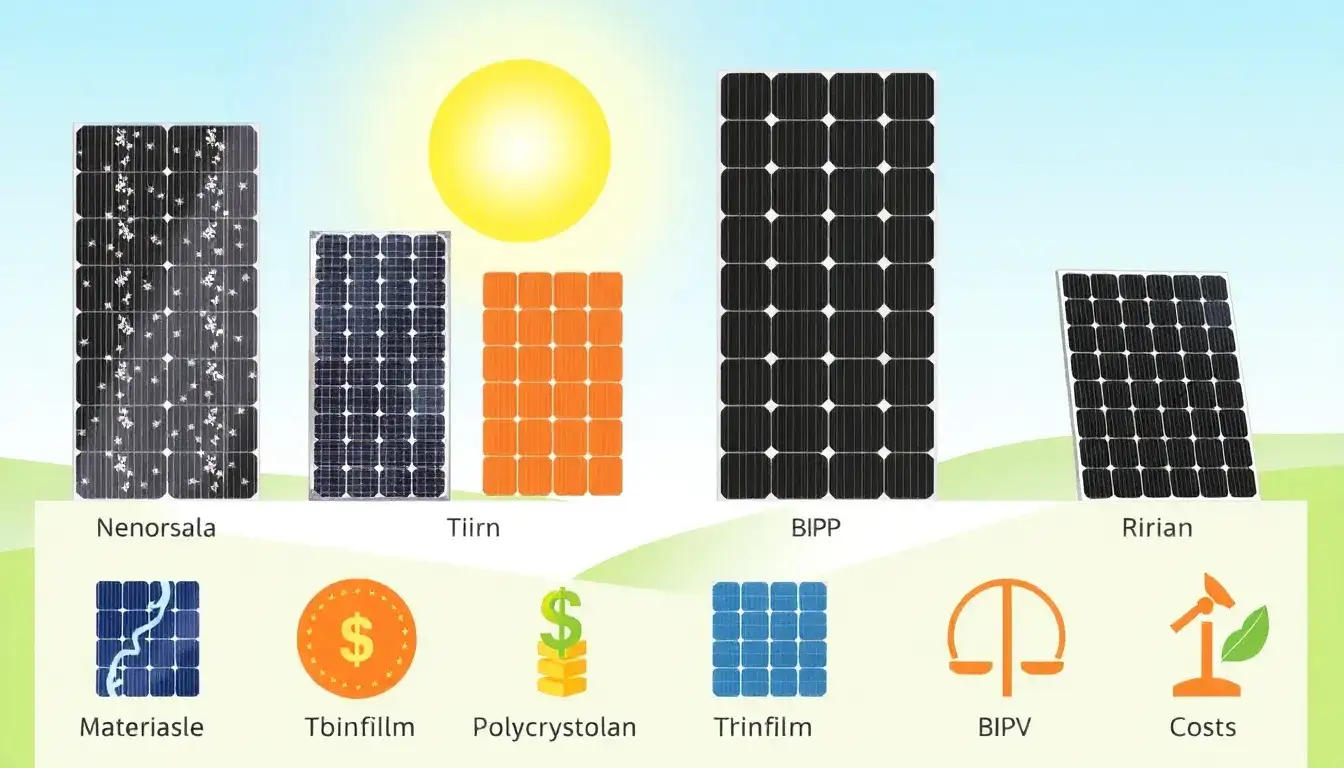
Different types of solar panels significantly influence their overall cost due to variations in efficiency, manufacturing technology, and warranty terms.
Main Types of Solar Panels and Their Cost Impact
- Monocrystalline Solar Panels
These are currently the most efficient and premium type of panels. Their manufacturing process involves using single-crystal silicon, which results in higher efficiency (often above 20%) and a sleeker black appearance. Consequently, monocrystalline panels tend to have higher upfront costs, typically around 30 to 50 cents per watt for premium models, which translates to about $120 to $200 for a single 400-watt panel. However, their higher efficiency means fewer panels are needed to meet energy demands, potentially reducing overall installation costs on roofs with limited space. - Polycrystalline (Multicrystalline) Solar Panels
These panels are made from multiple silicon crystals melted together and usually have lower efficiency (around 15-20%) compared to monocrystalline panels but are cheaper, often costing roughly half the price per watt compared to monocrystalline types, approximately $0.25 per watt. This lower cost comes with a trade-off: more panels are needed to generate the same electricity, possibly increasing balance-of-system costs (like racking and installation labor). - Thin-Film Solar Panels
Not as common for residential installations, thin-film panels use different materials (like cadmium telluride) and generally have the lowest efficiency and longest warranties. They are typically less expensive per panel but require more space and sometimes have shorter lifespans, which can impact long-term cost-effectiveness. They were not detailed in the provided data but are generally the cheapest per panel but less cost-effective overall.
Overall Cost Considerations
- Cost per Watt and System Size
The cost of solar panels is typically expressed in dollars per watt ($/W). Across the U.S., the average installed cost per watt is about $2.56 before incentives, translating to an estimated $20,552 for an 11 kW system after the 30% federal tax credit. Larger systems generally benefit from lower per-watt costs, similar to buying in bulk. - Panels Constitute a Minority of Total System Cost
Solar panels themselves usually account for only about 12–20% of the total installation cost. The remainder goes to inverters, racking, labor, permits, and other soft costs. Therefore, switching to cheaper panels may not drastically reduce the overall system cost and might reduce system performance or longevity. - Warranty and Longevity
Higher-quality panels, such as those from SunPower, LG, and Panasonic, often come with robust 25-year performance and product warranties, justifying their higher initial price through durability and better long-term energy yield. Cheaper panels, like VSUN or Hyundai models, can be lower cost per watt but may have shorter or less comprehensive warranties and slightly lower efficiencies, affecting lifetime value. - Efficiency and Roof Space
If roof space is constrained, higher efficiency (and more expensive) monocrystalline panels might be necessary to meet energy needs without oversizing the system, which can save on installation complexity and additional hardware.
Summary Table
| Solar Panel Type | Efficiency | Cost Range (per Watt) | Panel Cost Examples (per 400W panel) | Warranty / Quality | Impact on Overall Cost |
|---|---|---|---|---|---|
| Monocrystalline | ~20-22% | $0.30 – $0.50+ | $120 – $200 | 25 years, high-quality | Higher upfront cost but fewer panels needed; better long-term ROI |
| Polycrystalline | ~15-20% | ~$0.25 | ~$100 | Moderate warranty | Lower cost per panel but need more panels; cost savings can be offset by installation and balance of system costs |
| Thin-Film | ~10-13% | Often less than $0.25 | Varies | Varies | Cheapest per panel but less efficient; can increase overall footprint and reduce ROI |
In conclusion, the type of solar panel chosen affects the overall cost primarily through differences in efficiency, which influences the number of panels and size of the system needed, as well as panel price per watt and warranty terms. While cheaper polycrystalline or some budget brands lower initial panel costs, monocrystalline panels with higher efficiency and better warranties often present a better value over the system lifecycle. Panel costs are only a fraction of total installation expenses, so considering the full system and long-term performance is critical when evaluating cost impacts of solar panel types.
Original article by NenPower, If reposted, please credit the source: https://nenpower.com/blog/how-do-different-types-of-solar-panels-affect-their-overall-cost/

