

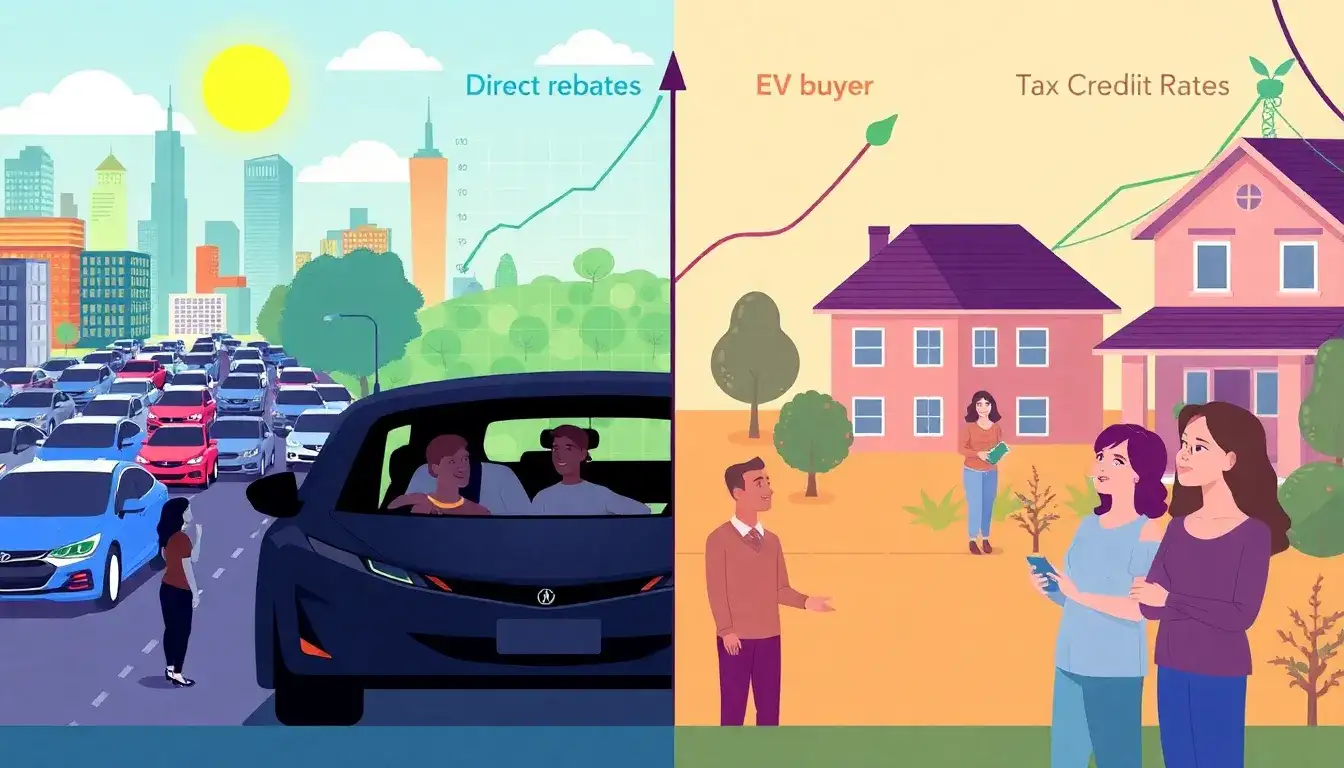
The impact of different types of electric vehicle (EV) subsidies, such as rebates and tax credits, on adoption rates can be analyzed based on available studies:
Rebates
- Impact on Adoption: Direct purchase rebates have been shown to significantly increase EV adoption. For every thousand dollars of rebate offered, there is an approximate 8% increase in new EV registrations.
- Effectiveness: Rebates directly reduce the upfront cost of purchasing an EV, making them more appealing to potential buyers. This direct financial incentive has been associated with a higher increase in overall EV registrations compared to other types of incentives.
Tax Credits
- Impact on Adoption: State-level income tax credits for EVs do not appear to have a statistically significant effect on adoption rates. This could be due to limited temporal variation in incentives.
- Indirect Benefits: While tax credits may not directly increase EV sales, they still contribute to creating a more favorable environment for EV adoption by providing financial relief post-purchase.
Overall Effectiveness and Considerations
- Subsidy Pass-Through: Studies indicate that subsidies, particularly rebates, are largely passed on to consumers, which increases demand among low- to middle-income buyers.
- Demand Elasticity: A subsidy that reduces the price of an EV by 10% can increase demand by 32-34% among responsive buyers, though this translates into a modest number of additional EVs due to the small baseline quantity.
- Cost vs. Benefits: While subsidies help in promoting EV adoption, the cost-effectiveness and net welfare benefits can vary depending on factors like environmental benefits, market growth, and innovation.
In summary, rebates tend to have a more direct and significant impact on EV adoption by reducing the upfront cost, whereas tax credits, although beneficial, may not directly boost sales as significantly due to their indirect nature. Both types of subsidies contribute to creating a conducive environment for EV adoption, but their effectiveness and cost-benefit analysis can vary depending on the context and broader economic considerations.
Original article by NenPower, If reposted, please credit the source: https://nenpower.com/blog/how-do-different-types-of-ev-subsidies-rebates-vs-tax-credits-impact-adoption-rates/

