

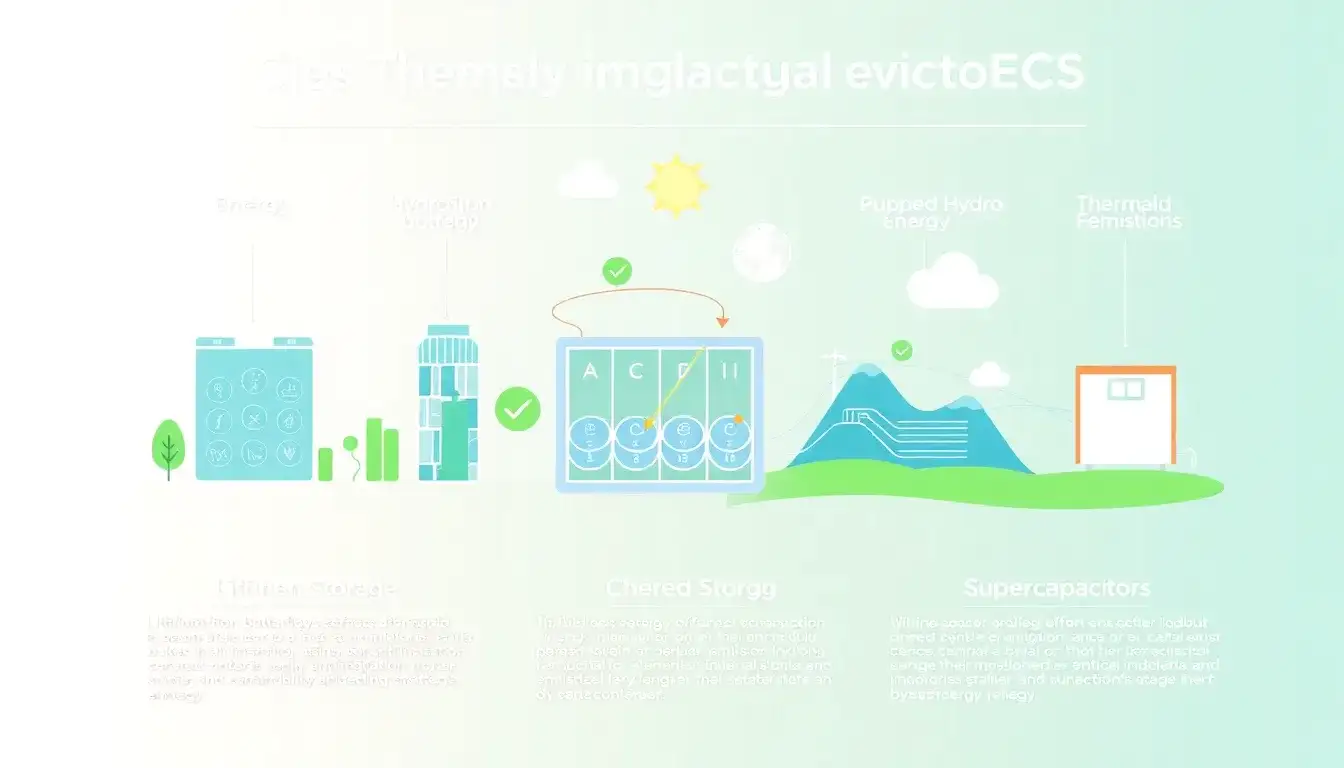
Emissions and Emissions Reduction Potential of Energy Storage Technologies
1. Pumped Hydro Storage (PHS)
- PHS has the lowest life-cycle emissions among common utility-scale storage technologies.
- It benefits from long-lived components and does not require fossil fuels to operate, resulting in near-zero fuel-related emissions but moderate construction and operation emissions.
- Typical emissions are around 6 kg CO2e per MWh delivered (construction and O&M related) with zero fuel emissions.
- Because PHS stores energy mechanically using water, it supports large-scale storage and helps integrate renewables with minimal additional emissions.
2. Compressed Air Energy Storage (CAES)
- CAES has the highest direct emissions of the technologies studied due to combustion of natural gas during operation.
- It emits approximately 288 kg CO2e per MWh due to fuel combustion, plus some construction-related emissions.
- This makes CAES less favorable from an emissions reduction perspective, even though it provides grid flexibility.
3. Battery Energy Storage Systems (BESS) (e.g., lithium-ion)
- BESS systems have no fuel emissions but relatively high manufacturing-related emissions due to energy-intensive production of batteries.
- Estimated construction and operational emissions range from about 33 to 40 kg CO2e per MWh delivered.
- Although BESS enhances renewable energy use by smoothing intermittency, their embodied emissions mean the net emissions benefit depends on grid context and battery lifecycle.
4. Emerging Power-to-Gas and Long Duration Energy Storage (LDES) Technologies
- Technologies like power-to-hydrogen (P2H), power-to-methane (P2M), and synthetic natural gas (SNG) storage can enable long-duration, high-density storage with the potential for net-zero emissions if paired with carbon capture and renewable hydrogen production.
- SNG storage may be economically attractive but involves complex processes including carbon capture from air or industrial sources.
- The key to emission reduction in these systems lies in minimizing carbon capture costs and hydrogen storage costs, enabling truly carbon-neutral power-to-power cycles.
5. Thermal Long Duration Energy Storage
- Thermal LDES can incrementally reduce emissions by replacing fossil fuel heat but is limited to less than 5% achievable emissions reduction in industrial contexts due to operational constraints.
Summary Comparison
| Technology | Key Emissions Source | Approximate Emissions (kg CO2e/MWh) | Emissions Reduction Potential | Notes |
|---|---|---|---|---|
| Pumped Hydro Storage (PHS) | Construction & O&M | ~6 (no fuel emissions) | High – supports renewables with very low emissions | Long lifespan, mature technology |
| Compressed Air Storage (CAES) | Natural gas combustion | ~288 (fuel) + 4 (construction) | Low – high fuel emissions reduce net benefit | Uses fossil fuels; less emissions-friendly |
| Battery Storage (Lithium-ion BESS) | Battery manufacturing | 33-40 (construction) | Moderate – no fuel emissions but embodied carbon in manufacturing | Depends on grid carbon intensity and battery lifespan |
| Power-to-Gas (P2H, P2M, SNG) | Electrolyzer energy use, carbon capture | Highly variable; potential net zero | Potentially very high if combined with carbon capture and renewable inputs | Emerging tech; long-duration storage; cost and carbon capture key |
| Thermal LDES | Partial fossil fuel displacement | <5% emissions reduction (relative) | Limited – incremental reductions for industrial heat | Useful for industrial decarbonization but limited scale effect |
Conclusion
Energy storage technologies contribute differently to emissions reduction depending on their operational characteristics and embedded emissions. Pumped hydro offers the lowest life-cycle emissions and strong support for renewables, while CAES is limited by fossil fuel use. Batteries provide flexible, emissions-free operation but have moderate embodied emissions. Emerging power-to-gas and thermal long-duration storage systems hold promise for net-zero emissions storage but require technological and economic advancements, especially in carbon capture and hydrogen storage.
Hence, the best choice for emissions reduction depends on the application scale, duration needs, and integration with low-carbon energy sources.
Original article by NenPower, If reposted, please credit the source: https://nenpower.com/blog/how-do-different-types-of-energy-storage-technologies-compare-in-terms-of-emissions-reduction-2/

