

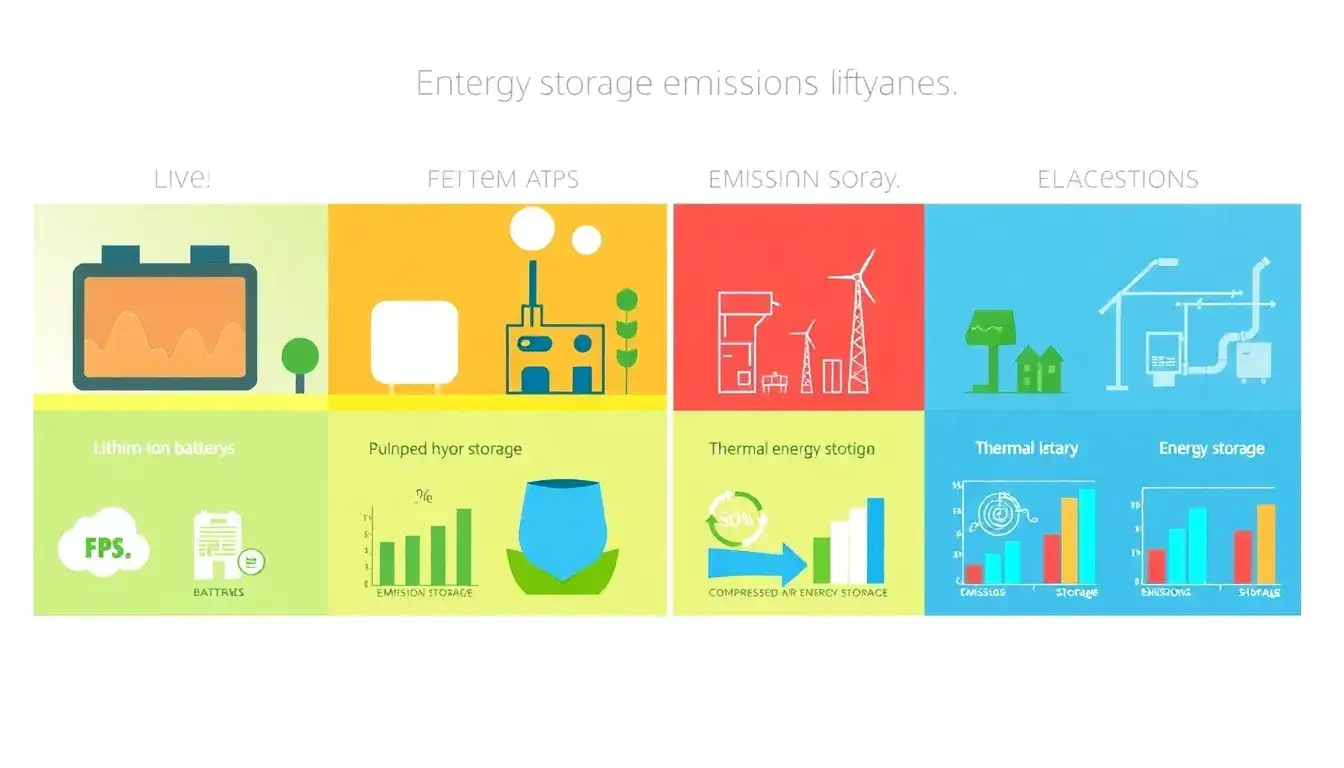
Comparing different energy storage technologies in terms of emissions reduction
Comparing different energy storage technologies in terms of emissions reduction involves considering the lifecycle emissions of each technology, including construction, operation, and decommissioning processes. Here’s a comparison of several common energy storage technologies:
Overview of Energy Storage Technologies
- Pumped Hydro Storage (PHS): PHS is considered one of the cleanest forms of energy storage, with low emissions primarily linked to construction materials and operational energy used to pump water. It offers substantial climate benefits by accommodating wind and solar generation.
- Lithium-Ion Battery Energy Storage Systems (BESS): These systems have higher life-cycle emissions due to energy-intensive manufacturing processes and materials used, such as lithium and cobalt. However, they are crucial for integrating variable renewable energy sources into the grid.
- Compressed Air Energy Storage (CAES): CAES typically requires natural gas for efficiency, leading to significant greenhouse gas emissions during operation. It is less carbon-friendly compared to PHS and some battery technologies.
- Vanadium Redox Flow Batteries (VRB): VRBs are known for their long lifespan and less toxic materials compared to Li-ion batteries, potentially offering a more environmentally friendly option for energy storage.
- Long Duration Energy Storage (LDES): LDES technologies, such as thermal storage or hydrogen fuel cells, offer extensive energy storage capabilities that can significantly reduce industrial emissions when paired with renewables.
Comparison Table
| Technology | Emissions Characteristics | Key Benefits |
|---|---|---|
| Pumped Hydro Storage (PHS) | Low emissions from construction and operation | Supports renewable integration, low emissions |
| Lithium-Ion BESS | High manufacturing emissions | Critical for integrating variable renewables, despite high lifecycle emissions |
| Compressed Air Energy Storage (CAES) | High operational emissions due to natural gas | Provides long-duration storage but with significant emissions |
| Vanadium Redox Flow Batteries (VRB) | Moderate emissions; potentially less toxic | Offers long lifespan and environmentally friendly materials compared to Li-ion |
| Long Duration Energy Storage (LDES) | Can significantly reduce industrial emissions when paired with renewables | Supports decarbonization of industrial processes |
Key Points
- Emissions Reduction Potential: PHS and LDES technologies are generally more effective in reducing overall emissions by facilitating the integration of renewable energy sources into the grid and supporting industrial decarbonization.
- Complexities in Emissions: While energy storage can enhance the use of renewables, its own emissions vary significantly based on the technology, materials, and operation. Policies should be designed to ensure that storage technologies support a low-carbon transition without unintended emissions increases.
Overall, the choice of energy storage technology should consider both the lifecycle emissions and the broader impact on reducing greenhouse gas emissions when integrated with renewable energy systems.
Original article by NenPower, If reposted, please credit the source: https://nenpower.com/blog/how-do-different-types-of-energy-storage-technologies-compare-in-terms-of-emissions-reduction/

