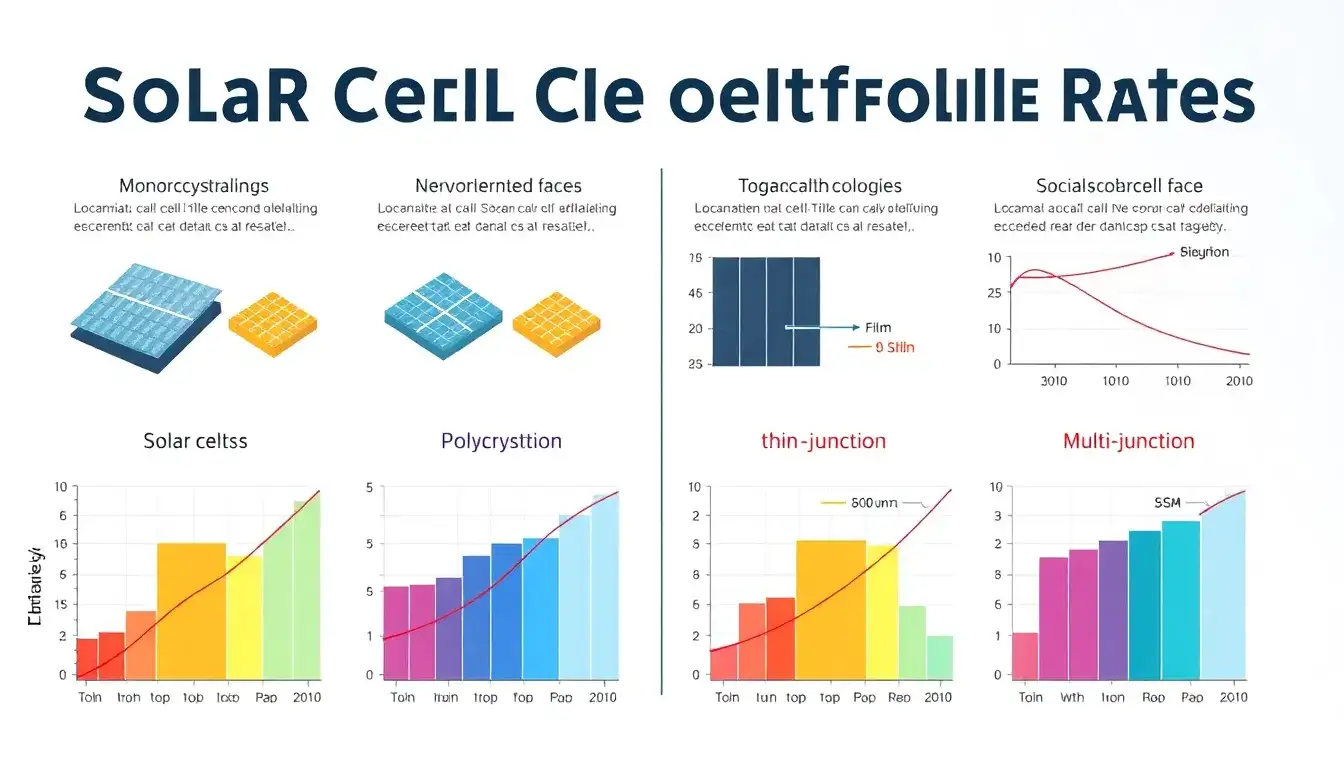
Different solar panel technologies exhibit varying degradation rates, which significantly influence their long-term efficiency, energy output, and financial viability. Here is a detailed comparison based on current industry data and studies:
Degradation Rates by Solar Panel Technology
| Solar Panel Type | Typical Annual Degradation Rate | Description and Impact |
|---|---|---|
| Monocrystalline Silicon | 0.3% – 0.5% | Monocrystalline panels degrade the slowest among common silicon types. They maintain more than 90% efficiency after 20 years and perform better in high-temperature environments due to higher heat tolerance. This slower decline leads to higher cumulative energy output over their lifetime despite being more expensive. |
| Polycrystalline Silicon | 0.5% – 0.7% | Polycrystalline panels generally degrade faster than monocrystalline, losing around 10% efficiency over 25 years in some climates. They are more affordable but yield lower long-term energy. |
| Thin-Film Panels | 1.0% – 1.5% | Thin-film technologies (amorphous silicon, CdTe, CIGS) typically have higher degradation rates, potentially losing over 30% efficiency in 20 years. They are more sensitive to environmental factors like shading, temperature swings, and dirt, which accelerate degradation. |
| Bifacial Panels | 0.25% – 0.35% | Bifacial panels capture sunlight on both sides, which helps reduce effective degradation and improve durability against environmental stressors like wind, snow, and hail. They degrade slower than traditional monofacial panels, potentially lengthening operational life and performance. |
| Glass-on-Glass (GOG) Panels | 0.2% – 0.3% | GOG panels are more robust than glass-on-backsheet designs, with dual glass protecting cells better from environmental damage like humidity and salt mist, resulting in lower degradation rates. |
| Glass-on-Backsheet (GOB) Panels | 0.5% – 0.7% | These panels degrade faster than GOG types due to less robust environmental protection, making them more prone to efficiency loss, especially in harsh environments. |
Additional Insights
- Environmental Influence: Temperature extremes, humidity, UV exposure, shading, and dirt all accelerate degradation. For example, monocrystalline panels tend to tolerate heat better, slowing performance loss compared to polycrystalline panels in hot climates.
- System vs. Module Degradation: While module degradation rates typically range below 1% per year for crystalline silicon, entire system degradation including balance-of-system components can be higher, sometimes exceeding 2% per year in certain cases, highlighting the importance of quality system design and maintenance.
- Recent Research and Improvements: Advances in materials, encapsulation, and panel design—including heterojunction technology and improved coatings—are pushing degradation rates lower, sometimes below 0.2% annually in top-tier panels. Smart monitoring technologies also help detect early signals of performance decline to mitigate losses.
- Economic Impact: Degradation directly affects energy output and return on investment. Panels with lower degradation rates sustain higher output over the warranty period (typically 25 years, with guarantees of 80%+ original capacity), improving financial returns for residential and commercial users.
Summary
- Monocrystalline and bifacial panels offer the best longevity with the lowest degradation rates (0.25%-0.5%/year).
- Polycrystalline panels have moderate degradation (0.5%-0.7%/year).
- Thin-film panels degrade faster (1%-1.5%/year) and are more vulnerable to environmental stresses.
- Glass-on-glass construction significantly enhances durability and reduces degradation compared to glass-on-backsheet panels.
Choosing the right technology depends on the balance between upfront cost, expected lifespan, environmental conditions, and performance requirements. For long-term projects, investing in lower degradation rate technologies like monocrystalline, bifacial, or glass-on-glass panels often results in better sustained energy yields and financial outcomes.
Original article by NenPower, If reposted, please credit the source: https://nenpower.com/blog/how-do-different-solar-panel-technologies-compare-in-terms-of-degradation-rates/