

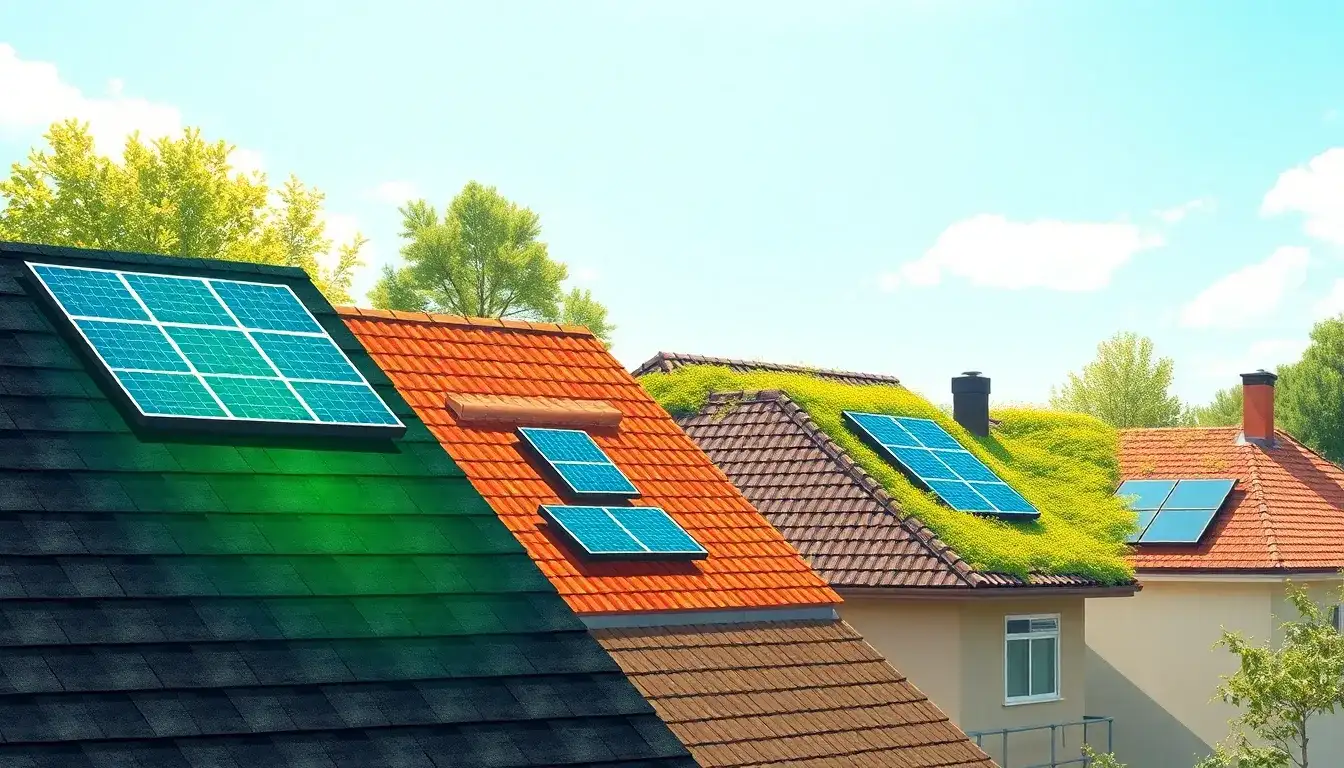
Impact of Roofing Materials on Solar Panel Temperature
- Light-Colored or Highly Reflective Roofs: Roof materials that are light in color or have high reflectivity (high albedo) tend to reflect more sunlight and absorb less heat. This reflection reduces the roof surface temperature beneath the solar panels, which helps keep the panels cooler. Cooler solar panels operate more efficiently because solar panel efficiency decreases as temperature rises. Using reflective roofing materials can thus enhance solar panel energy output by lowering panel temperatures.
- Dark, Heat-Absorbent Roofs: Conversely, dark roofing materials absorb more heat due to their lower albedo, raising the surface temperature of the roof. This leads to higher solar panel temperatures since the panels are in close proximity to the roof. Elevated temperatures reduce the panels’ efficiency, albeit the decrease is often slight but measurable.
- Metal and Tile Roofs: Some roofing materials like metal or tile reflect sunlight fairly well and dissipate heat efficiently. These materials create conditions favorable for solar panels by not increasing their temperature significantly and sometimes even aiding cooling through air circulation beneath the panels.
How Temperature Affects Solar Panel Efficiency
Solar panels are rated for peak efficiency around 59°F to 95°F (15°C to 35°C), with standard testing at about 77°F (25°C). When panel surface temperatures rise significantly above this range—e.g., up to 150°F (65°C) on hot days—efficiency drops. The temperature coefficient of a panel quantifies this: for each degree Celsius above 25°C, a typical panel might lose about 0.38% efficiency. Therefore, roofing materials that contribute to lower panel temperatures help maintain higher efficiency.
Additional Factors and Integrated Solutions
- Airflow and Installation: Proper mounting creating a ventilation gap between the roof and panels is essential to dissipate heat regardless of roofing type.
- Green and Cool Roofs: Combining solar panels with green roofs or cool roofs (highly reflective roofs) has been shown to reduce temperatures and increase panel output by 6–7% while mitigating urban heat increases caused by widespread solar deployment.
- Hybrid Cooling Technologies: Advanced solutions like water-cooled PV systems can manage excess heat to both improve panel efficiency and generate hot water, reducing the negative impact of roof heat on solar panels.
Summary Table
| Roofing Material Type | Effect on Roof and Solar Panel Temperature | Impact on Solar Panel Efficiency |
|---|---|---|
| Light-colored / Highly Reflective | Reflects sunlight, lowers roof surface temperature | Increases panel efficiency by reducing heat |
| Dark-colored / Heat-Absorbent | Absorbs more heat, raises roof and panel temperature | Slightly decreases panel efficiency |
| Metal / Tile | Reflective and good heat dissipation | Supports cooler panel temperatures |
| Green / Cool Roofs (Integrated) | Reflective or vegetated surfaces reduce heat buildup | Boosts panel efficiency and reduces urban heat |
In conclusion, roofing materials with higher reflectivity and better thermal properties help maintain lower operating temperatures for solar panels, leading to improved energy production. Dark, heat-retentive roofing raises panel temperatures and reduces performance slightly. Optimizing panel installation for ventilation and integrating panels with cool or green roofs can further enhance solar panel efficiency and minimize urban heat effects.
Original article by NenPower, If reposted, please credit the source: https://nenpower.com/blog/how-do-different-roofing-materials-impact-the-temperature-of-solar-panels/

