

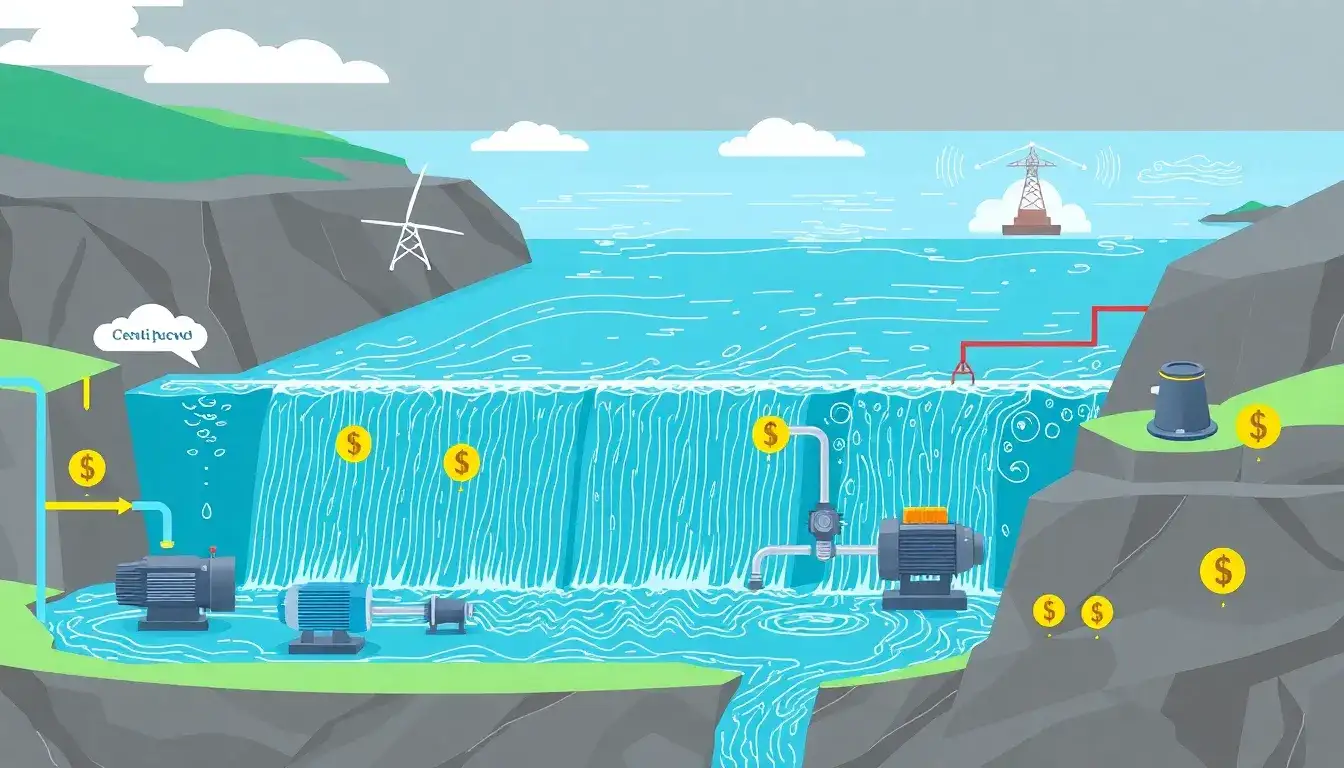
Different pumping technologies significantly impact the overall cost of pumped hydroelectric energy storage (PHES) by affecting efficiency, operational flexibility, and investment requirements. Here are some key aspects to consider:
Types of Pumping Technologies and Their Impact on Costs
- Variable Speed vs. Fixed Speed Turbines/Pumps:
- Variable Speed (Adjustable Speed, AS) Turbines/Pumps: These offer higher operational efficiency and flexibility, allowing for better adaptation to varying power demands. They can provide frequency regulation services, which can increase revenue and reduce overall costs by optimizing electricity purchase during off-peak hours.
- Fixed Speed (FS) Turbines/Pumps: These are less efficient and less flexible compared to AS systems. They cannot provide frequency regulation services while pumping and might require additional equipment for this purpose, potentially increasing costs.
- Reversible Turbine/Generator Assemblies: Reversible units can operate both as pumps and turbines, which simplifies the system design but may add complexity and cost due to the need for more sophisticated engineering and maintenance.
- Pump As Turbine (PAT) Systems: PAT systems utilize existing pumps to generate electricity during discharge, reducing the need for separate turbines. While they can be cost-effective, they often have lower efficiencies compared to traditional reversible turbine generators.
Economic Considerations
- Initial Investment Costs: Advanced technology like variable speed systems typically involves higher upfront costs due to the complexity of the equipment.
- Operational Efficiency: Higher efficiency technologies, such as adjustable speed systems, can reduce long-term operating costs by minimizing energy losses and optimizing energy storage and release.
- Maintenance and Repair Costs: More complex systems may require more frequent or costly maintenance, impacting overall lifecycle costs.
- Revenue Opportunities: The ability to provide grid services like frequency regulation can generate additional revenue and offset some operational costs.
Environmental and Social Costs
- Environmental Impact: While PHES is generally environmentally friendly, the construction of reservoirs can have significant environmental and social impacts, affecting local ecosystems and communities. These costs are not directly related to pumping technology but are important considerations in project development.
In summary, the choice of pumping technology in PHES affects not only the direct cost of equipment and maintenance but also operational efficiency, revenue opportunities, and the environmental footprint of the project. Advanced technologies like variable speed systems can optimize performance but require higher initial investments.
Original article by NenPower, If reposted, please credit the source: https://nenpower.com/blog/how-do-different-pumping-technologies-impact-the-overall-cost-of-pumped-hydroelectric-energy-storage/

