

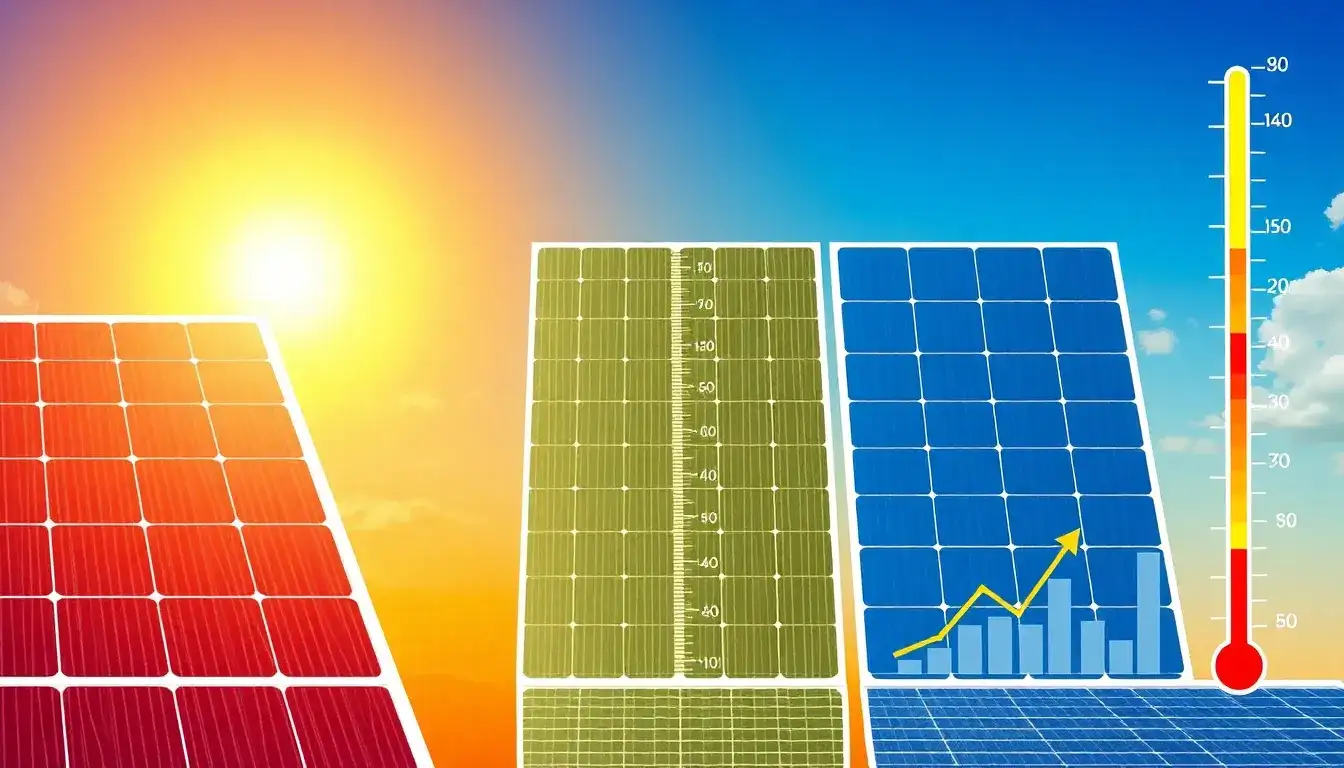
Solar panels’ efficiency in high temperatures varies depending on the materials used in their construction. Here’s how different materials impact efficiency under elevated temperatures:
Material Types and Temperature Sensitivity
-
Crystalline Silicon (Mono and Poly-Crystalline):
- These are the most common types of solar panels and have temperature coefficients between -0.3% to -0.5% per 1°C above 25°C. This means their efficiency decreases as temperature increases.
-
INTERDIGITATED BACK CONTACT (IBC) Solar Panels:
- Temperature Coefficient of 0.29%/°C, which is lower than many other types, meaning they lose less efficiency per degree of temperature rise. They are preferred in high-temperature conditions due to their improved thermal stability and reduced internal resistance.
-
Passivated Emitter and Rear Contact (PERC) Solar Panels:
- Have a slightly higher temperature coefficient of approximately 0.34%/°C, making them less efficient in high temperatures compared to IBC panels.
-
Thin Film Solar Panels:
- Often used in high-temperature environments as they have a lower temperature coefficient compared to traditional crystalline silicon panels. However, they generally have lower efficiencies under standard conditions.
Innovative Materials and Technologies
-
Bifacial Solar Panels:
- These panels can capture sunlight from both sides, potentially reducing temperature sensitivity while increasing overall efficiency.
-
Specialized Coatings and Cooling Systems:
- Employing heat dissipation techniques like passive or active cooling systems can reduce panel temperatures, thus improving efficiency under high temperatures.
Installation Factors
-
Installation Method:
- Ground-mounted or rack-mounted panels typically perform better in hot conditions compared to roof-mounted setups due to better airflow.
-
Panel Color and Material:
- Lighter-colored panels or materials absorb less heat than darker ones, maintaining lower operational temperatures.
In summary, the choice of material significantly affects solar panel efficiency in high temperatures, with IBC panels offering better performance in such conditions. Innovations in materials and technologies, along with optimal installation methods, can further enhance efficiency under elevated temperatures.
Original article by NenPower, If reposted, please credit the source: https://nenpower.com/blog/how-do-different-materials-used-in-solar-panels-affect-their-efficiency-in-high-temperatures/

