

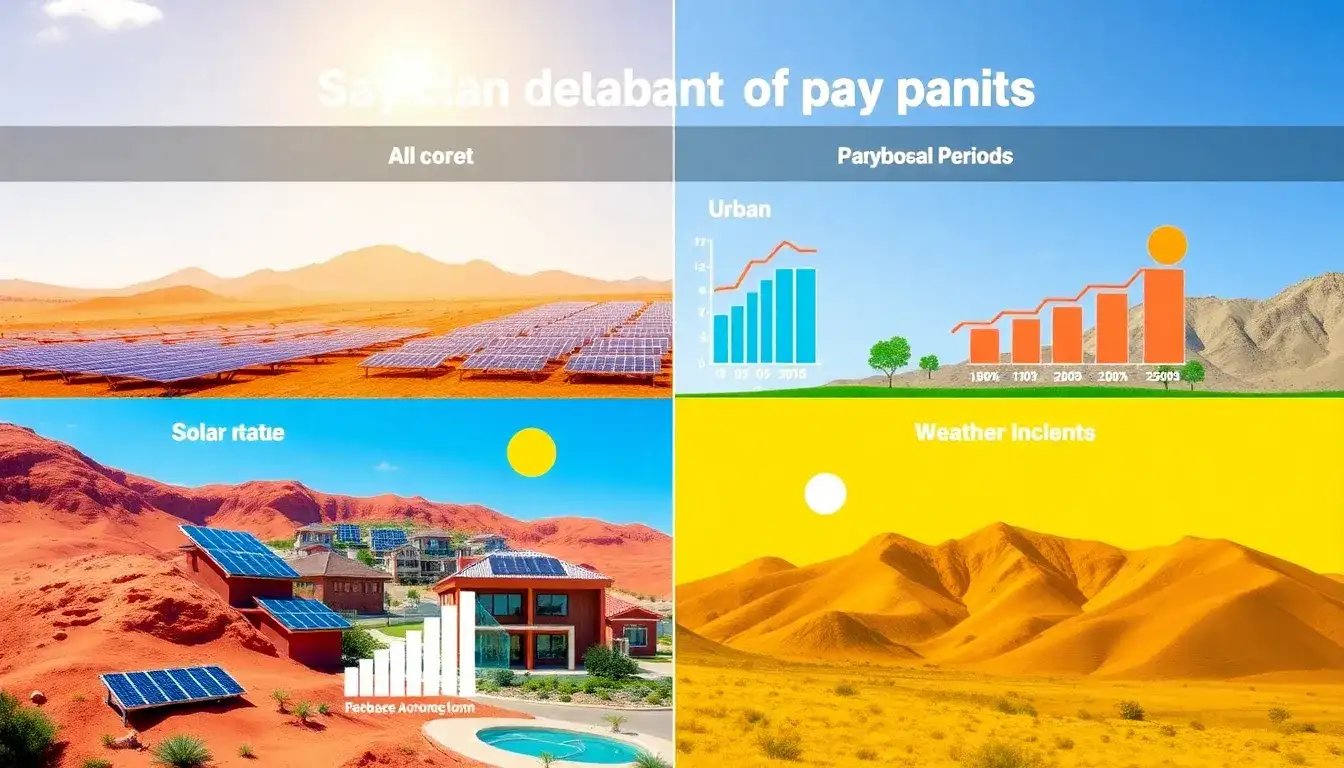
The payback period of solar panels is significantly influenced by location due to factors such as sunlight availability, electricity costs, and regional incentives. Here’s how different locations affect the payback period:
Key Location Factors
- Sunlight Availability: Locations with abundant sunlight, like Arizona and Nevada, tend to have shorter payback periods because they generate more electricity per day. Conversely, regions with less sunlight, such as New England or the Pacific Northwest, have longer payback periods.
- Electricity Costs: Areas with high electricity rates, such as California or Massachusetts, benefit from faster payback periods because solar energy helps avoid higher utility bills. In contrast, regions with low electricity costs typically have longer payback periods.
- Regional Incentives: Locations offering generous solar incentives, such as state rebates or net metering policies, can significantly shorten the payback period by reducing upfront costs.
Payback Period by Region
- High-Sunlight Regions: States like California and Arizona typically have payback periods between 6 to 8 years.
- Moderate-Sunlight Regions: Areas like New York and Illinois usually see payback periods ranging from 9 to 11 years.
- Lower-Sunlight Regions: Regions like Alaska or the Pacific Northwest often have payback periods exceeding 12 years.
Strategies to Optimize Payback in Different Locations
- Maximize Sunlight Exposure: Ensure panels are optimally angled and unshaded to maximize energy production.
- Utilize Local Incentives: Take advantage of federal, state, and utility incentives to reduce upfront costs.
- Optimize System Design: Tailor the solar system size to match energy usage for maximum savings.
Original article by NenPower, If reposted, please credit the source: https://nenpower.com/blog/how-do-different-locations-affect-the-payback-period-of-solar-panels/

