

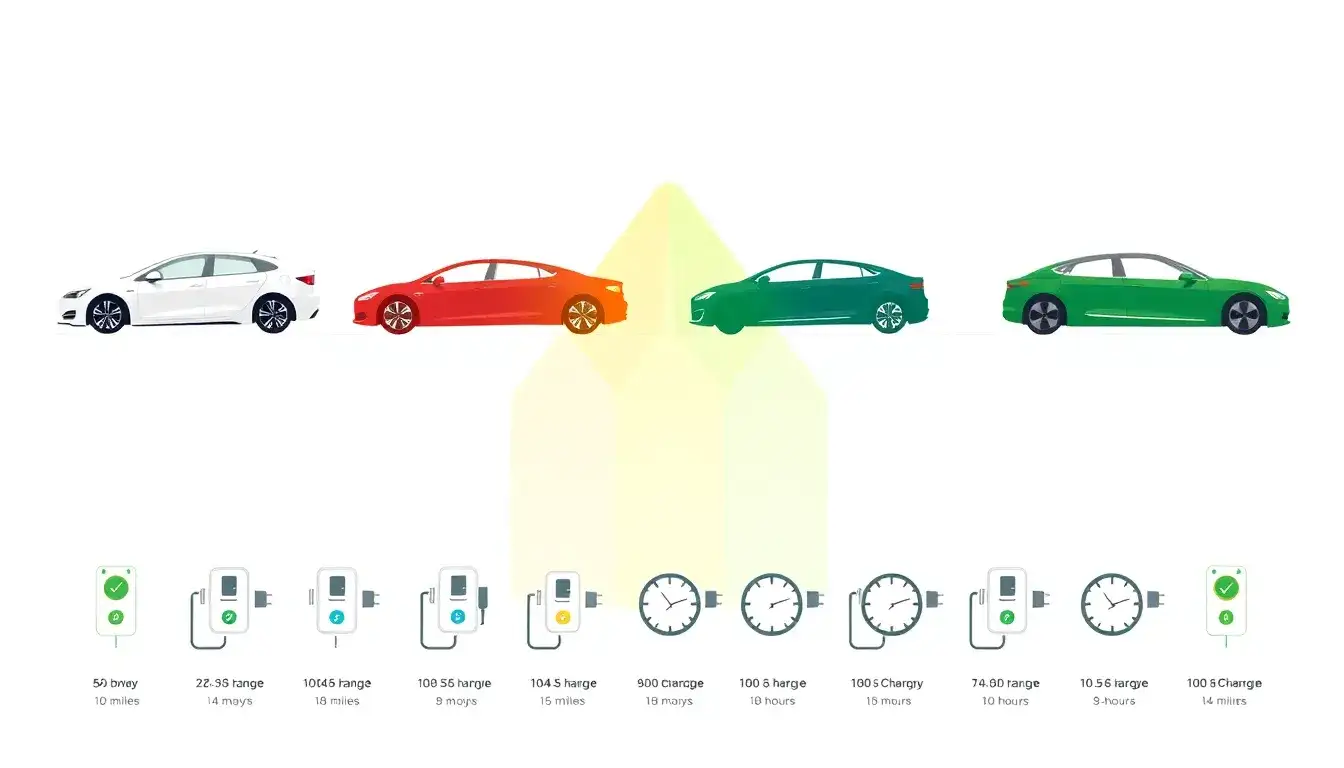
Electric vehicles (EVs) vary significantly in terms of range and charging time, which are crucial factors for potential buyers. Here’s a comparison of different EV models:
Range Comparison
- Longest Range Models:
- 2025 GMC Sierra EV Denali: Offers an impressive range of up to 507 miles.
- 2022 Lucid Air Dream Range: Known for its extensive range of approximately 505 miles.
- 2024 Chevrolet Silverado EV RST: Provides a range of around 400 miles.
- Mid-Range Models:
- Mercedes EQS: Offers a range of about 400 miles.
- Tesla Model S: Boasts a range of approximately 320 miles.
- Shorter Range Models:
- MG ZS EV Standard Range: Offers a range of around 265 miles.
- Renault 5 E-Tech 40kWh: Has a range of about 255 miles.
Charging Time Comparison
The charging time for EVs depends on several factors, including the type of charger and the vehicle’s battery capacity. Here are some general observations:
- Fast Charging: High-end models like the Lucid Air can charge from 0 to 100% in under 30 minutes using ultra-fast charging systems (450 kW). However, most EVs typically require around 30-60 minutes to charge from 10% to 80% using fast charging options (100 kW to 150 kW).
- Regular Charging (AC): For standard AC charging, most EVs can fully charge overnight, typically taking around 8-12 hours depending on the charger’s output (e.g., 7 kW) and the car’s battery size.
Key Factors to Consider
- Battery Size: Larger batteries generally offer longer ranges but may also increase charging times.
- Charger Type: DC Fast Charging systems significantly reduce charging times, especially for long-range drives.
- Efficiency: Models with higher efficiency tend to achieve longer ranges from their battery capacity.
In conclusion, choosing an EV involves balancing range, charging speed, and overall vehicle features based on your needs and lifestyle.
Original article by NenPower, If reposted, please credit the source: https://nenpower.com/blog/how-do-different-ev-models-compare-in-terms-of-range-and-charging-time/

