

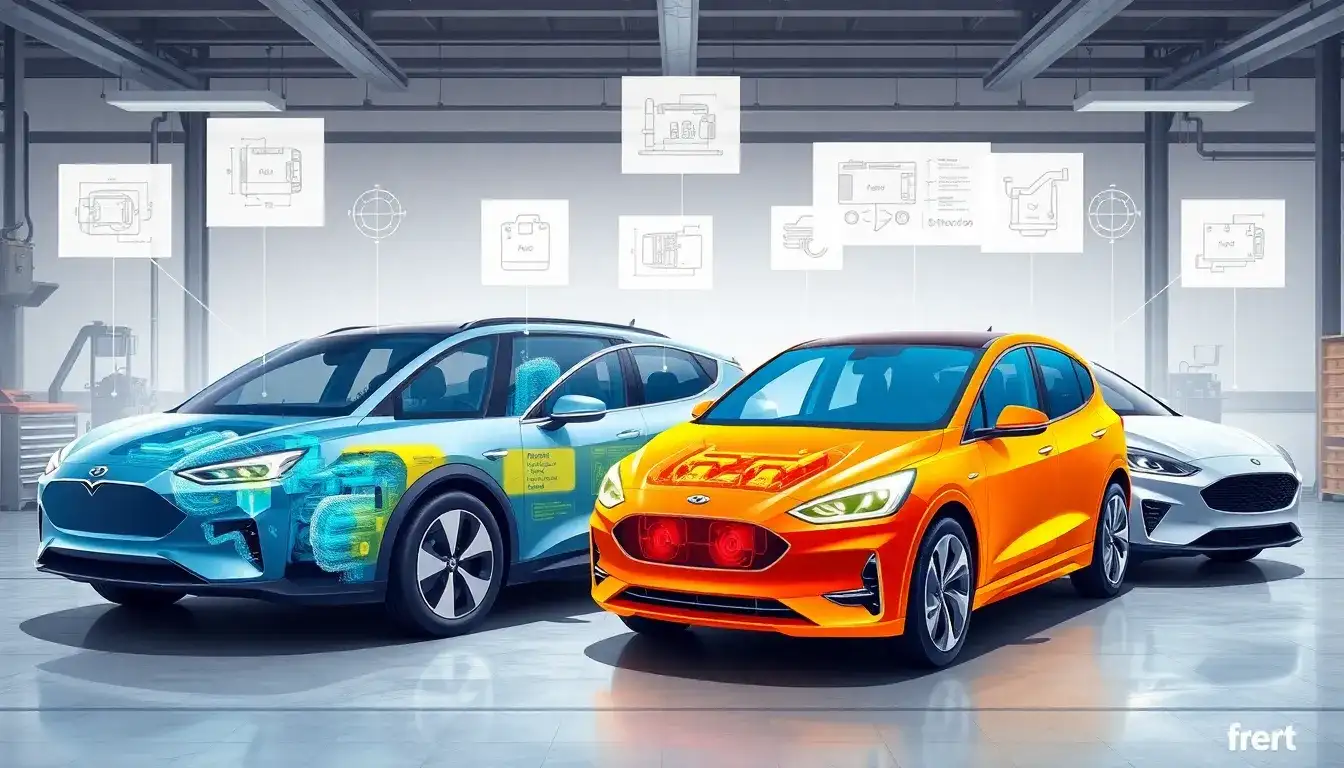
EV manufacturers implement thermal management systems through various approaches tailored to optimize component efficiency, safety, and passenger comfort. Below are key methodologies and technologies used across the industry:
Coolant and Refrigerant Systems
- Liquid coolant loops: Circulate coolant around the battery pack, inverter, and motors to maintain temperatures between 15–45°C. Some manufacturers use separate low- and high-temperature loops for components like motors and batteries.
- Refrigerant-based cooling: Employ heat pumps and chillers for battery and cabin cooling. Refrigerant loops use pressure sensors, temperature sensors, and specialized R744 (CO₂) sensors for precise control.
- Integrated heat pumps: Recycle waste heat from motors and electronics to warm the cabin or battery in cold climates.
Adaptive Control Strategies
- Condition-based operation:
- Cold conditions (<0°C): Electric heaters warm the battery and cabin, while coolant pumps circulate fluid once components reach threshold temperatures.
- Moderate conditions (0–25°C): Heat from motors and inverters is dissipated via low-temperature radiators.
- Hot conditions (>25°C): Chillers cool the battery, while refrigerant loops and radiators manage motor and cabin temperatures.
- Neural network models: Simplify complex thermal interactions for real-time control, balancing energy efficiency and performance.
Sensor Integration and Monitoring
- Battery management: Sensors track coolant temperatures at cold plates, cell/busbar temperatures, and refrigerant pressure.
- Multi-loop coordination: Pressure and temperature sensors at expansion valves and heat exchangers optimize cooling/heating across loops.
- Amphenol’s approach: Combines cell-level temperature sensors with CO₂ refrigerant sensors to prevent system overload.
Component-Specific Thermal Design
- Motors/Inverters: Cooled via dedicated liquid loops or low-temperature radiators to prevent demagnetization and insulation degradation.
- Battery packs: Use cold plates or refrigerant-based chillers, with some systems integrating phase-change materials for heat absorption.
System-Level Modeling
- Simulation tools: MathWorks and Siemens Simcenter model entire thermal systems, including cabin climate, refrigeration loops, and vehicle dynamics.
- Cross-domain integration: Combine physics-based models (e.g., refrigerant phase changes) with machine learning to predict thermal loads.
By prioritizing component-specific cooling, adaptive control, and advanced sensor networks, manufacturers like Tesla, BMW, and Hyundai optimize range and reliability across diverse climates.
Original article by NenPower, If reposted, please credit the source: https://nenpower.com/blog/how-do-different-ev-manufacturers-implement-temperature-management-systems/

