

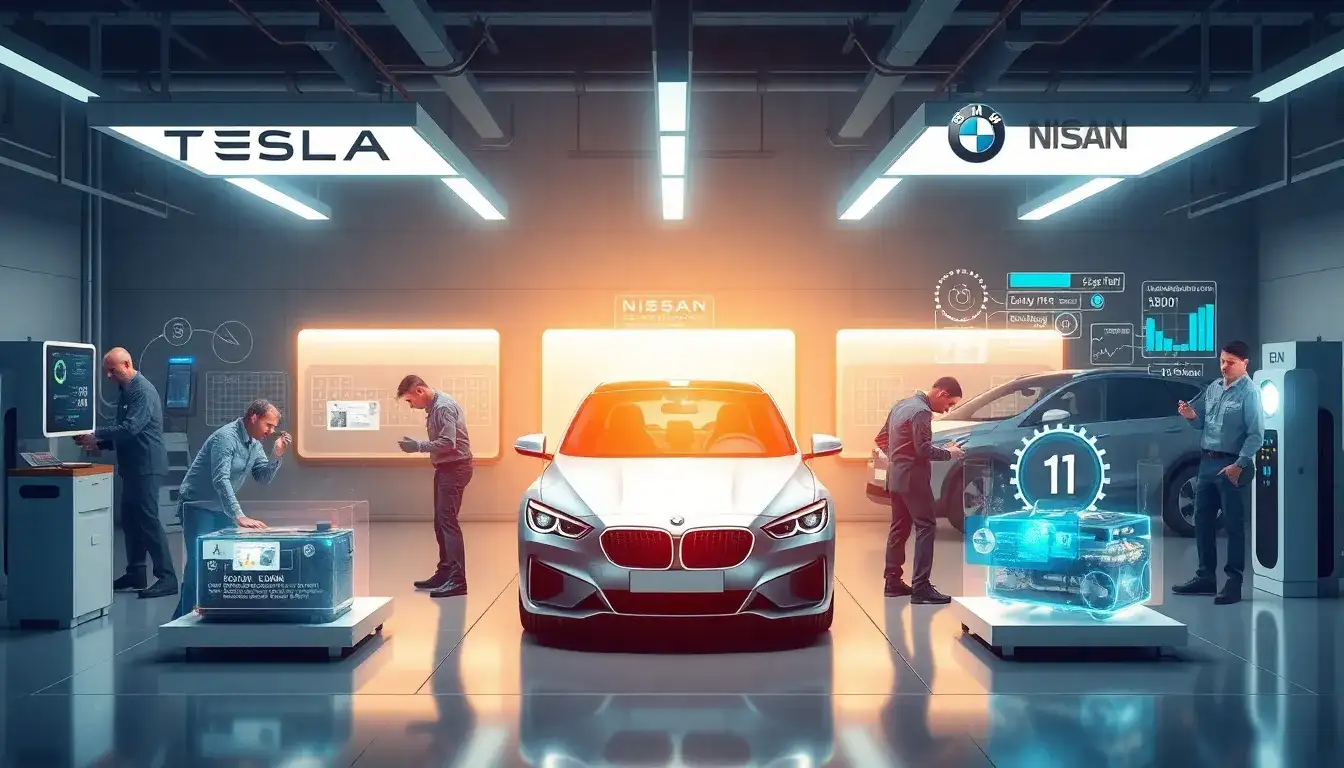
Different electric vehicle (EV) manufacturers generally adopt similar core approaches to battery maintenance, focusing on preserving battery health, optimizing lifespan, and preventing degradation. Their strategies include controlled charging practices, thermal management, software updates, and scheduled diagnostics, although the emphasis and specific recommendations can vary. Key approaches include:
Common Battery Maintenance Approaches by EV Manufacturers
1. Charge Management: Avoiding Full Discharge and Overcharging
Most manufacturers recommend maintaining the battery charge between about 20% and 80% to avoid stress on the battery cells. Fully discharging or continuously charging to 100% can accelerate battery wear and capacity loss. Some manufacturers provide software limits or user settings to cap charging at 80% for daily use, reserving full charges for long trips. They also suggest starting to charge when the battery level drops to around 30% to avoid deep discharge damage and range anxiety.
2. Use of Appropriate Charging Speeds
For daily charging, slower Level 2 AC chargers are preferred to minimize heat and stress on the battery. Fast DC charging is recommended only occasionally for emergencies or quick top-ups, as frequent fast charging can degrade the battery faster due to increased heat and charging rates.
3. Thermal Management and Storage Practices
To reduce battery degradation, EV manufacturers often advise parking and charging vehicles in shaded or cooler environments to avoid extreme heat exposure. Internal thermal management systems in EVs actively regulate battery temperature during operation and charging, especially in premium models.
4. Software Updates and Battery Management Systems (BMS)
Manufacturers frequently release over-the-air or dealer-installed software updates to improve battery management algorithms, optimize charging protocols, and better monitor battery health. The BMS plays a critical role in protecting the battery from damage by controlling charge and discharge rates, balancing cell voltages, and providing diagnostic data for preventative maintenance.
5. Conditioning and Battery Diagnostics
Some manufacturers or service centers may recommend occasional battery conditioning cycles, which involve controlled full charges and discharges to recalibrate the battery management system and maintain capacity. Diagnostic tools can assess battery health and performance, helping to identify issues early and extend battery life.
6. Scheduled Maintenance and Preventative Care
While EVs typically require less maintenance than internal combustion vehicles, manufacturers suggest routine checkups including battery system inspections, cooling system maintenance, and software checks to ensure optimal battery performance and safety.
Overall, while specific implementations vary, the consensus among EV manufacturers emphasizes maintaining partial charge ranges, limiting frequent fast charging, managing temperature exposure, updating software, and conducting periodic diagnostics to prolong battery health and EV performance. These strategies collectively help reduce capacity loss and extend the battery’s usable life.
Original article by NenPower, If reposted, please credit the source: https://nenpower.com/blog/how-do-different-ev-manufacturers-approach-battery-maintenance/

