

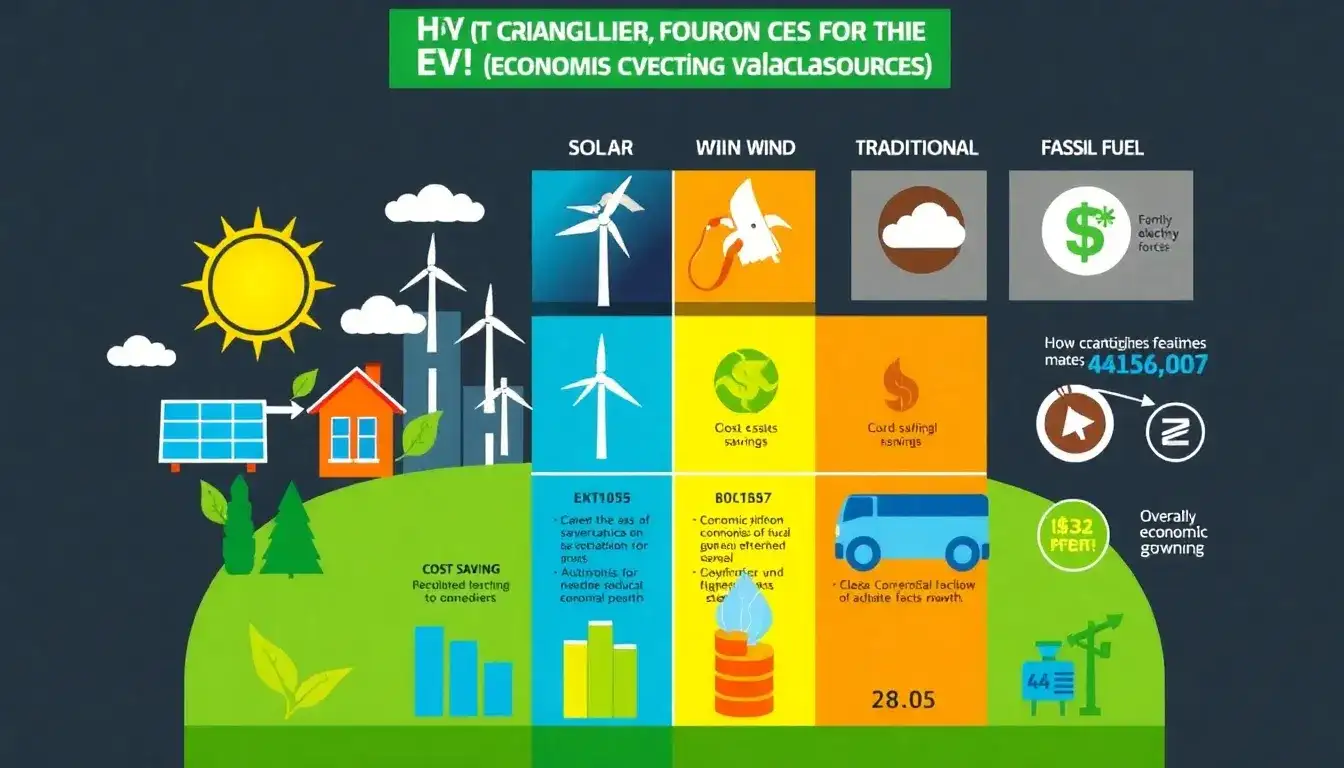
Different energy sources used for electric vehicle (EV) charging significantly influence the overall economic benefits by affecting costs, environmental impact, grid demand, and infrastructure requirements.
Impact of Energy Sources on Economic Benefits
1. Cost Differences by Energy Source
- EV charging powered by renewable energy sources such as solar, wind, hydro, geothermal, and tidal can reduce operational costs over time due to the low or zero marginal cost of energy once infrastructure is in place. However, upfront investments in renewable capacity or integration with the grid can be higher.
- Charging EVs from conventional grid electricity, which may include fossil fuel generation, is generally cheaper upfront but potentially more costly in terms of environmental externalities and potential future carbon pricing. The cost of EV charging itself tends to be significantly lower than liquid fuels like gasoline or diesel, contributing to overall economic savings for consumers and fleets.
- Grid electricity costs vary regionally and depend on the generation mix. Increased use of renewables can lower long-term costs but may require grid upgrades to accommodate variability and storage.
2. Infrastructure and Grid Interaction
- The type of charging infrastructure interacts with energy source economics. Slow chargers (up to 22 kW) are more suited to home or workplace charging, which often uses the existing electrical grid potentially supplemented by rooftop solar panels, offering convenience and cost efficiency.
- Fast chargers (above 22 kW and up to 350 kW) require more power and infrastructure investment and usually rely on grid electricity. They are critical for public and commercial charging networks, and their integration with renewable energy or energy storage systems can optimize costs and reduce peak demand charges.
- The expanding charging infrastructure, including public and private stations, needs to be planned with awareness of the energy source mix to maximize economic benefits and grid stability.
3. Environmental and Long-term Economic Benefits
- Using cleaner energy sources for EV charging reduces greenhouse gas emissions and air pollution, leading to economic benefits related to public health improvements and climate change mitigation. This indirectly contributes to lowering societal costs and enhancing economic productivity.
- The degree to which renewable energy is used currently is limited but growing (around 36% of EV charging powered by renewables as of recent data), enhancing sustainability and economic incentives for further adoption.
Summary
| Factor | Renewable Energy Charging | Grid-based (Mixed Source) Charging | Fossil Fuel-based Charging (Indirect) |
|---|---|---|---|
| Upfront Infrastructure Cost | High (solar panels, storage) | Moderate (grid connection and upgrades) | Lower (existing infrastructure) |
| Operational Energy Cost | Low to zero | Variable, depending on grid mix | Higher for liquid fuels |
| Environmental Impact | Low (near zero emissions) | Moderate (depends on grid generation mix) | High (direct fossil fuel combustion) |
| Grid Stability & Demand Impact | Potentially variable, needs storage and management | Depends on load and grid mix | Not applicable to EV charging directly |
| Long-term Economic Benefits | High (savings + health benefits) | Moderate to high | Low (higher fuel costs, pollution costs) |
In conclusion, EV charging powered increasingly by renewable energy offers the greatest overall economic benefits through reduced energy costs, health and environmental savings, and alignment with decarbonization goals. Conversely, reliance on conventional grid electricity or fossil fuels diminishes these benefits but still generally costs less than liquid fuels and supports growing EV infrastructure needs.
Original article by NenPower, If reposted, please credit the source: https://nenpower.com/blog/how-do-different-ev-charging-energy-sources-affect-the-overall-economic-benefits/

