

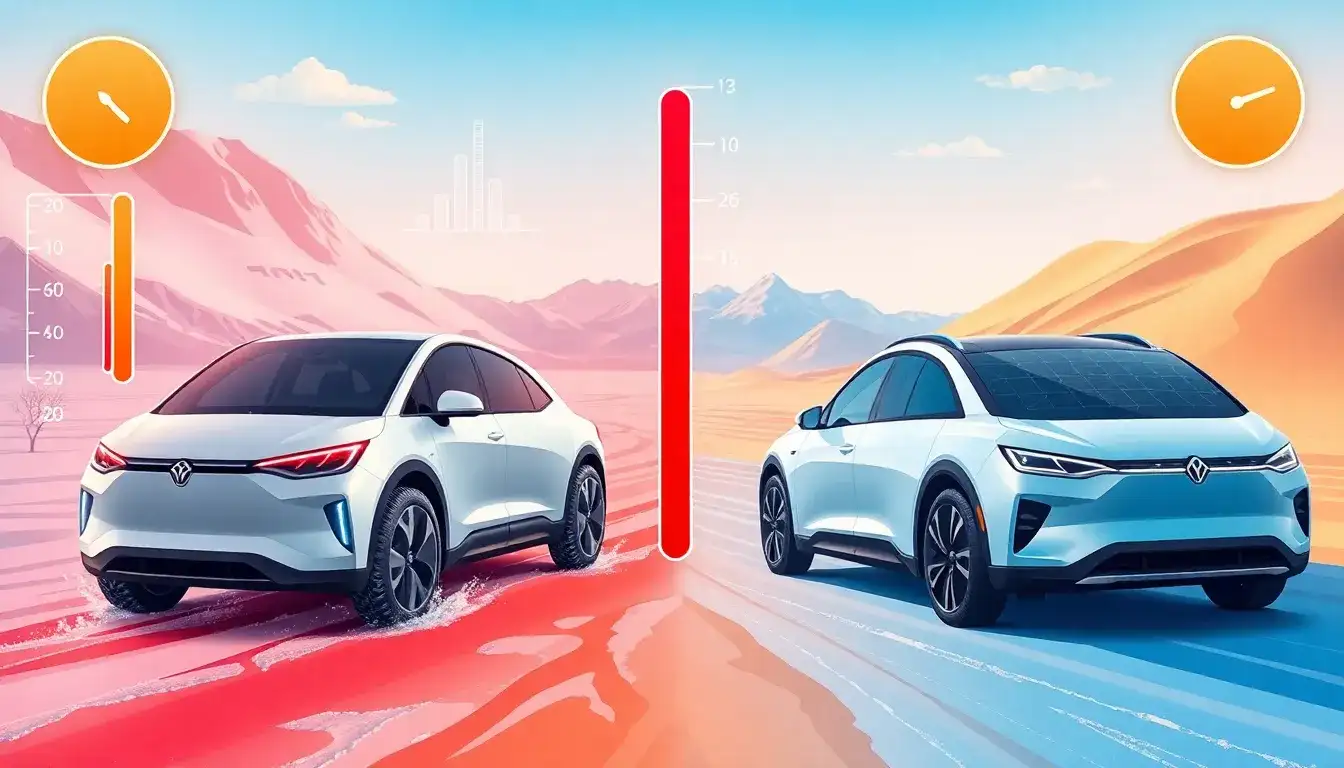
Different electric vehicle (EV) brands handle temperature variations primarily through advanced thermal management systems designed to optimize battery, motor, and cabin temperatures across various environmental conditions. These systems are crucial because battery performance and longevity, as well as passenger comfort, depend heavily on maintaining ideal operating temperatures.
Key Approaches to Thermal Management in EVs
Battery and Motor Temperature Control
EV thermal management systems actively cool and heat critical components like batteries and electric motors to keep them within optimal temperature ranges. This prevents issues such as battery degradation, motor burnout, and efficiency losses related to temperature extremes. For example, motors can experience demagnetization or insulation aging if overheated, so thermal systems prevent these problems by precise temperature regulation.
Cold Climate Management
In cold conditions, EV brands incorporate strategies to prevent battery temperature from falling too low, which can reduce charge rates and performance. They do this by controlling charge rates to allow the battery to warm up before fast charging and by using heaters or heat pumps to provide warmth. Unlike internal combustion engine (ICE) vehicles that use waste heat to keep warm, EVs must use dedicated thermal management systems to maintain battery and cabin warmth efficiently.
Efficient Heating and Cooling Technologies
EVs often employ heat pump systems, heated/cooled seats, and targeted climate control to reduce energy consumption while keeping the cabin comfortable. This targeted approach is more efficient than simply heating or cooling the entire space, helping preserve driving range. Heat pumps in EVs provide superior performance in extreme temperatures compared to traditional ICE vehicles’ waste heat, especially during snowstorms or traffic jams.
Integrated Thermal Management for Range and Safety
Thermal management systems also play a role in preserving EV range by minimizing the energy used for climate control, which can otherwise reduce driving range by up to 68%. Manufacturers and research organizations like NREL focus on reducing the number of coolant loops and integrating thermal systems to reduce weight and energy consumption, thereby improving range and driver comfort. Enhanced thermal comfort reduces driver distraction and improves safety.
Summary of How Different EV Brands Handle Temperature Variations
| Aspect | Approach by EV Brands | Benefits |
|---|---|---|
| Battery thermal regulation | Heating/cooling battery with liquid loops, heat pumps | Maintains battery health and charging efficiency |
| Motor temperature control | Active cooling systems to prevent motor damage | Prevents motor burnout and efficiency losses |
| Cold weather strategies | Warm battery before high charge rates, use cabin heaters | Ensures stable performance in cold climates |
| Cabin climate control | Heat pumps, heated/cooled seats, zone-specific heating | Preserves range and improves passenger comfort |
| Integrated system optimization | Combining heating and cooling loops, reducing system weight | Increases overall vehicle efficiency and range |
In sum, leading EV brands adopt sophisticated thermal management systems that respond dynamically to temperature changes, balancing component protection, passenger comfort, and driving range effectively in both hot and cold environments.
Original article by NenPower, If reposted, please credit the source: https://nenpower.com/blog/how-do-different-ev-brands-handle-temperature-variations/

