

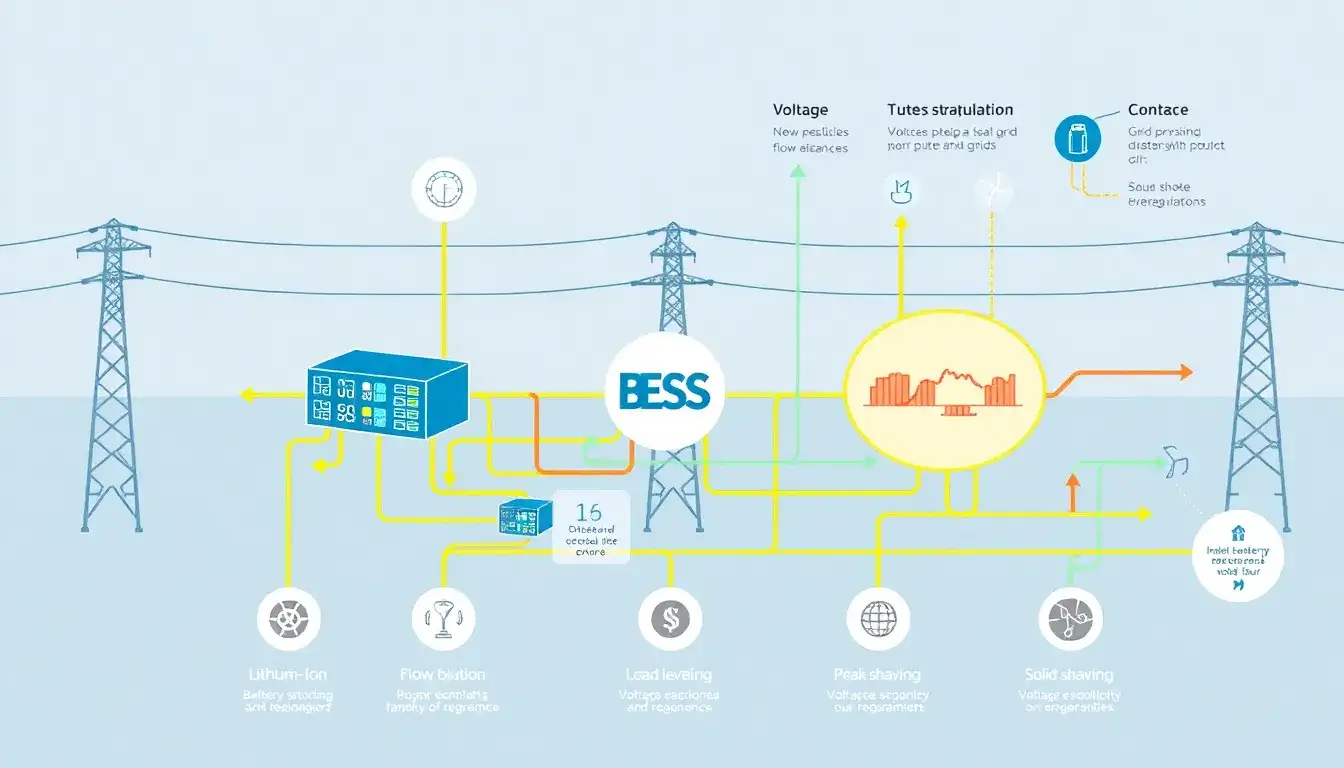
Different control strategies for Battery Energy Storage Systems (BESS) can significantly impact grid stability by addressing various challenges such as frequency regulation, peak shaving, and voltage stability. Here’s how different strategies influence grid stability:
Impact of Control Strategies on Grid Stability
1. Frequency Regulation
- Adaptive and Coordinated Control: Strategies that utilize state-machine-control techniques allow BESS and wind power plants (WPP) to share frequency response obligations. This approach ensures continuous power supply by maintaining an optimal state of charge (SOC) for the BESS, thereby enhancing grid stability during frequency fluctuations.
- Switching Control Strategies: These strategies enable real-time adjustments to energy storage power outputs during frequency fluctuations, helping stabilize the grid by supporting system frequency.
2. Peak Shaving and Valley Filling
- Optimization Models: Research suggests using optimization models to manage BESS for peak shaving and valley filling. This approach helps in balancing load demands, reducing peak loads, and improving overall grid stability by mitigating the impact of load fluctuations.
- Multi-Objective Control: Strategies that switch between peak regulation and frequency modulation based on system conditions improve the utilization of BESS, ensuring better support during peak hours and enhancing grid stability.
3. Voltage Regulation
- Reactive Power Management: Control strategies employing reactive power management can enhance voltage quality by coordinating energy storage with other power sources. This improves grid stability by maintaining optimal voltage levels across different conditions.
- Timing Coordination Methods: These methods coordinate the participation of reactive power sources and energy storage to regulate grid voltage, ensuring consistency and stability in power supply.
Conclusion
Control strategies for BESS play a critical role in maintaining grid stability by optimizing energy storage operations for frequency regulation, peak shaving, and voltage stability. Effective coordination and adaptive strategies ensure that BESS complements renewable energy sources, providing robust support to the grid during various operational scenarios.
Original article by NenPower, If reposted, please credit the source: https://nenpower.com/blog/how-do-different-control-strategies-for-bess-impact-grid-stability/

