

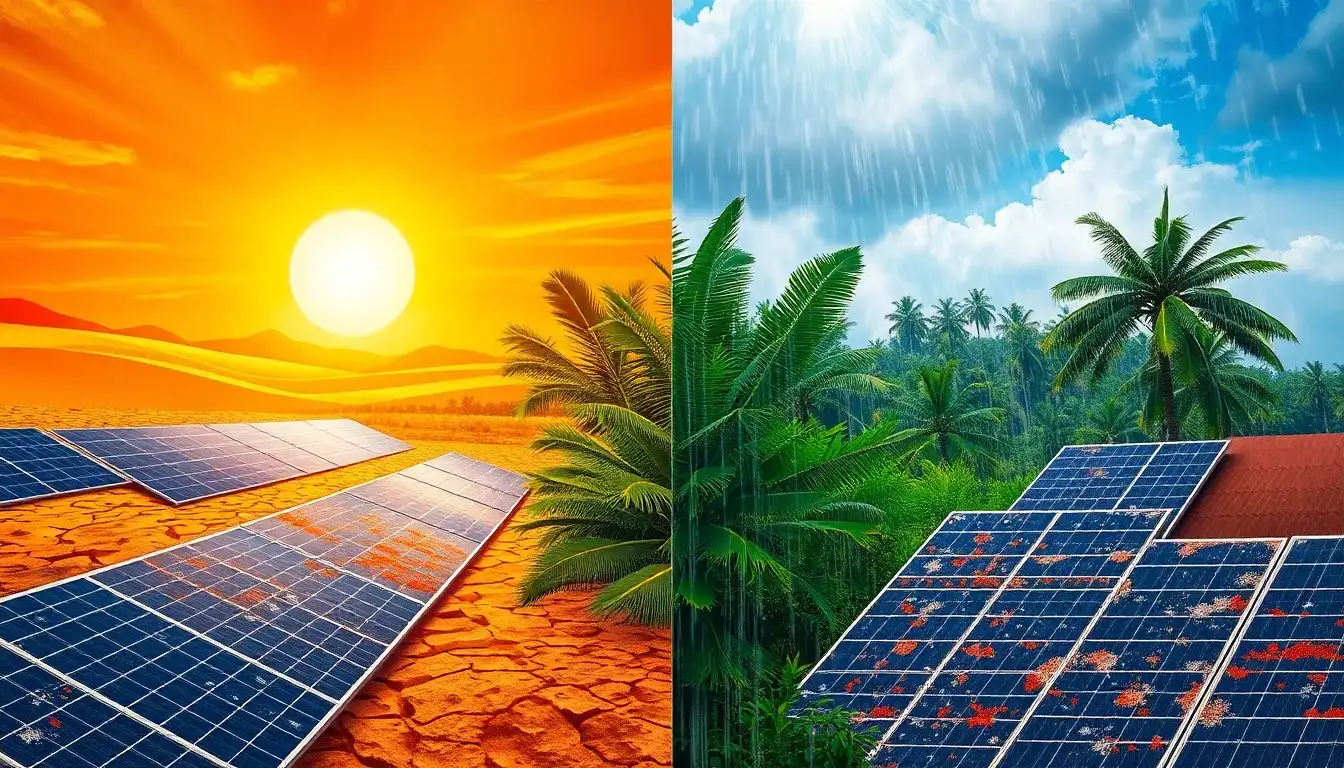
Solar panel degradation varies significantly across climate zones due to differing environmental stressors. Key findings from recent studies include:
Hot and Humid Climates
- Thermal degradation dominates due to prolonged high temperatures and humidity.
- Hydrolysis accelerates in moist conditions, degrading encapsulants and backsheets.
- Projected impacts: Degradation rates could nearly double by 2100 in regions like northern Australia, leading to 8.5–12% increased power loss by 2059.
Desert and Arid Regions
- Lower humidity reduces hydrolysis risks, but high daytime temperatures drive thermal stress.
- Sand and dust cause abrasion and soiling, reducing efficiency.
- Projections: Degradation increases are smaller compared to humid zones but still significant due to extreme heat.
Temperate and Moderate Climates
- Balanced degradation: Moderate temperatures and humidity result in slower degradation rates.
- Key stressors: Occasional thermal cycling (day-night temperature swings) and UV exposure still contribute to long-term wear.
Extreme Weather Events
- Hail (>25 mm) and high winds (>90 km/h) cause immediate mechanical damage (cracks, delamination).
- Snow loads (>1 m) stress mounting systems, accelerating structural fatigue.
- Long-term effects: Systems exposed to extreme weather show above-average annual degradation rates post-event.
Comparison of Degradation Mechanisms by Climate
| Climate Type | Primary Stressors | Degradation Rate |
|---|---|---|
| Hot and Humid | Thermal, hydrolysis, UV | Highest (up to 2× by 2100) |
| Desert | Thermal, soiling, dust | Moderate-High |
| Temperate | Thermal cycling, UV | Low-Moderate |
| Extreme Weather Zones | Hail, wind, snow | Spikes post-event |
Mitigation Strategies
- Hot climates: Use heat-dissipating module designs and corrosion-resistant materials.
- Humid zones: Prioritize hydrophobic encapsulants to minimize hydrolysis.
- High-risk weather areas: Adopt hail-resistant coatings and wind-rated mounting systems.
These insights highlight the need for climate-specific PV module engineering to ensure long-term efficiency and cost-effectiveness.
Original article by NenPower, If reposted, please credit the source: https://nenpower.com/blog/how-do-different-climates-affect-solar-panel-degradation/

