

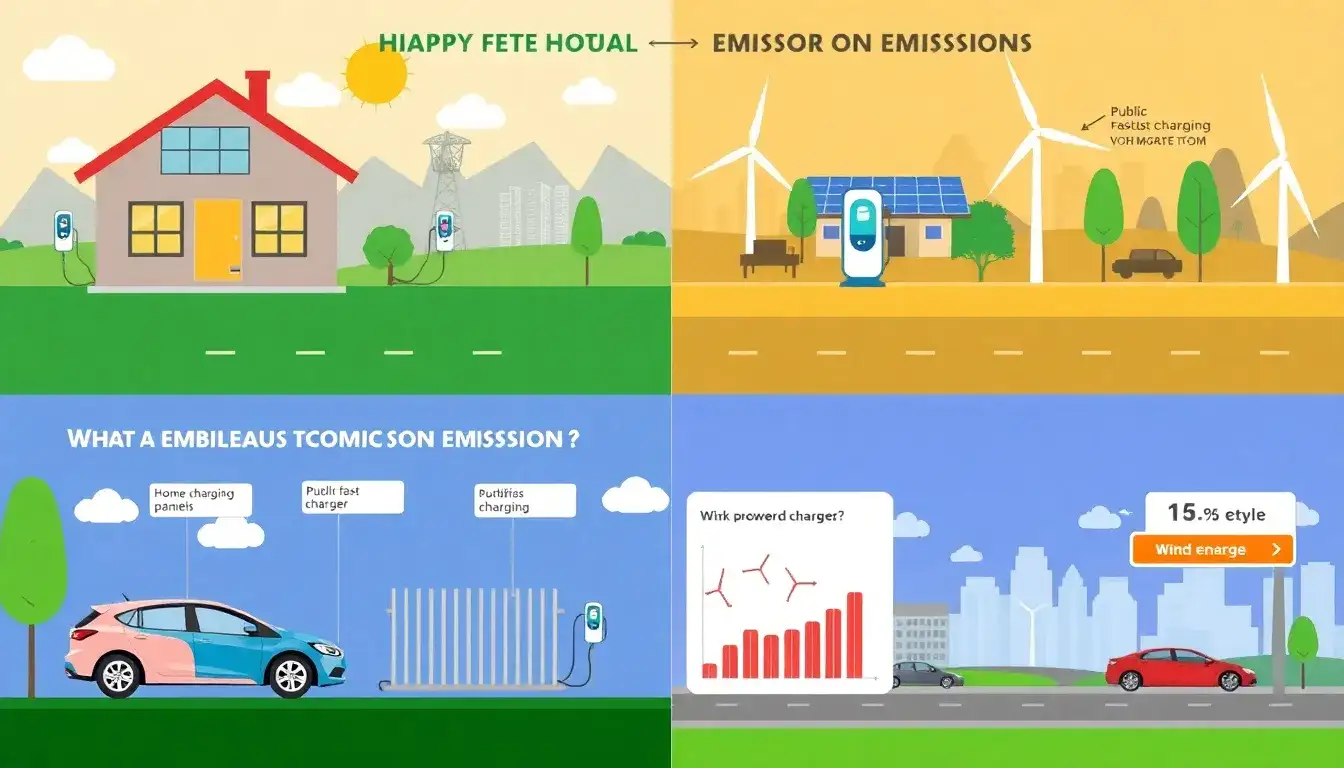
Electric Vehicle Charging Emissions Overview
Electric vehicle charging emissions vary significantly based on timing, grid composition, and charging strategy. Here’s how different scenarios impact emissions:
1. Time-of-Day Charging
- Daytime charging (especially with solar-rich grids) produces lower emissions than nighttime charging in renewable-integrated systems. In Europe’s projected 2050 grid, daytime charging shows 22–52% lower CO₂e/km than flat or nighttime charging due to lower grid carbon intensity during daylight.
- Night charging often increases emissions in grids relying on fossil-fuel baseload (e.g., coal or inefficient gas plants). Marginal emissions can spike if charging coincides with high fossil dependency.
- Off-peak restrictions (e.g., post-9 PM) may worsen emissions if the grid relies on fossil fuels during those hours. Studies show time-restricted off-peak charging increases total emissions compared to flexible charging.
2. Charging Strategy
- “Dumb” charging (immediate, uninterrupted) risks aligning with high-emissions grid periods. For example, midday charging in grids with curtailed solar could cause gas plants to ramp up, tripling marginal emissions.
- Emissions-optimized smart charging pauses during high-carbon periods and resumes when renewables dominate. This strategy reduces emissions without compromising charging goals.
3. Grid Composition Dependency
- High-renewable grids see minimal emissions differences between charging times. However, fossil-heavy grids exhibit stark variations:
- Workplace/daytime charging reduces emissions when solar is abundant.
- Night charging becomes cleaner only if baseload shifts to nuclear or renewables.
4. Vehicle Type and Charging Location
- Battery EVs benefit more from smart charging than plug-in hybrids (PHEVs), as PHEVs still use gasoline.
- Workplace charging (typically midday) often yields the lowest emissions in mixed grids by utilizing solar generation.
Key Comparisons
| Scenario | Emissions Impact | Optimal Grid Condition |
|---|---|---|
| Daytime Charging | Lowest emissions (e.g., 12–19 g CO₂e/km in 2050 Europe) | High solar/wind penetration |
| Night Charging | Higher emissions (e.g., +34–52% vs. daytime) | Grids with nuclear/hydro baseload |
| Smart Charging | Reduces emissions by 15–30% vs. unoptimized | All grids, especially renewables |
| Off-Peak Restrictions | Increases emissions if fossil-dependent | Avoid in coal/gas-heavy grids |
Conclusion
Emissions-optimized smart charging paired with daytime/workplace charging in renewable-rich grids minimizes EV-related CO₂. Grid decarbonization remains critical to maximize benefits.
Original article by NenPower, If reposted, please credit the source: https://nenpower.com/blog/how-do-different-charging-scenarios-affect-the-emissions-of-evs/

