

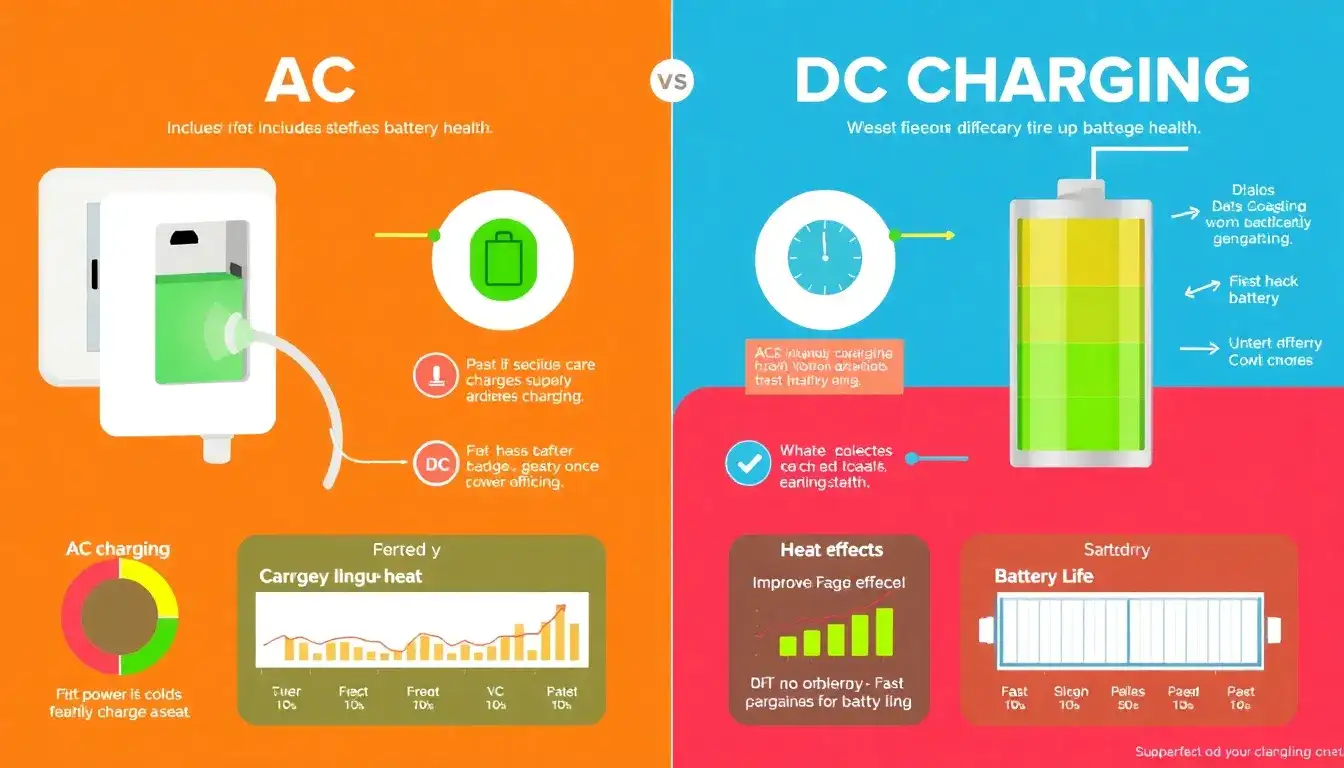
Impact of AC and DC Charging on Battery Health
The choice between AC (Alternating Current) and DC (Direct Current) charging methods can impact the health and longevity of electric vehicle (EV) batteries. Here’s a comparison of how each method affects battery health:
AC Charging
- Lower Heat Generation: AC charging is generally slower and generates less heat than DC charging. This reduced heat generation is less stressful on battery cells, which helps preserve battery health over time.
- Ideal for Daily Use: AC charging is recommended for daily, routine charging, such as overnight at home. It is cost-effective and benefits battery longevity by keeping the battery at a lower temperature.
- Less Stressful: The slower charging speed and lower temperatures associated with AC charging contribute to reduced stress on the battery, which is beneficial for maintaining its capacity over longer periods.
DC Charging
- Increased Battery Temperature and Stress: DC fast charging is significantly faster but generates more heat due to high currents, which can lead to increased battery temperatures. Elevated temperatures and rapid charging can accelerate battery degradation over time.
- Occasional Use Recommended: While DC fast charging is ideal for situations where a quick recharge is necessary, such as on long trips, limiting its use can help preserve battery health. Frequent use of DC charging may slightly increase battery degradation compared to AC charging.
- Negligible Overall Impact: Despite the potential for faster degradation, studies suggest that the overall impact of DC fast charging on battery health is minimal compared to other factors like temperature management. Modern EVs often include advanced cooling systems to mitigate these effects.
Tips for Maximizing Battery Life
- Use AC Charging for Routine Needs: AC charging is recommended for daily use as it is gentler on the battery.
- Reserve DC Charging for Quick Needs: Limit DC fast charging to emergencies or long trips.
- Monitor Battery Temperature: Avoid charging when the battery is already warm from driving to reduce additional stress.
- Avoid Extreme Charges: Keep the battery state of charge (SOC) between 20% and 80% to avoid excessive degradation due to full or near-empty charging.
Original article by NenPower, If reposted, please credit the source: https://nenpower.com/blog/how-do-different-charging-methods-ac-vs-dc-impact-battery-health/

