

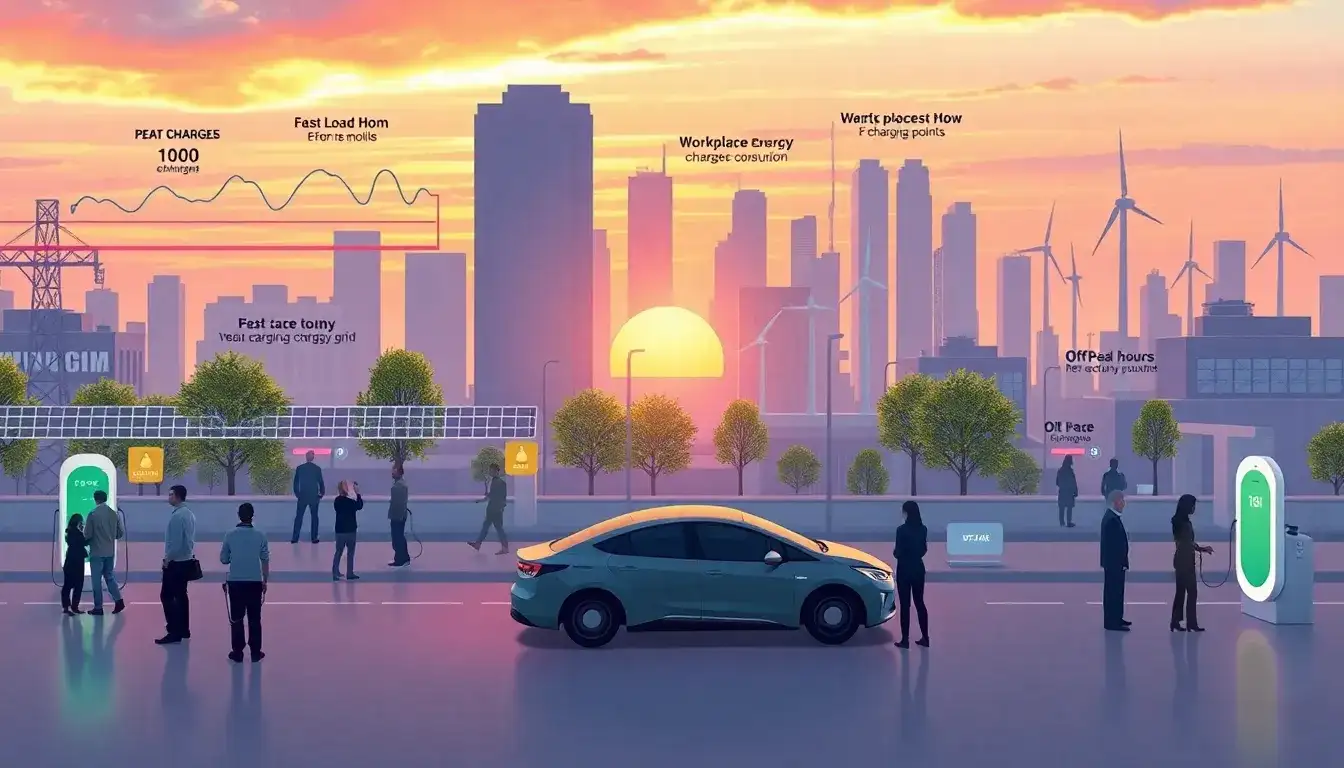
1. Home charging dominance
EV owners charging primarily at home during evening hours (common in residential areas) exacerbates peak demand when combined with existing baseload (e.g., air conditioning use). This creates overlapping evening peaks, especially in regions like California and Texas.
2. Public/workplace charging
Daytime charging at workplaces or commercial areas shifts demand to midday, aligning better with solar generation and reducing evening grid strain. This approach balances baseload from commercial activities (peaking early afternoon) and charging loads.
3. Heterogeneous charging strategies
Diversifying charging locations and times through incentivized behaviors (e.g., charging when battery levels drop below thresholds) reduces peak demand by up to 80% compared to uncontrolled charging. Infrastructure placement across homes, workplaces, and public spaces enables this distribution.
4. Automated load management
Smart charging that responds to grid conditions (e.g., delaying charging until off-peak hours) mitigates reliability risks. NERC emphasizes collaboration between manufacturers and utilities to standardize these protocols.
Comparison of Charging Scenarios
| Scenario | Peak Time | Grid Impact | Mitigation Strategy |
|---|---|---|---|
| Home-heavy | Evening | Severe overload risk | Time-of-use pricing, smart chargers |
| Public-heavy | Midday | Aligns with solar | Workplace incentives |
| Mixed-use | Distributed | Reduced peaks | Infrastructure diversification |
Unmanaged charging behaviors pose the greatest threat during existing peak periods, while strategic coordination through behavioral nudges and automated controls can transform EVs into grid-balancing assets.
Original article by NenPower, If reposted, please credit the source: https://nenpower.com/blog/how-do-different-charging-behaviors-impact-the-peak-load-on-the-electrical-grid/

